Hollowland by Amanda Hocking – A Book Review

If you are a writer, unless you’ve been living with wolves, chances are you have heard of Amanda Hocking, the twenty-something Minnesota author of young adult fantasies who spun the publishing industry in an unexpected direction.

One year ago this month, after a string of rejections from agents and editors, Hocking uploaded two novels in Kindle format.  She thought $43 for her first two weeks of sales was “pretty good.”  By the start of this year, she was selling half a million eb00ks a month, and in March she signed a reported $2 million dollar contract with St. Martin’s Press.

Amanda Hocking’s story has been told in the New York Times, the Wall Street journal, and on dozens if not hundreds of blogs, but one key question is seldom directly addressed:  are her books any good?  I just finished my first Hocking novel, and the short answer is, yes, it was lively, original, and I liked it a lot.

Hollowland starts with a bang and the action does not let up.  How is this for an opening sentence?

“This is the way the world ends – not with a bang or a whimper, but with zombies breaking down the back door.”

These are not your old-school, reanimated corpse type zombies.  No stiff, slow, shambling, mumbling, B-Grade movie zombies.  A mutation of the rabies virus has infected most of the population, causing them to become really angry, really psychotic, and ravenously hungry.  After her quarantine station near Las Vegas is breached by a coordinated zombie attack, 19 year old, Remy, and her friend, Harlow, set off across the desert, determined to find Remy’s brother.  Their first traveling companion is an African lion – animals are immune to this kind of rabies, and all the big cats from Circus Circus are loose.  That night they meet a rock star whose fame doesn’t mean so much in a post-apocalyptic world.  They pick up an SUV and a couple of refugees from a fundamentalist cult, whose leader has the habit of “cleansing” his female followers in his bedroom.  And so it goes.

It says a lot about Remy that she names the lion, Ripley, after Sigourney Weaver’s character in the Alien movies  That is the mojo you need when the zombies are winning.  Remy also has a charming irreverence, the kind of simple, eyes-open, speak-your-mind nature that you see in Amanda Hocking’s online interviews.

I can really see, though I have not found the words to express it, why the literary establishment would not cut Hocking a break.  There’s a hint of piety about the stories and characters you see in the YA fantasy section of Barnes&Noble.  The word “homogenized,” comes to mind.  And “processed food.”  And “inbred.”

This story was fresh, a little bit raw, a bit unpolished, but shaped by a writer whose imagination has not, and hopefully will not, be poured into the grooves shaped by others.  Hocking reminds me of Stephen King and not for the obvious horror licks that they share.  Both authors seem to gravitate to horror not just for its own sake, but to explore what ordinary people will do in impossible situations.

Hollowland is a available in both self-published text version, and Kindle format for $0.99, and in case anyone does not know, a Kindle device (though I love mine) is not required to read a book in that format.  Amazon has free Kindle apps for pc, mac, iPads and smart-phones.

Enjoy.

Gone For Good by Harlan Coben

A few posts ago I said I was going to read six books straight through for pleasure, and then cycle back and analyze the ones with plot features I admire.  Book number two on my list was Harlan Coben’s Gone For Good, 2003.  Donald Maass had good things to say about this title in his Writing the Breakout Novel Workbook.  He said it takes a mystery cliche – a detective haunted by the murder of his wife or girlfriend – and turns it inside out by layering the plot and adding twists and turns.  I cannot recall a thriller with more surprising twists packed into its pages.

Will Klein’s mother tells him a few days before her death that his beloved older brother Ken is still alive. Ken disappeared eleven years earlier, wanted for the murder of Will’s former girlfriend. The family believes Ken is innocent but assumes he is dead – could he really be alive and in hiding? The day after his mother’s funeral, Will’s girlfriend, Sheila disappears. The next day at work, two FBI agents ask for Sheila’s whereabouts, and inform Will that her fingerprints were found at the scene of a double homicide in New Mexico. Meanwhile we meet two former classmate’s of Will’s older brother, one a gangster and one a sociopathic master-assassain known as “The Ghost,” and both have a keen interest in Will.

Got all that?  You need to, since this is just the basic setup of Gone For Good.  When Will sets out with his friend, Squares, to try to discover what is really going on, Squares warns him he may not like the answers.  “The ugliest truth, in the end, was still better than the prettiest of lies,” Will says, a sentiment that will be tested as the story progresses.

Perhaps the greatest take-away for me as a writer is the way questions can keep us turning pages as effectively as tension.  From the initial, “What’s going on?”, “Is my brother alive?”, “Where is my girlfriend?” mysteries, Will must face issues that cut deeper and deeper into the basic assumptions of his life and the people he loves.

This is not a perfect book.  During the second half, I found my attention wandering.  In part, the plot twists were coming with such frequency they felt expected and lost a little of their power to shock.  So I think when I review Gone For Good in greater detail, I am going to discover that for a large section of Act II, the stakes and the pacing of the revelations stayed somewhat constant.

Also, the most menacing character, The Ghost, was not fleshed out until the end of the book.  It is hard to write a convincing, three-dimensional, psychopathic killer.  It is the humanizing details that make them come alive.  Hannibal Lektor valued good manners and hated rude people.  The killer in No Country for Old Men had certain personal values – keeping his promises, for one.  Such quirks make them more believable than an apparently flawless killing machine.  The Ghost, we learn at the end of the book, is driven by a complex and unexpected sense of loyalty and fair play, but I think we would have found him more “real” and more frightening if we had known some of the details earlier.

As I now understand it, the whole point of this exercise – reading and then rereading six books to try to look under the hood – is to look deeply into what works in six unique approaches.  Having just finished a complex novel like this, I have several other opinions and hunches but I need to review them further.

I was reminded though, of the very first post I made on this blog at the end of last June.  I quoted Neil Gaiman’s comment as editor of Stories, that the measure of a storyteller’s success are the four words we all want to hear – “And then what happened?”  By that measure, Harlan Coben deserves the acclaim Gone For Good has won.

Spiritual Bypassing: An Interview with John Welwood

John Welwood has studied, taught, and written about the relationship of psychotherapy and spiritual practice for thirty years.  He is currently the editor of the Journal of Transpersonal Psychology and author of Journey of the Heart.

In an interview in the Spring issue of Tricycle, Welwood discusses the concept of “spiritual bypassing” which he presented three decades ago:  http://www.tricycle.com/interview/human-nature-buddha-nature.  According to Welwood, spiritual bypassing is the “tendency to use spiritual ideas and practices to sidestep or avoid facing unresolved emotional issues, psychological wounds, and unfinished developmental tasks.”

Both eastern and western world views implicitly or explicitly elevate spirit over flesh, absolute truth over relative truth, and the impersonal over the personal.  Welwood says such an attitude is fraught with danger:  “One might, for example, try to practice nonattachment by dismissing one’s need for love, but this only drives the need underground, where it is likely to become acted out in covert, unconscious, and possibly harmful ways.”

We’ve all seen that dynamic play out in headlines of scandals involving both eastern gurus and western clergy.  Other consequences of an exclusive focus on the transcendent are less dramatic but far more pervasive.  I once attended a talk presented by a large organization that teaches eastern spiritual practice.  The group is well regarded – never a hint of scandal.  During the Q&A following the talk, one young woman said, “I cried when cat died recently.  Was that okay?”  Everyone breathed a collective sigh of relief when the speaker said yes.

Is it all right to be myself?  Is it all right to think what I think and feel what I feel?  Not if the focus of practice is transcendence of all that is messy in the human condition.  Welwood has seen a lot of this in his therapeutic practice and says:

One Indian teacher, Swami Prajnanpad, whose work I admire, said that “idealism is an act of violence.” Trying to live up to an ideal instead of being authentically where you are can become a form of inner violence if it splits you in two and pits one side against the other.

For anyone interested in or engaged in spiritual practice, this is a worthwhile article to consider, as John Welwood tries to articulate the vision of a spiritual discipline that aims to fully develop both “poles” of our nature, the human and the divine.

Tough Love, Math, Software, and Writing

One sunday afternoon, when I was in the second grade, I learned a key life lesson because my mother got tired of hearing me whine.  I had some difficult arithmetic homework.  Plus the afternoon was gorgeous, and I could see my friends playing baseball up the hill.  My mother was trying to show me how to work the problems, but I was having none of it.  “I caan’t,” I said.  “It’s too haard.”

My mother finally had enough, and said, in her no-nonsense voice, “Sit here, and do not move, until your homework is done.”

“But….”

“No buts!” I don’t want to hear another word until you’re finished.”

After a quick review of alternatives, such as rafting down the Mississippi, I realized I was trapped – nothing left to do but figure it out.  I remember how delighted I felt when I did, but I didn’t begin to understand how important that lesson would be.  How often I would be faced with similar situations, especially in the world of work – critical problems that no one else knew how to solve – and what a boon it would be to think, “Let’s take a look,” instead of, “I can’t.”

There were times when I was younger when “practice situations” arose, and I remembered and took inspiration from that day in the second grade.  I fought a similar battle to learn formal calculus proofs as a freshman in college.  Another time my van broke down in Bakersfield, and I didn’t have enough to pay someone else to fix it.

I joined the high tech world before the phrase, “cutting edge,” became a cliche – when we really were trying things that hadn’t been done before.  Through luck and interest, I spent some years doing early work in a specialty sort of software.  That made it exciting, made us kind of important, but also meant when we were stuck, we were stuck.

In the second grade, my mother forced me to learn what it meant to do my best – really do my best.  In the world of math and software, it’s rather easy to gauge.  You pretty much know when you have a solution, and the harder you work, the quicker you get there.

It’s not so clear cut in writing.  Sometimes white-knuckle effort pays off, and sometimes it’s counter-productive.  The quality of the my work does not always correlate with “feeling inspired,” and I can’t really judge it until weeks or months go by.  Sometimes it’s best to sit at the table and and hammer away, and sometimes it’s better to go outside and play.  What works one day may not work the next.

I’ve said before, I love the image Joseph Campbell gave for the way the Knights of the Round Table set out to look for the Holy Grail.  Each of them entered a trackless part of the forest, for it would have been “shameful” to follow the trail made by another.  In trying to find my own way, charging ahead is probably not the best way to proceed.  Rather, it’s time to take my time, pay attention, listen especially to the strange hunch and “crazy” idea.  Watch what happens out of the corner of my eye.  Learn to enjoy the forest and let it go, for as T.S. Eliot said, “The rest is not our business.”

The Hunger Games by Suzanne Collins

What if there was a trend and I wasn’t paying attention?

I actually did notice The Hunger Games when it came out in 2008, but I did not read it then for two reasons.  First, though I love the genre, I am wary of reviews of fantasy literature, with words like “Breathtaking,” or “Original,” because I’ve been burned too many times.  In addition, when I read the synopsis, although The Hunger Games did sound original, but we had just had a round of serious layoffs at work, and I wasn’t in the mood for a story of hard times in the not-so-distant-future.

Last weekend, at the SCBWI conference, I heard repeated praise of The Hunger Games from sources I trust.  Later, one of the speakers cautioned the audience not to write a story just because it is trendy.  He cited a current mass of “dystopian fiction” as an example.

Looking again at reviews, and watching the the trailer of the movie that is “Coming Soon,” I realized The Hunger Games must have sparked the trend.  I downloaded the ebook and to my surprise and delight, could not put it down.  I devoured it this week.  It seems strange that in the fantasy genre, real originality is so rare, but this book has it.  It isn’t perfect.  I thought that at a key moment, Suzanne Collins held true greatness in her hand and let it slip away.  Still, The Hunger Games is one of the very best reads I recall in YA fantasy.

Katniss

I didn’t just read this book for pleasure.  It is one of a half-dozen new books I plan to read once for pleasure, and again with an eye to look under the hood and try to see how the author creates the magic.  Observation one – Suzanne Collins takes all the time she needs to introduce us to Katniss Everdeen, 16, and let us bond with her.  We rise with Katniss, learn that she loves her 12 year old sister Prim but despises her cat.  Very human stuff like that.  We learn that times are hard.  We learn that to get into the woods to hunt for squirrels to eat or trade on the black market, she has to pass through an electrified fence, which isn’t really that dangerous, because the power is seldom on.  We aren’t in Kansas anymore!  We meet Katniss’ best friend and hunting partner, Gale, who despises The Capitol, which runs things, and we learn he could be killed by the Peacekeepers if such talk is overheard.  We learn this is the day of “The Reaping” and that does not sound good.

Panem

Panem rose from the ruins of America.  Katniss’ District 12 used to be called Appalachia.  The Capitol is totalitarian, and attempts to flee result in death or slavery.  Earlier worlds of this sort, like 1984, reflected the cold war mentality, while Panem is firmly lodged in 21st century fears.  Large chunks of the coastline are gone.  There have been famines and other ecological disasters.  The Peacekeepers bring to mind Homeland Security, and the iffy electricity has an eerie resonance to what is happening right now in Japan.

But all that is nothing compared to the Hunger Games and what happens if you are selected as a “Tribute” at the “Reaping.”

As punishment and a warning to the 12 surviving Districts that unsuccessfully tried to revolt, the Capitol demands a boy and a girl between the ages of 12 and 18, to be chosen by lottery once a year.  The are trained and pitted against one another in a huge outdoor arena as gladiators.  One victor will be set up for life.  Twenty-three others will die for the amusement and “instruction” of the population, which is forced to watch – there is always enough electricity to televise the Hunger Games.

The Games

When her baby sister, Prim, is chosen, Katniss rushes forward to volunteer to take her place.  We had come to like her before, and now we love her.  Her chances do not seem very good.  Her fellow District 12 tribute, Peeta, is a baker’s boy, who doesn’t seem much of a warrior.  To make things worse, Peeta once saved her life with the gift of a loaf of bread, and both know they will eventually have to fight to the death to survive.

By now, of course, we are really into the story, and incredibly, as their training unfolds, we begin to think Katniss and Peeta may stand a chance.  As a strategy to deceive the others, they feign love for one another – except Peeta may not be pretending.  Katniss wins the affection of the crowds and the all-important sponsors.  The odds-makers give her good marks for her skill with a bow.  Their trainer, a past winner and a drunk goes on the wagon and dedicates himself to their survival.

Then the games begin and all hell breaks loose – literally.

Rue

Lets face it, we know Katniss will survive, but to her credit, Collins keeps up the nail-biting doubt.  The most poignant moment comes when Katniss teams up with Rue, a twelve year-old slip of a girl, who reminds Katniss of her sister.  They bond in a hurry, and Katniss briefly basks in the luxury of not feeling alone – never mind that they will have to fight each other later.  But after a daring raid on another team’s food supply, Rue is mortally wounded.  Katniss sings her a lullaby as she dies, for her greatest love had been music.  And then, as the greatest protest she dares, Katniss covers her friend’s body with wildflowers as the hidden camera’s broadcast the image all through the land.  Gladiators are not supposed to care for each other – it is the closest thing to open defiance Katniss can imagine.

At this moment, The Hunger Games transcends genre and reaches the level of tragedy – that which is grave and constant in human affairs.  In particular, it reminded me of that heartrending day, Dec. 25, 1914, that we now call the Christmas Truce.  Two armies of young men defied the old men who sent them to kill each other, by celebrating the birth of Christ with friendship.  The generals promised a firing squad to any who tried it again.

How It Ends

Things tapered off from there, perhaps inevitably so, for how could such a moment be sustained?  Still, the genetically mutated zombie-werewolves who end the contest were over the top – they seemed like an add-on, a patch to ramp up adrenalin by borrowing from the horror genre.  For me, it had the opposite effect.

The book also ends with romantic teasers.  Katniss went out of her way to save the badly injured Peeta, but until now, she had been a hard-luck tomboy, fond of him and grateful, but not in love.  Her last moment inner conflict does not seem to grow “organically” from her earlier thoughts about her friendship with two young men – maybe I am too cynical, but I took it as a carrot to get the masses of Twilight readers to buy the next book of the trilogy.  Club Peeta or Club Gale?

Still, I plan to read and enjoy the final two books of the trilogy.  Even if the series comes off as an “ordinary” romance and battle of good guys against an evil empire, if that’s the worst thing we can say of The Hunger Games, it is still in very good company.  Suzanne Collins has given us a vividly imagined and wonderfully crafted story.

The Three Act Structure

In his book, Plot and Structure, (see the link in my previous post), author and speaker, James Scott Bell, offers this definition of his terms.  Plot concerns the elements of a story, what happens.  Structure is about the timing of those events – when they happen.

The Three Act Structure is the default of storytelling and has been, according to Bell, at least since time of Aristotle.  A novelist doesn’t need to use it, but like an oil painter who decides to forgo a flat, rectangular surface, it is good to know what you are doing instead.

Screenwriters don’t even have the choice to stray.  So pervasive is the influence of Syd Fields, a champion of the three act structure in movies, that studios often specify it in their contracts.  (See the link to Syd Fields’ Screenplay in this post ( https://thefirstgates.com/2010/08/26/a-novel-planning-method/ ).

Every writer about writing who discusses what belongs in the Beginning, Middle, and End is implicitly endorsing what Bell and Fields refer to as Act I, Act II, and Act III, but both of these writers offer more detailed terminology that helps flesh out the concept.  Setup, Conflict, Resolution are Fields’ terms.  I once heard a screenwriter use those exact words to describe what you need to pitch to a producer in the three sentences or so they are willing to listen to.  Literary agents give similar advice.

Bell and Fields offer nearly identical diagrams of the three act structure:

The thing to notice here is the timing.  Act I, the Setup, where we meet the protagonist(s), their problem, and their world lasts for about a quarter of the story.  Act II, the trials and tribulations lasts for half of the novel or movie, and Act III, which often includes a final battle or chase, takes up the last quarter of the manuscript.

Syd Fields uses “Plot Point” to signal the dramatic event that bridges two of the Acts.  I prefer Bell’s term, “Doorway of No Return,” because usually the previous world is swept away, and going home again is no longer possible.  Neo chooses the red pill.  Louise shoots a man.  A rider interrupts the party at Tara to announce that the Civil War has begun.

It’s fun to watch for the moment this happens in movies, since the timing tends to be very precise.  In a two hour film, something will occur very close to the half-hour point that locks the hero into the conflict – he cannot go back to the Shire.

The second Doorway of No Return, about three-quarters into the film or novel, guarantees the final showdown.  Gary Cooper watches the last train pull out of town, and it’s almost noon.  When he and Trinity rescue Morpheus, Neo really believes, for the first time, that he is “The One.”  In True Grit, Maddie sees the man who shot her father at the river.  He does not notice her.  She could slip away, but once she draws her pistol and orders him to surrender, the final battle is underway.

As I said in my previous post, I find a lot of useful suggestions in James Scott Bell’s Plot and Structure, including the clearest discussion I know of the Three Act Structure.  Still, thanks to Google, you don’t need a book to gather a lot of good information, including suggestions that the Three Act Structure is passe, an impediment, or a device for mere genre-writers.   We can use it or not but it seems to me that any writer can benefit from understanding the concept.

A Conference and a Resolution

“If we had more stories as children, we would need fewer psychiatrists as adults.” – James Hillman

On Saturday, I attended the Spring Spirit Conference of the North/Central region of the SCBWI – Society of Children’s Book Writers and Illustrators.  This all day event took place in Rocklin, just 20 minutes from home.  It featured seminars and critiques by writers, editors and agents, aimed at people who write for children and young adults.  I had registered at the end of December, but as the day rolled around, I wasn’t that anxious to go.

Part of it was simple fatigue, the after-effect of this spring’s flu.  Part of it was a kind of burnout.  Earlier this week, as I was reviewing a manuscript for one of my critique groups, I caught myself writing a comment out of habit – a knee jerk response I was not even sure was true.  I’ve found myself doing that several times recently, and as a result, I was feeling an impulse to step away and sort out some ideas that didn’t feel like mine.  I wasn’t sure I needed a professional gathering where I was likely to pick up more.

I was pleasantly surprised by the keynote speaker, author and teacher, Bruce Coville.  “Take everything the presenters say with a grain of salt,” he said.  “Your job is to find your own truth.”  Those words turned my day around.  They set the tone of the day, as did his later seminar on writing fantasy, a genre he notes is snubbed by some literati as less than properly serious.  “Tell that to Homer, to Dante, Milton, and Shakespeare,” Coville said.

Sometimes I write fairytales because it’s the best way to tell the truth.” – C.S. Lewis

As I went through they day, an ongoing problem that is really mine came into focus.  I’ve been stalling out on my current book because several key plot elements need to be re-imagined.  Slogging away is not going to do it this time.  I’ve known I need to take a break, take a step back, but that isn’t easy for an A-Type, yankee-ingenuity, roll-up-your-sleeves mentality.  I needed some kind of plan to make it okay to take a break.  And I found one.

When in doubt, read, read, read.  That in itself is a great idea, but I find it hard to study really compelling books when the great ones sweep me into the story from the start – I’ll do the objective stuff later, and later never comes.  I happened to flip through the first book I ever bought specifically to help with plot and structure, called (would you believe) “Plot and Structure,” by James Scott Bell.

Toward the back of the book, Bell addresses that whole issue in a section called, “How to Improve Your Plotting Exponentially.”  It involves getting half a dozen novels, ones you have read or new ones.  Read them first for pleasure, then read them again with a stack of 3×5 cards and note the events, characters and purpose of every single scene.  Review them when done (like “forming a movie in your head,” says Bell).  Finally, lay out the cards and see how the scenes fit into the traditional three-act structure.  Where are the key plot points?  Where is “the door of no return?”  Where is the final battle joined?

This will take eight to twelve weeks, Bell estimates, but because of all that I earlier learned from him, I’m willing to test his estimation that during those weeks “you will jump ahead of 99 percent of all the other aspiring writer out there, most of whom try to find out how to plot by trial and error.” Trial and error has always been iffy for me.

So I’m giving myself permission to take a reading break.  I’ve already downloaded three books to my Kindle:

1)  The Hunger Games by Suzanne Collins, an acclaimed, post-apocolyptic story for young adults.   I started it yesterday and found to my delight, a YA story I can’t put down – I haven’t come upon too many of those recently.

2)  Gone For Good, by Harlan Coben.  This violates Bell’s instructions to stick with the type of book I want to write, but I’ve meant to read this ever since I saw Donald Maass praise the story in his Breakout Novel Workbook.  Besides, I really enjoy action/adventure and believe the genre contains elements that can improve any sort of writing.

3)  Hollowland by Amanda Hocking.  About time I read something by her!

From time to time I will report back on how this goes and probably review at least some of the titles, but right now, I have to get back to  The Hunger Games!

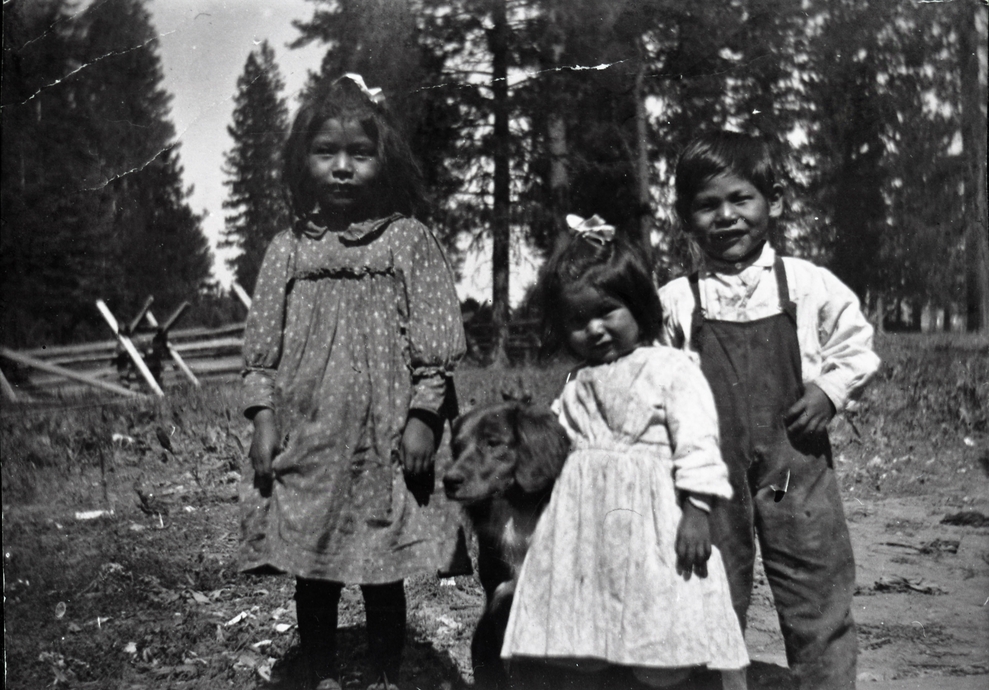
California Indians and their Dogs

Three-thousand archeologists are on the loose in Sacramento, gathered for the 76th annual meeting of the Society for American Archaeology, which runs through sunday.  According to the local paper, members of this tribe are avid researchers one of humankind’s oldest recreational beverages.  The Bee reports that in 1993, they drank all the beer in the conference hotel, and this in St. Louis, hometown of Anheuser-Busch.

When they are not partying like ancient Egyptians (one theory holds that pyramid-builders were paid in beer), the Society’s members will hear numerous research papers.  One of them, by Paul Langenwalter, professor of archaeology and antropology at Biola University in La Mirada, contradicts a popular prevailing view, and asserts that California Indians had close personal relationships with their dogs. http://www.sacbee.com/2011/03/29/3510650/indians-dogs-were-companions-in.html
 

Native American Children and Dog, near Susanville, ca 1900 - From Sacramento Bee

This is good news for those who have wondered if we are the only culture in the historyof the world that buys our dogs presents at Christmas and Jackalope horns at Halloween.  Actually, we probably are.  Langenwalter, who has studied Indian burial sites dating to 1700 has not recovered any Jackalope horns, but he has found many other things of interest.  Native people and their dogs were often buried side by side, curled up in a sleeping position.  Dog graves were also marked with stone cairns. 

Early European observers noted the close relationship between native Californians and their dogs, and this is confirmed by Debra Grimes, a Miwok Indian, and cultural preservation specialist for her tribe.  Grimes agrees that dogs were historically buried as a member of the family, because they were.

I am reminded of a story I heard so long ago that I cannot even remember its source.  My best guess is that it is either a plains Indian legend or that it comes from the Pacific Northwest.

When the earth was young, humans and animals were natural allies, and the friendship of the animal tribes made us very powerful.  So powerful, in fact, that gods were worried.  (Even then we had a tendency to get too big for our britches).   The gods decided to separate the human and animal nations, so they opened a chasm between us in the earth.  From a small crack it grew deeper and wider, the animals on one side, people on the other.  At the very last possible moment, Dog jumped across the gap to stand with humans, and that is why dogs have been our special friend ever since.

Enjoy the article and wish the archaeologists well.  Who knows, they could find the Jackalope horns any day!