A spring break medley

medley (med-lē) n., 1 a mixture of things not usually placed together; heterogeneous collection; hodgepodge.

A quiet week, with many ideas wandering through my mind without quite attaining blog post velocity. Sitting here, with a cup of coffee and the windows open to a fine spring morning, I decided to scoop up some of these notions, not necessarily in order of importance, and present them to you as a medley, or hodgepodge as the case may be.

On Mickey Rooney: I wish I had known that last Sunday, all day, Turner Classic Movies was  hosting a day of Mickey Rooney movies. I tuned in late, but did get to see Boy’s Town (1938) and The Human Comedy (1943), both notable for their idealistic and almost too sentimental presentation of American life. Boys Town tells the story of Father Edward Flanagan (Spencer Tracy), who founded a home for abused and delinquent boys in Nebraska. Rooney plays Henry Hull, the tough kid who tests Flanagan’s belief that there is “no such thing as a bad boy.”

Tracy and Rooney in "Boys Town," 1938

Tracy and Rooney in “Boys Town,” 1938

In addition to the real life humanity of Flanagan, whose Boys Town still exists in the Midwest, the film reflects 1930s progressive ideals, as well as an older, deeper, American romanticism, the belief that by nature, we are noble beings, corrupted only by cultural dysfunction. Watching Boys Town, I thought of the next great eruption of that ideal in the ’60s and remembered a line from Crosby, Stills & Nash that almost stands as an epitaph for that era: “It’s been a long time coming / it’s gonna be a long time gone.” The album came out in 1969, the year Charles Manson called optimism like Father Flanagan’s into serious question.   

Mother Nature on the run: Now that I’m thinking of Crosby, Stills & Nash, that phrase popped to mind as title for this subsection, though it’s really about animals on the run. An editorial in yesterday morning’s paper, The case for banning wildlife-killing contests by Camillia H. Fox, outlines the common practice of for profit, recreational predator hunting contests.
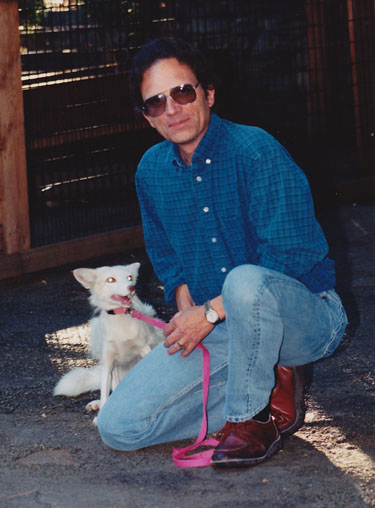
Exercising Vixen the fox while a volunteer at the Folsom City Zoo, ca. 1996. She was a sweetheart, though a bit of a drama queen. Is this the enemy?

Exercising Vixen the fox while a volunteer at the Folsom City Zoo, ca. 1996. She was a sweetheart, though a bit of a drama queen. Is this the enemy?

“The greatness of a nation and its moral progress can be judged by the way its animals are treated,” said Mahatma Gandhi. It is heartening to learn that pushback is growing, both from citizens and state Fish and Game Commissions. In California, commission president, Michael Sutton said:

“I’ve been concerned about these killing contests for some time. They seem inconsistent both with ethical standards of hunting and our current understanding of the important role predators play in ecosystems.”

The way we treat the animals seems increasingly to be like the way we treat each other. Witness the case cited in the article, of the organizer of one of these killing contests, who (allegedly) pushed a 73 year old man to the ground for trying to photograph the event. We have to say, “allegedly” because, although the older man’s spine was fractured, the perpetrator has yet to be charged. This is not what our founding fathers meant when they spoke of a “well ordered militia.”

Of Jungians and Tibetans: I’ve recently started, with keen interest, The Psychology of Buddhist Tantra (2012) by Rob Preece, an in depth practitioner of both Jungian psychology and Tibetan Buddhism. Tibetan iconography is striking and vivid, almost begging for Jungian analysis, but most western commentators, including Jung himself, have written about it as outsiders looking in.

Not Preece, who studied with Lama Thubten Yeshe, one of the greatest 20th century Tibetan teachers to come to America. Lama Yeshe understood Jung and understood that Buddhist practice has always undergone change when crossing geographic and cultural boundaries.

Preece writes of Col. Francis Younghusband, who visited Tibet in 1904. Seeing pictures of wrathful deities, Younghusband concluded that this was a culture that worshiped demons. Jungians may pounce on the concept of shadow, but that too, will often be wide of the mark. Although Tibetans and Jungians both understand such imagery as depicting internal qualities, in this case, it is wrathful energy in the service of compassion. It’s the energy of, “This shit’s gotta stop!” The energy that led Camilla Fox to start a foundation to stop the slaughter of animals.

Two large gatherings: Over the last two weekends, I took part in two separate events which drew hundreds of people. Both were immensely satisfying days of harmonious groups, drawn together by shared interest, working cooperatively and having a lot of fun doing so. It’s almost enough to make you believe in no such thing as a bad boy or girl, in Mickey Rooney’s America.

That fundamental goodness is precisely what the Tibetans and Buddhists in general believe, even with their finely honed awareness of both relative truth, here in the trenches, and ultimate truth. Our ultimate nature, they say, the ground of our being is pure, unstained by any event, the way the sky is unstained by pollution. The bad news is, it can take eons for us to figure this out; a weekend at Woodstock is clearly not enough.

Still, I always feel energized after such gatherings, even as that wrathful energy rises at the thought of all the artificial barriers that divide us in our day to day lives. That’s something everyone has to work out for themselves. Meanwhile, I felt like listening again to Crosby, Stills & Nash. I hope they’re right in this song: that it’s always darkest before the dawn.

Socially Responsible Purchasing Power

Here’s some nice info to pass on. I’m already a fan of Paul Newman salad dressings and popcorn, and it’s great to hear of garments made in America once again. I like the idea of socially responsible funds too, though once when I looked at them (sometime ago) I discovered they trailed index funds in their returns. Many things have changed since then, but you’ll want to investigate or check with a financial advisor. At any rate, it’s great to hear of opportunities to shop with conscience.

gcsanghablog's avatarGuhyasamaja Center Blog

It’s human nature to want to buy stuff…more and more stuff. That being said, why not try to buy from socially responsible companies? Many companies donate a percentage of their sales to charity (for example, Paul Newman’s company has donated over $400 million to charities since 1982 from the sale of grocery items.

A new company, Fed By Threads, specializes in Made-In-America organic ethical vegan clothing that feeds 12 emergency meals to hungry Americans via foodbanks per item sold. The company’s founders, Jade Beall and Alok Appurdurai, created the company when they learned about the tremendous suffering that sheep, silkworms, cows, goats and other animals experience in the production of clothing. They also are firm believers in paying fare wages to garment workers and in keeping these jobs in America.

Also, the number of socially responsible / sustainable investment mutual funds has grown over the years. Some lend money…

View original post 50 more words

by all means by Edward Espe Brown

by all means A ZEN CAUTIONARY TALE

by all means A ZEN CAUTIONARY TALE

“Growing up meant you were competent and stayed out of trouble…When you hit the wall, who or what would see you through?”

Traditional Zen practice is both very simple and very formal.  Think of classic Japanese brush painting.  In Zen, there are prescribed ways of bowing, walking, holding the hands in meditation, and so on.

At the end of by all means A ZEN CAUTIONARY TALE, Zen abbot, Edward Espe Brown, includes a photograph of himself, in full Zen regalia, with a stern expression on his face, and a pig puppet on a cushion beside him.  Traditional Zen masters don’t give dharma talks with pig puppets any more than traditional authors use upper and lower case in their titles like Brown does here.  by all means lies outside traditional book categories, which ironically, makes it very Zen.

When Edward, as an adult, rescues Ponce (two syllables) the Pig puppet from a cat named Turtle (not a puppet), his affection for Ponce allows him to explore many issues, especially those of abandonment:  how others abandon us, how we abandon them and ourselves, and all the things we do to try to compensate:

“A lot of things that Edward did were very important because it was important to him to be doing important things and not just wasting his time.  Otherwise how could he have any respect for himself? And wasn’t it important to be self-respecting? Because if you left it to the others, there didn’t seem to be a lot of respect going around, and you weren’t likely to get much.”

We learn how Edward lived in an orphanage after his mother died when he was three.  We learn how he turned his anger on the stuffed animals he had as a kid after he got out.  We see how childhood issues live on inside the adult and how Ponce the Pig reacts at a critical moment, when Edward abandons him.  At first Ponce weeps, but then he closes his eyes to meditate (the pig is a dedicated Dharma practitioner):

“He found his heart swelling even though nothing changed outwardly. The space within was like that: vast and expansive, warm and tender without dimensions.  All of his friends were gathering just as fast as he could think of them. A burst of astonishment flashed through Ponce.  Left without any capacity for thinking about what was happening, he was one with everything, and everything was a part of him.  No separation could be found.  Dazzling!  What was there to think about?  Nothing needed figuring out…”  Edward learns his lesson and reconciles with Ponce in the end because it’s that kind of a book.

I enjoyed by all means, but it’s not for every reader. It is not an instruction manual in Zen or a book of eastern philosophy.  If you have no interest in Zen or have not spent time talking to puppets as I have, the book might not appeal.

If you are in doubt, I suggest you check out some of the Dharma talks Edward has made available on his website.  If you like them, you’ll probably like the book.  The talks, like this book, are simply another way that Edward, with abundant humor and compassion, tells his truths, using all means. 

A retreat with Edward Espe Brown

Edward Espe Brown

Edward Espe Brown

Saturday was the fourth time in as many years that I’ve attended a daylong retreat with Edward Espe Brown,  Zen abbot, author, cook, and altogether a charming and extremely funny man.  In 1965, Edward became a student of Shunryu Suzuki Roshi, author of Zen Mind, Beginner’s Mind.  When his teacher founded the Tassajara Zen Center near Big Sur, Ed became the head cook (as an author, he is best know for the Tassajara Cookbook and the Tassajara Bread Book).

Much of his learning took place in the kitchen, which gave him several unforgettable teaching stories. He relates his frustration in trying, without success, to produce a “perfect” muffin.  He tried numerous recipes and variations.  Everyone else thought they were great, but he was never satisfied.

One day he managed to taste a muffin without his usual preconceptions and found it delicious.  In that moment, he realized the source of his earlier discomfort – he’d been comparing his muffins to the “perfectly” shaped Pillsbury muffins he’d eaten as a kid.  This discovery led to one of the core ideas he tries to communicate as a teacher: we have the choice of living our lives according to someone else’s recipe or trying to discover our own.  “There is no by-the-book way for you to be you,” he says.

Given this background, it’s no surprise that he started the day by saying, “I’m not going to give you any meditation instructions, because then you might try to follow them – and be looking over your shoulder to ask, ‘How am I doing?”  The simplest instruction in Zen, “Just sit,” is the hardest to practice.  Similar things can be said for writing or painting (“Just write/paint what’s in your heart”) – and many other areas of life as well.

Such instructions (or lack thereof) assume the student knows the basics and some has experience.   This was true for the group that gathered on saturday.  It allows a generous teacher like Edward Brown to invite the student to seek what lies beyond a lifetime of learning how they are supposed to be.

Ed once said, “What is precious in us doesn’t come and it doesn’t go.  It is not dependent on performance.”  That’s a nice sounding aphorism, the kind of thing I jot down in notebooks.  Saturday’s retreat was a chance to test the waters, and as I hope I’ve made clear, at its best, Zen is about everything in our lives. I’d heard that Ed had written a new book, and it proved to be a fine example of finding our own way.

He has several traditional books in print on Zen and cooking, and he also edited a collection of Suzuki Roshi’s teachings.  When I’d read the title of his new book, By all Means A Zen Cautionary Tale, I assumed I’d be in for traditional reading.  Instead, I was surprised and delighted to find he’d written a semi-fictional, semi-autobiographical story of his adventures a little pig hand puppet.

When I asked him to sign a copy, I said, “This is great.  For my first 10 years, I had hand puppets.  They were my closest friends and confidents.”

“Ah, then you know,” he said.  “They’re powerful, aren’t they?”

In my next post, I’ll review By all Means, and after that, maybe the topic of conversing with inanimate things.  Please stay tuned!

——————————————————————————————–

PS:  When I posted this, I forgot to add a link to Edward’s home page, Peaceful Sea Sangha. In particular, I recommend the recordings of his talks, which give the flavor of his teaching style, his concerns, and his humor.

Getting rid of those pesky memories

In my previous post, I wrote of advances in the field of virtual reality, and posted a video clip that brought to mind the dystopian landscape of Aldous Huxley’s Brave New Word (1932).  Huxley imagined life in “The World State” in 2540, where children are born in “hatcheries.”  They are raised in “conditioning centers” and learn to be avid consumers and abhor the thought of solitude.

Happy face thumbs up

One of the World State’s tools for keeping people docile are “the feelies,” multi-sensory movies, most often centered on sex.  The connection to virtual reality should be obvious.  Another conditioning tool was “soma,” a side-effect free hallucinogenic drug that World State citizens used to go on “holidays.”  Soma relates to the subject of this post – a potential advance in the technology of feeling happy, happy.

In “Unwanted Memories Erased in Experiment,” an article in The Wall Street Journal (12/23/13, p. A1), Gautam Naik writes that scientists used electrical currents to erase memories they had implanted earlier.  Someday doctors may be able to zap painful memories and leave the rest in tact.  Assuming the technology becomes (relatively) safe, would this be a wise thing to do?

In a few cases it might be – the 39 patients who volunteered for the experiment were already undergoing electroshock therapy for severe clinical depression after all other treatments had failed.  But the article’s assertion that memory erasing might be useful to remove “associations linked to smoking, drug-taking, or emotional trauma” suggests the kind of social engineering Huxley wrote about.

Last year at a Buddhist teaching, I met an elderly woman who had spent her youth in a Soviet gulag.  As difficult as the hardship was, she had written a memoir for her family to read, “So they’ll know who I really am.”  Her core identity, as well as her later practice of Buddhism were direct results of those years of suffering.

In my late 20’s, I knew a woman who lost her closest male friends over a short period of time; they died of cancers related to Agent Orange exposure in Vietnam.  After surviving a deep depression, my friend enrolled for training to work in a hospice.  Without the pain of loss, she wouldn’t have found her calling.

The poet, Rilke, declined Jung’s offer of therapy work saying, “If you take away my devils, I fear my angels might flee.”  

The disowned parts of ourselves are especially important in scripture.  When Jesus offers living water (Jn 4:10-13), only those who know they are thirsty will hear him.  When Buddha teaches a path beyond suffering, we won’t listen if we’ve deadened ourselves with soma or reality TV.

A tour of America 80 years ago sparked Huxley’s vision of an economic and political culture at war with soul values.  Now that another “holiday season” has run its course, as the media waits for the next distraction, I am reminded once again of the cautionary words in this wonderful poem that William Stafford published in 1960:

A Ritual to Read to Each Other

If you don’t know the kind of person I am
and I don’t know the kind of person you are
a pattern that others made may prevail in the world
and following the wrong god home we may miss our star.

For there is many a small betrayal in the mind,
a shrug that lets the fragile sequence break
sending with shouts the horrible errors of childhood
storming out to play through the broken dyke.

And as elephants parade holding each elephant’s tail,
but if one wanders the circus won’t find the park,
I call it cruel and maybe the root of all cruelty
to know what occurs but not recognize the fact.

And so I appeal to a voice, to something shadowy,
a remote important region in all who talk:
though we could fool each other, we should consider–
lest the parade of our mutual life get lost in the dark.

For it is important that awake people be awake,
or a breaking line may discourage them back to sleep;
the signals we give–yes or no, or maybe–
should be clear: the darkness around us is deep.

About Rejoicing

Rejoicing is an abrupt theme change from the last two posts I’ve worked on, both of which have ground to a halt.  They seemed important at the time, but they were full of bad news, and there’s plenty of that to go around.

Recently I attended two teachings by a Tibetan lama visiting from the east coast, the Venerable Khensur Lobsang Jampa.  I’d heard him on a previous visit and on both occasions his teachings were all I expected and more.  I purchased a book he published this year and started to read it when I got home.

Ven. Khensur Lobsang Jampa Rinpoche.

Ven. Khensur Lobsang Jampa Rinpoche.

In the early pages, he gave an account of a king called Prasenajit who sought the Buddha’s advice.  King Prasenajit wanted to study the Dharma, and asked how he could do so when so much of his time was devoted to running his kingdom.  Like us, he was insanely busy, and didn’t have much time for spiritual practice.

Buddha gave him just three things to do, which he could practice in the midst of other activities:  generate bodhicitta, rejoice, and dedicate.

Bodhicitta is the core of Mahayana Buddhist practice.  It’s the desire and determination to seek spiritual awakening for the benefit of all living beings.  It parallels St. Paul’s first letter to the Corinthians, where he says no amount of spiritual prowess is worth anything without love.

Dedication means mentally giving the positive energy of spiritual practice, the good karma, for the benefit of all sentient beings.  The secret is that by giving it away, we do not lose anything, for like Jesus’ loaves and fishes, there’s always enough to go around.

Buddha’s final instruction, rejoicing, took on a special meaning this week.  Lama Khensur wrote:  “Rejoicing is simply cultivating happiness in the positive actions of others and in the good things that happen to others, thinking ‘How wonderful for them!'” He explained that rejoicing means celebrating the lives of spiritual masters, prophets and saints, as well as the positive actions of “ordinary” people.

Consider the world-wide rejoicing we saw this week for the life of Nelson Mandela.  How uplifting it was to reflect on the positive transformation he brought to his own nation and  to the lives and dreams of people everywhere.  The Buddha said that such uplift is ours anytime we deeply reflect on the good that people have done and can do.

Yesterday I attended the wedding of a long time friend.  I’m not ordinarily a fan of occasions like weddings, where I have to be on my best behavior for several hours at a time, but this was different.  Some 30 friends and family members gathered to witness the union of a couple who are such a good match that it was pure celebration and I didn’t look at my watch until after the cake.  It was easy to think, “How wonderful for them!”

The smallest event can spark this kind of rejoicing when we watch for such occasions.  Last week, when I stepped out of the rain and cold and into a local bagel shop, the young man who brought me a bagel and coffee with a genuine smile passed on something very valuable.  Many such moments are ours when we pay attention.

The clouds above us join and separate,
The breeze in the courtyard leaves and returns
Live is like that so why not relax?
Who can stop us from celebrating?
– Lu Yu

Creative Commons

Creative Commons

Stories that make the world

Photo by Manel, 2011, CC BY-ND 2.0

Photo by Manel, 2011, CC BY-ND 2.0

 On saturday, an acquaintance and I met at a local park to discuss some things of mutual interest.  It was a stunning fall day, with temperature in the low 80’s, so we sat for several hours at a picnic bench surrounded by tall oaks.

I met this man just a few months ago, and during the conversation, it became clear that his political views and mine are polar opposites.  We mentioned them but didn’t argue, for we had other things to discuss.  Besides, by then some people nearby had a birthday barbecue going, and we were both distracted from politics by the smells.  When someone said, “Anyone else want a burger?” I was sorely tempted to raise my hand.

Later though, I reflected on how the two of us could hold such different narratives of the same recent events.  The poet, Muriel Rukeyser’s phrase, “The universe is made of stories” came to mind, as it often does, for it summarizes a key observation of two disciplines that have deeply shaped my world view, eastern philosophy and depth psychology:

  • “The Buddhist does not inquire into the essence of matter, but only into the essence of the sense perceptions and experiences which create in us the idea of matter.” – Lama Angarika Govinda, 1969.
  • “Every notion in our minds, each perception of the world and sensation in ourselves must go through a psychic organization in order to “happen” at all.” – James Hillman, 1975. 

Such statements may seem too lofty for a number of common experiences, especially things like physical pain, even the sliver I have in a finger from hauling firewood onto the back porch.  Not long ago, however, I came upon a concrete example of how the mind creates reality.

A contemporary Tibetan lama spoke of an experience we all went through in learning to read.  One day when we were young, a teacher drew three marks on the board (or our parents did, or we saw it on Sesame Street).  That teacher then said something that changed our world forever:  “This is the letter A.”

a-elmo-alphabet 200

From that moment on, the letter “A” existed for us, and it always appears to exist “out there,” in the world, when in fact, all that’s “out there” are three lines in a specific pattern.  “A” exists only in the minds of those who have learned certain alphabets – a person who doesn’t read or only reads Chinese would not be able to find it.

This small story about the letter “A” parallels the complex stories we create, borrow, and use to make the sense of the world.  Sometimes, like this past saturday, when it seems like the person you’re talking to comes from an alternate universe, it’s because they do – not a universe we could travel to with  warp drive, but one that is simply constructed of very different stories.