Dreaming with animals

Bobcat, Folsom City Zoo Sanctuary - M.Mussell

Bobcat, Folsom City Zoo Sanctuary – M. Mussell

“What is the single greatest predictor of a hero’s success in folktales around the world?”

A professor who had studied the subject at length once posed that question in a psychology class. The answer, he said, was finding an animal helper. More than any other human or supernatural guide, an animal ally can lead the hero or heroine through trials and dangers to the end of their quest.

The professor was a friend and colleague of James Hillman (1926-2011) who loved animals and began collecting animal dreams in 1956.  Toward the end of his life, Hillman helped compile and update five decades of essays and lecture transcripts for a ten volume collection of his work.  Five volumes have been published to date, including Animal Presences, 2012, which I am currently reading.
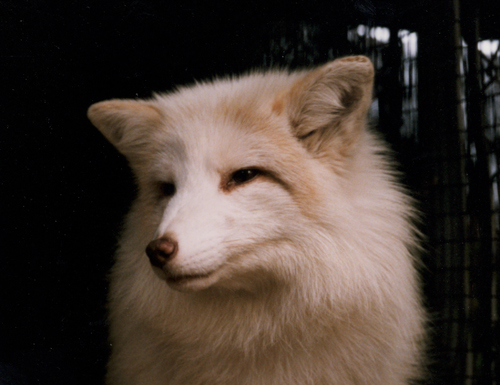
Vixen the fox, Folsom City Zoo Sanctuary - M. Mussell

Vixen the fox, Folsom City Zoo Sanctuary – M. Mussell

After serving in the US Navy, Hillman studied at the Sorbonne, at Trinity College, Dublin, and in Zurich, where he received a PhD from the University of Zurich and an analyst’s diploma from the C.G. Jung Institute where he served as Director of Studies until 1969.  Versed in Jungian psychology, he charted his own path which he named “Archetypal Psychology.”  His first major work, Revisioning Psychology, 1975, was nominated for a Pulitzer Prize.

With 18 volumes in Jung’s Collected Works, and 10 in Hillman’s, it is clearly beyond the scope of a blog post to compare and contrast these two complex approaches to the depth psychology.  That said, several broad generalizations are possible:

Jung’s psychology can be characterized as “monotheistic,” aiming at a realization of the “Self,” as the supreme archetypal principle.  Jung understood the Self as “the God image within.”  Hillman, by contrast, called the psyche “polytheistic,” and considered the Self as simply one of many psychic centers within us.  Our nature, as we experience it moment by moment, is more like a pantheon of many gods than the kingdom of single inner supreme being.

As a corollary to these differing models of the psyche, development for Jung was often imagined as an ascent, a kind of upward climb toward spiritual clarity.  For Hillman, growth was often a descent, leading to contact with the “Soul,” which for him was more like the “soul” of a blues musician or an artist than the “immortal soul” of organized religion.

Hillman was also concerned with anima mundi, the soul of the world.  How can people be healthy when the world is ailing?  Hillman had little patience with ego psychologies that pretend human health is possible when our cities are blighted and we work in sterile, windowless offices bathed in florescent light?  As a result, his method of approaching dream and fantasy was unique.  He shunned methodologies that seek to aggrandize ego by asking what the figures of dream mean.  He insisted we treat the beings who visit us nightly with the same courtesy we would show to a guest in the waking world.

“the animals are right here. You have to be careful you don’t say something stupid because the animals are listening. You can’t interpret them; you can’t symbolize them; you can’t do something that is only human about them.”

Sage the wolf, Folsom City Zoo Sanctuary - M. Mussell

Sage the wolf, Folsom City Zoo Sanctuary – M. Mussell

“the image is the teacher. We have to endure a laboriously slow method of dreamwork…A dream brings with it a terrible urge for understanding. We want dreams decoded for their meanings. But the dream, like the animal in it, is a living phenomenon. It goes on displaying itself, pointing beyond itself to ever further interiority if we can hold back the hermeneutical desire so that the image can elaborate itself.”

“I am suggesting that the dream animal can be amplified as much by a visit to the zoo as by a symbol dictionary.”

Something within us mourns the animals missing from our lives.  We wear their pictures on t-shirts and sometimes collect little animal figurines.  We cherish domestic pets in ways that might seem bizarre to earlier generations who weren’t as estranged from the natural world.  We thrill at the sight of Coyote or Deer moving through twilight woods at the edge of the housing tract, and we mourn them dead on the road as we drive to work.

Sly the Fox, Folsom City Zoo Sanctuary - M. Mussell

Sly the Fox, Folsom City Zoo Sanctuary – M. Mussell

We are energized when animals visit our dreams – sometimes.  We’d rather they weren’t fierce, threatening, or slimy.  We prefer majestic and noble: an eagle, a dolphin, or wolf will do nicely. We’re not so fond of ants or mice, pigs or slugs, skunks or rats.

With the natural world in tatters, however, anima mundi is not dreaming of Disney creatures and love and light.  That’s all right.  Black Elk said the Lakota people knew every being has it’s place in the medicine wheel.  And if we don’t know what’s broken in ourselves and in the world, said Hillman, we don’t have the slightest idea of who and what and where we are.

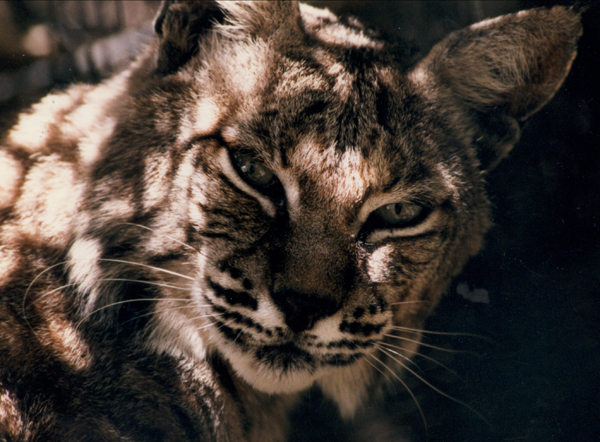
Aiko the bobcat, Folsom City Zoo Sanctuary - M. Mussell

Aiko the bobcat, Folsom City Zoo Sanctuary – M. Mussell

What animals have recently come to your dreams?  What did they seem to want? Don’t remember any animal dreams? Just ask. If you mean it, if you are truly interested and repeat the suggestion until it brings results; if you prime the pump by leaving a notebook and pen you your bed stand, the creatures will visit.

They want to be heard and are looking for those who will listen.
It’s mostly insubstantial

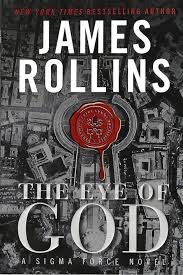
This morning, on friend and author Amy Rogers’ website, Sciencethrillers.com, I found the link to a great article by New York Times bestselling author James Rollins.  Rollins writes science thrillers, and the article, Turning Science Into Fiction, details a tour he took of Fermilab, near Chicago, the conversations he had with physicists there, and how he turns such information into riveting stories like his most recent novel, The Eye of God.

The Eye of God

The article holds points of interest for writers of all sorts.  When Rollins sat down with a group of Fermilab physicists, his question was, “Tell me what scares you about your research, what keeps you up at night?”  Not only did the answers become central to The Eye of God, but they hold great interest to me as a student of Eastern thought.

All religions hold that the world we perceive with our senses hides much of what is really real, but according to Rollins, his conversation with these scientists centered on “the insubstantiality of the physical world.”  He gives this quote he discovered after his visit:

“If you remove all the space within the atoms making up the human body, every person that’s ever lived would fit inside a baseball.” – Brian Greene, physicist

Beyond such ultimate pondering, Rollins’ article is full of details on his research which should be of interest to any novelist who wonders how much one needs to learn of an esoteric topic to be able to tell a convincing story.

I highly recommend this article, and for more of the same, Sciencethrillers.com, which you will find in the link above and on my blogroll.

Your Own Damn Life: an interview with Michael Meade in The Sun

Michael Meade is an author, storyteller, and a passionate advocate of soul values in a world that increasingly ignores them; I’ve written about Meade or mentioned him in half a dozen posts.

In The Water of Life (revised, 2006) he shares his discovery that stories can be a matter of life and death.  As a teen in New York, when confronted by gang members from a rival neighborhood, Meade didn’t just lie his way out of serious injury or worse – he storied his way out, with an elaborate made-up tale that won over the assailants long enough for him to make his escape.  Readers of my recent posts will recognize a thriving trickster in Meade when he was just a kid!

I recently found an interview between Michael Meade and John Malkin in the The Sun that is as timely today, or more so, than in November, 2011, when it was published.  In the interview, “Your Own Damn Life,” Meade quotes an African proverb, “When death finds you, may it find you alive.”  Alive, he goes on to say, “means living your own damn life, not the life that your parents wanted, or the life some cultural group or political party wanted, but the life that your own soul wants to live.”

In the past, meaningful stories could guide soul evolution, but now, with the culture and the natural world both in crisis, Meade points to our lack of coherent, guiding tales.  A culture falls apart, he says, when youthful imagination and energy are stunted and when the traditional wisdom of elders is forgotten.  At one extreme, “You’re not supposed to be worrying about the end of the world as a teenager; you’re supposed to be bringing your dream to it. The world seems old and troubled now, and the young are no longer allowed to be as young as they should be.”  At the other extreme, we have a lot of “olders” but not many wise “elders.”

When traditional stories collapse, Meade says, the guiding and healing stories must come from within.  “That means going to the core of your own life and finding the story seeded within.”  Meade has tried to facilitate such explorations through his writings and talks, which first became known in the 80’s when he, James Hillman, and Robert Bly hosted a series of men’s conferences.

Meade continues to teach, write, and offer a variety of community services through the non-profit Mosaic Foundation he founded in Seattle where he lives.  If you’ve read this far, you will find Meade’s interview in The Sun and the Mosaic page hightly rewarding and likely sources for new ideas.


July 6 is the Dalai Lama’s birthday

His Holiness with a participant at the Young Minds Conference in Sidney, Australia, June 17, 2013

His Holiness with a participant at the Young Minds Conference in Sidney, Australia, June 17, 2013

His Holiness the Dalai Lama is 78 today.  Regarded by many as an emanation of Avalokiteshvara, the Buddha of Compassion, here is a summary of the Dalai Lama’s mission in the world from the website of the Gyuto Vajrayana Center in San Jose.

Three Main Commitments of His Holiness

Firstly, on the level of a human being, His Holiness’ first commitment is the promotion of human values such as compassion, forgiveness, tolerance, contentment and self-discipline. All human beings are the same. We all want happiness and do not want suffering. Even people who do not believe in religion recognize the importance of these human values in making their life happier. His Holiness refers to these human values as secular ethics. He remains committed to talk about the importance of these human values and share them with everyone he meets.

Secondly, on the level of a religious practitioner, His Holiness’ second commitment is the promotion of religious harmony and understanding among the world’s major religious traditions. Despite philosophical differences, all major world religions have the same potential to create good human beings. It is therefore important for all religious traditions to respect one another and recognize the value of each other’s respective traditions. As far as one truth, one religion is concerned, this is relevant on an individual level. However, for the community at large, several truths, several religions are necessary.

Thirdly, His Holiness is a Tibetan and carries the name of the ‘Dalai Lama’. Therefore, his third commitment is to work to preserve Tibet’s Buddhist culture, a culture of peace and non-violence.

Jorinda and Joringel, Part 2

Photo by Jon Sullivan, public domain

Photo by Jon Sullivan, public domain

This post continues my discussion of Jorinda and Joringel, a fairytale from the Brothers Grimm.  If you haven’t read Part 1, I suggest you do so.  What follows will make more sense.  Here is a summary of the story:

A young couple, betrothed to be married, stray too close to the castle of a witch in a dense forest.  The witch freezes the young man, Joringel, on the spot and turns the young woman, Jorinda, into a nightingale.  She cages Jorinda and carries her into the castle where she keeps thousands of other girl-songbirds.  

The witch then frees Joringel, who wanders to a strange town and works as a shepherd for a long time.  At last he dreams of a red flower enclosing a jewel which overcomes all enchantments.  After searching for nine days, he finds such a flower with a large drop of dew inside.  He uses the flower to free Jorinda and the other girls, and strip the witch of her magical powers.  Jorinda and Joringel marry and live happily for many years.

I have referred before to the writings of Marie-Louise Von Franz, Carl Jung’s closest associate, who wrote several books on folklore from a Jungian perspective.  In approaching this story, I reread parts of her Individuation in Fairy Tales (1977).

Individuation was  Jung’s central concept.  He used the term for the ultimate goal of inner-work, the lifelong struggle to realize the Self – not the ego-self but our unique totality, the union of all our tendencies, good, bad, and ugly.  This psychic wholeness can free us from the prison of neurosis.  

Jung and Von Franz listed numerous symbols for the Self:  the divine figures of all religions; the wise old man or wise old woman; the divine child, the helpful animal, mandalas, flowers, jewels, birds, golden balls, circular towers, and almost anything else that implies wholeness or completeness in itself. 

Rose windows in the cathedrals are well known western mandalas, symbols of unity in the cosmos, while our fairytale rose, which breaks all enchantments and hides a pearl, has a similar meaning for the lovers in this story.

English stained glass by William Wailes, ca 1865. Photo by TTaylor, 2006. Public Domain via Wikimedia Commons

Jorinda and Joringel, when they finally marry, embody another symbol of the Self in the Jungian view, the divine pair.  The mystery of the male-female union of opposites was often illustrated as a hermaphrodite in the alchemical texts that Jung studied, a western equivalent of the yin-yang symbol.

Fairytales don’t feature hermaphrodites, just normal weird being like giants and dragons, but I think we can look for this theme of “higher union” whenever a folktale ends with a wedding.  But before the happy ending, Jorinda and Joringel have to experience loss and getting stuck.

At the start of the story, they seem very young.  Young people don’t know the dark regions in the forest.  They play with golden balls, their original wholeness, but that is destined to go.  In folklore and in life, innocence makes a fall inevitable.

Everyone goes through stuck times. – the unsatisfactory job or relationship.  What once sustained us loses its flavor.  Marie-Louise Von Franz gave the example of one of her patients – a 43 year old unmarried man who lived at home and took care of his mother.  She had spells of illness whenever he talked of getting a place of his own.

Jorinda is caught in a different but similar trap.  Her transformation into a songbird is unique in my experience.  I haven’t come across this motif in any other tale.  A songbird is a pretty, entertaining, and unthreatening creature – perhaps what our culture wishes for young women and girls.  Yet to interpret the story like that amounts to projecting our modern sensibility onto earlier generations who shared this story around their hearths for hundreds of years – a risky proposition at best.

The witch is old.  Freezing people and caging them as songbirds can be seen as similar strategies for stopping time.  If we want to read this psychologically, we can imagine the witch as those places within that hate change, that cling to youth and beauty as if grasping will prevent them from slipping away.  It’s interesting that the healing flower contains a drop of dew, one of life’s more ephemeral things.

As happens when people are truly stuck, the solution doesn’t come from the characters’ ego selves – it comes from a transpersonal source, a “big dream” that leads Joringel to the magical flower.  And it doesn’t come immediately, but only after this one-time golden boy labors for a long time as a lowly shepherd.  Robert Bly has written in detail about the sobering quality of menial work in folklore.  Von Franz wrote about the value of work in helping the flighty, “eternal youth” in us get grounded.

The historical Saint Patrick was captured at 16 by Irish pirates and sold into slavery.  He worked for six years herding sheep.  He learned to pray in the wilderness and found his way to Christianity.  When the time was right, he heard a voice tell him his ship was ready, so he made his rather miraculous escape.  According to Jung and Von Franz, our inner center, the Self, does things like that.

To me, there is a beauty in these stories that equals scripture.  Faith, trust, kindness, belief in oneself and in the goodness of life, are implicit.  The heroes and heroines have to learn timing and instinct, when to trust and when to be wary, when to speak and when to be still.  They generally learn things the hard way (like us) after taking a fall – if their attention doesn’t falter in the forest, they wind up with a stepmother.  But those who listen to birds, to their own hearts, and to the voices in the wind, find a way to keep going and chose the right path.

jorinda

I don’t have any definitive answers about what the stories mean – the paths through the otherworld shift too fast for that.  I’m not sure that folklore meanings have that much meaning – I offer the ideas of Jung, Von Franz, and others as maps of where other explorers have gone.  In the end, I think it is living with these stories that matters most.  And then, as Joseph Campbell, another great explorer said, we enter the forest at the point that seems best us and watch for the birds or small creatures beside the road who can guide us.

Permission to be ourselves

Not long ago, I came upon a post by Zen practitioner, Tomas Qubeck, called “Zen: How to Recalibrate Myself Back to Zero.”  Tomas discusses his love of solitary retreats.  I’m with him on that score, but then he adds an unusual twist – “Just recently I have realized that this ‘zero’ refers to ‘zero purpose’.”

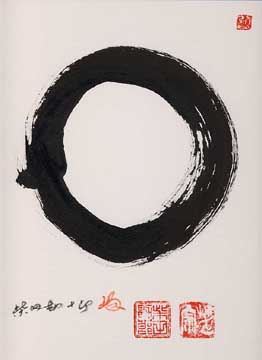
Enso circle.  CC-by-SA-3.0

Enso circle. CC-by-SA-3.0

I know from experience that letting go of purposeful action for any length of time is a very difficult practice.  Why would one even bother?  Tomas observes that an urge to be purposeful often “shows up in my mind, [as] an image or…a sense of how I want to feel or be. All of this necessarily involves a moving away from how and what I am just at this very moment.”  Sometimes busy-ness can be an addiction, he says.

I’ll leave you to read his reflections, which have nothing to do with quitting our jobs, living in caves, or any other oddball decisions his title might suggest if you take it literally.  My own thoughts veered in a different direction.  Thinking of “purposeful action,” reminded me of something I heard Zen teacher, Edward Espe Brown say at a day long retreat:

“No matter what you do, your inner authorities will not be pleased.”

I’ve written several posts about Edward Brown.  I enjoy his humor, the deceptively “simple” depth of his insights, as well as the wisdom he gained as a chef and the recipes he shares in his Tassajara Cookbook.  I’ve attended three retreats with him in as many years and jotted down some of his pithy statements.  In Zen, one carries such sayings in the mind, turning them over until fresh meaning emerges.  Here are four others I’ve found valuable.  I often remember them at interesting moments.

What is precious in us doesn’t come and it doesn’t go.  It is not dependent on performance.

Are you going to be a rule follower, or are you just going to be you?

No one else can give us permission to be who we are.

There is no by-the-book way for you to be you.

As you might guess, Edward Brown, who was trained in traditional Zen by Shunryu Suzuki Roshi, is charting his own course these days.  If you want to learn more about his style of cooking and Zen, you can visit his home page and and listen to some of his teachings at The Peaceful Sea Sangha website.

The Second Coming by W.B. Yeats

We have all heard and read more words this week than we want or need. The ones that keep coming back to me were written in 1919, in a poem called “The Second Coming,” a haunting vision written by William Butler Yeats in the wake of the first world war.

W.B. Yeats by John Singer Sargent. Public Domain W.B. Yeats by John Singer Sargent. Public Domain

The Second Coming

Turning and turning in the widening gyre
The falcon cannot hear the falconer;
Things fall apart; the centre cannot hold;
Mere anarchy is loosed upon the world,
The blood-dimmed tide is loosed, and everywhere
The ceremony of innocence is drowned;
The best lack all conviction, while the worst
Are full of passionate intensity.

Surely some revelation is at hand;
Surely the Second Coming is at hand.
The Second Coming! Hardly are those words out
When a vast image out of Spiritus Mundi
Troubles my sight: somewhere in sands of the desert
A shape with lion body and the head of a man,
A gaze blank and pitiless as the sun,
Is moving its slow thighs, while all about it
Reel shadows of the indignant desert birds.
The darkness drops again; but now I know
That twenty centuries of stony sleep
Were vexed to nightmare by a rocking cradle,
And what rough beast, its hour come round at last,
Slouches towards Bethlehem to be born?

***

Yeats was a member of The Golden Dawn, an early 20th century occult organization centered in Britain that sought to recover lost elements of the western mystery traditions.  Their once-secret teachings are now posted online, where we can see that the group practiced the kind of visualizations that could give rise to spontaneous “images out of Spiritus Mundi,” the World Spirit, one of the Golden Dawn’s concepts.

Elsewhere we can read that the poet worked out his own concept of world cycles or “gyres” as he put it here.  We find theories of world cycles from many cultures in many times.  The Greeks said there once was a Golden Age, but now it is Iron.  We’ve all heard of the Age of Aquarius, though unfortunately astrologers now tell us it won’t begin for a few hundred years.  Eastern cultures envision vast cycles that rise and fall and rise again eternally.

In all of these visions, this is the Iron Age, the Kali Yuga, a time of degeneration, where the ceremony of innocence is drowned.  Different traditions differ on where it goes from here.

In one account, offered by Paramahansa Yogananda, the crucifixion marked the nadir of this particular world age.  Things are getting better; right now we are experiencing inertia, a last gasp of the dark ages.  Even in this hopeful account, nothing is fixed or pre-determined.  It’s up to us.  How we live our lives, what we think, and what we do, matter more than we know.  More than we can imagine.

In truth, we already know this, just as we know that despair is not an option.  It seems to me the only choice we have is to live moment by moment as if we are the people we want to be, living in the world we want to live in.  There may not be anything more important.  Isn’t it true that the sum of our collective thoughts and actions is going to shape our world and the one future generations are going to inherit?