A Cautionary Tale

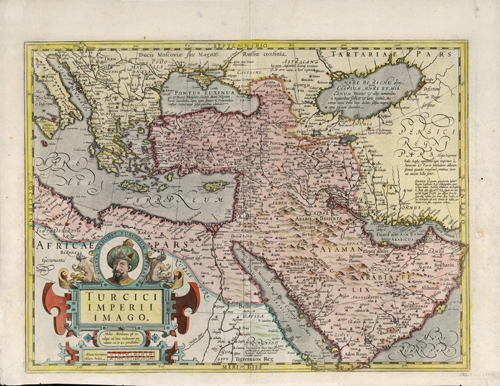
Ottoman Empire, early 17th century. Library of Congress

At its height, the Ottoman Empire (1299-1922), controlled North Africa, much of the Mediterranean, and portions of the Balkans, Italy, Austria, Hungary, and Russia. Innovations in medicine, mathematics, astronomy, architecture, philosophy, chemistry, physics, calligraphy, weaving, music, and literature are part of their cultural legacy. They gave us scalpels, alarm clocks, and coffee.

The following notes on the decline of the Empire come from A World Undone, 2007, by G.J. Meyer, an excellent history of World War I that I have quoted before.

The high point of the Empire occurred during the reign of Sultan Suleiman the Magnificent, from 1520-1566. The Sultans did not have wives, but large numbers of concubines, who gave them large numbers of sons. Suleiman had 300 women in his harem, but became enamored of a red-haired Russian woman, who later became known as “the witch,” She convinced Suleiman that his favorite son was plotting against him. Suleiman had this son killed and the witch’s son, Selim, installed as his heir. Meyer says:

“Selim the Sot was short and fat and a drunk. He never saw a battlefield and died after eight years on the throne by falling down and fracturing his skull in his marble bath.” Meyer describes the Sultans that followed him as “craven.” This started the Empire’s decline.

*****

Let me put this in bold type:

It only took eight years for a craven leader to begin the ruin of what, for 300 years, had been the most powerful and innovative Empire in the known western world.

Terminal Time

The phrase, “Terminal Time” has a dire sound, but as the photo below should make clear, this post is not about terminal illness. It’s about terminal, as in airports; not the end of life, but the end of patience.

Neon passageway, O'Hare Airport, 2013 by Nicola. CC By 2.0

Neon passageway, O’Hare Airport, 2013 by Nicola. CC By 2.0

The subject comes from the WordPress Daily Prompt for June 10, You’re at the airport, your flight is delayed for more than six hours, and none of your electronic devices are working. How do you pass the time?

Like millions of others, I’ve been there on several occasions. I think I was still in my teens the first time I got snowed in at O’Hare. Since Chicago’s airport has been the scene of my most dramatic delays, let’s imagine what we can do there to pass the time in an unwired kind of way.

1) Buy a paperback. This almost goes without saying, but since most airport bookstores don’t carry Moby Dick, here is a chance to indulge our guilty pleasures, whatever they may be. No one blames you for reading trash when you’re stuck at O’Hare.

2) Walk or ride the escalator through the neon passageways. If you’re with a companion, one of you can say, “Whoa, dude!” and the other can reply, “Psycedelic!”

3) Eat something. O’Hare has a huge variety, from cinnabuns, to Big Macs, to build-your-own-salads. Go to a bar if it suits you, but before you dip into the beer nuts, remember the opening scene of Contagion, with Gwenneth Paltrow doing just that.

4) Work a puzzle. Mary and I spent a happy hour doing that on the ground in Philadelphia last summer. She is crossword fan, with much experience and several dictionaries. I know lots of nerd expressions and assorted trivia, so we compliment each other.

5) People watch #1: Spot an interesting character and work out the plot of your next (or first) novel.

6) People watch #2: Figure which of your fellow travelers are aliens, as in Men In Black extra-terrestrials. Like the woman I saw with a dog in a pink tutu. This is true! She was talking to the dog, who looked absolutely miserable, while everyone tried to look away. I’m sure the dog came from a more intelligent planet than its owner.

7) Walk around. What a concept! You’ll feel better, and if you decide to be brisk, you can even get in some aerobics to work off those pizza slices.

8) Practice meditation. It’s a challenge to stay focused when you’re tired, annoyed and distracted, but that makes it interesting for brief periods of time.

9) Buy a notebook and write your next blog post longhand. Soon enough you’ll get your smartphone recharged.

10) If you’re gregarious, strike up a conversation. I’ve mentioned a few opening line suggestions like,  “Snow sucks, huh?”  Or, “Psychedelic!”  Or, “That poor dog. I hate tutus!”

You get the idea, and I’m sure you can add many more of your own. Maybe this post will help someone during the summer travel season. Now all I have to do is hope the lords of karma are kind, and I won’t have to eat my own cooking anytime soon!

A great story I neglected to post

I found this during a year-end cleaning of my “Drafts” folder – an unfinished post inspired by a newspaper article in July which details the life’s work of unsung folk artist, Arthur Harold Beal, garbage collector for the town of Cambria, CA.

Just down the road from the Hearst Castle, that world-famous monument to excess, lies Nitt Witt Ridge, the house on the hill that Beal lovingly crafted of driftwood, river stones, beer bottles, abalone shells, toilet seats, and other assorted junk.  Beal started work in the 30’s was still going in 1992, when he died at the age of 96.

Nitt Witt Ridge by megpi, CC BY-NC-SA-2.0

Nitt Witt Ridge by megpi, CC BY-NC-SA-2.0

Michael O’Malley, a plumber in town, bought the Ridge for $42,000 in 1999.  Unfortunately, the sale price did not include water rights, so he and his wife cannot live there, and because it is zoned residential, they can’t open the house for public tours.  Several times a week in the summer, O’Malley gives private tours, in return for donations, to people who contact him directly.  He is something of an expert on stories surrounding the Ridge’s creator.

Beal used to say he salvaged his wood from the ocean, but O’Malley points out the quality of the material, and suggests that Beal might have “salvaged” it from local construction sites late at night.  Beal seems to have been a curmudgeon.  Some people asked to visit the house while he was still living.  If he liked their looks, he’d let them in, if not, he would shake his fist and yell, “Move along, small change.”  O’Malley found a video of Beal on a 1981 TV episode of “Real People.”  At age 81, with a long beard and a walking staff, “he looked like a mix of John Muir and Dennis Hopper.”

Here’s a brief but informative clip of O’Malley giving a tour of the house:

Last summer, when I started this post, I added descriptions of other architectural oddities, like the Watt Towers and the Bottle House of Rhyolite, NV.  The story grew too long and languished until now.

The end of the year is a good time to contemplate things like Nitt Witt Ridge.  While others compile their lists of “The Best of 2013,” here is my contribution to a list of things wacky and weird.

Assurance: a poem by William Stafford and autumn photographs

Wawona, CA.  November 2013

Wawona, CA. November 2013

We were fortunate enough to be able to spend most of last week in Yosemite.  Though all seasons are wonderful there, late fall is my favorite in the Sierras.  It had recently snowed, and another storm was said to be moving in, but our days were mild, and the winter light was on fire.  Wherever I walked, a poem by William Stafford accompanied me.

Wawona, CA.  November, 2013

Wawona, CA. November, 2013

Assurance by William Stafford

You will never be alone, you hear so deep
a sound when autumn comes. Yellow
pulls across the hills and thrums,
or the silence after lightening before it says
its names- and then the clouds’ wide-mouthed
apologies. You were aimed from birth:
you will never be alone. Rain
will come, a gutter filled, an Amazon,
long aisles- you never heard so deep a sound,
moss on rock, and years. You turn your head-
that’s what the silence meant: you’re not alone.
The whole wide world pours down.

– from The Way It Is, Graywolf Press, 1999

Yosemite Valley, November 2013

Yosemite Valley, November 2013

You will never be alone, you hear so deep
a sound when autumn comes.

Yosemite Valley, November 2013

Yosemite Valley, November 2013

Yosemite Valley, November, 2013

Yosemite Valley, November, 2013

Yellow pulls across the hills and thrums

Yosemite Valley, November, 2013

Yosemite Valley, November, 2013

You were aimed from birth:
you will never be alone.

Yosemite Valley, November, 2013

Yosemite Valley, November, 2013

You turn your head-
that’s what the silence meant: you’re not alone.

Wawona, CA.  November, 2013

Wawona, CA. November, 2013

The whole wide world pours down.

Stranger in a strange (and beautiful) land

Retreat house dining room, Skalholt, Iceland

Retreat house dining room, Skalholt, Iceland

This post was sparked by todays WordPress Daily Prompt, “Blogger in a Strange Land,” which asked, “What is the strangest place from which you’ve posted to your blog?”  My answer was easy:  the dining room of the Skalholt Retreat House in Iceland, where Mary and I and a small group of storytellers spent an amazing week just over a year ago.

If you search here on “Iceland,” you’ll find an account of the trip, photos, and a detailed discussion of Njal’s Saga, which was central to our purpose in traveling.  This post concerns the dining room.

Those are real grapevines and bougainvilleas twining through the rafters under the skylight.  Through the windows you see the autumn colors of a hedge and beyond that, fog.  It was late morning when this picture was taken, probably 40 degrees Fahrenheit  outside.  Imagine how inviting it was to sit with a cup of coffee and write in this bright room where it was warm enough for grapes, and flower petals sometimes drifted onto the table.

Guesthouse, Skalholt

Guesthouse, Skalholt

“Strange” can happen anywhere, but it’s always by one’s side when traveling.  When we leave our familiar contexts behind, there’s a chance to peek around corners and see things that day-to-day vision too often misses.

“Fare forward, travelers!  not escaping from the past
Into different lives, or into any future;
You are not the same people who left that station
Or who will arrive at any terminus” – T.S. Eliot

Face Rock, Bandon, Oregon

face rock

From this perspective, it’s easy to see how Face Rock, got it’s name.  Legend says that long ago, Chief Siskiyou from the mountains came to the sea to trade with the four tribes that lived in this region.  Warriors stood on the bluffs above the ocean fearing that the evil sea-spirit, Seatka might cause trouble.

Siskiyou’s daugher, Princess Ewauna, was not afraid of the spirit, and one night, when the moon was full, she slipped away from camp with her faithful dog and a basket with her cat and kittens nestled inside.  She went swimming, farther and farther from shore, ignoring the warning barks of her dog.  Seatka captured the princess.

Carrying the basket of cats, the dog swam out to Ewauna and bit the evil Seatka.  Howling, he shook off the dog and threw the cats into the sea.  Seatka tried to make Ewauna look into his eyes, but she refused and kept her gaze on the moon.  The dog ran on the beach howling, but in time, he, the cats, and Ewauna, still gazing up at the moon, were frozen into stone where they remain to this very day.

I first passed through Bandon, Oregon back in college days, and it’s one of those places that has drawn me back ever since.  I took the current blog header photo two years ago at a spot about half a mile up the beach overlook trail.

With the wind off the sea and afternoon fog, it is downright chilly.  I had almost forgotten what chilly is like, but I remembered this afternoon, rolling into town in cutoffs and t-shirt.  It’s hard to pack for cold weather when it’s 100+ degrees outside, so tomorrow will likely involve shopping for a sweatshirt.

This will probably be a quiet week on thefirstgates, as we wander the shore, listen to the ocean, and eat cranberry oatmeal cookies.

Photo by Casey Fleser, CC-by-3.0

Photo by Casey Fleser, CC-by-3.0

See you then, with more stories and photographs.

Light and Shadow

Light and Shadow 6 blog

These photographs were taken in Wawona, just inside the south entrance to Yosemite National Park.

Light and Shadow 4 blog


Light and Shadow 5 blog

April is warm this year.  Mornings in the 30’s, daytime temperatures sometimes reaching the 70’s.  A few days ago it snowed, though all traces are gone.

Light and Shadow 8 blog


Light and shadow 1 blog

I think of the Summer King and the Winter King in Celtic folklore.  Their battle for ascendency never ends.  The King of Summer is winning now, but they’ll meet again in autumn.

Light and Shadow 2 blog


Light and shadow 3 blog

The sun is so bright and the shadows so deep they stop you.  Their interweaving patterns, stirring in the breeze, shift from moment to moment.

Light and Shadows 7 blog

The world changes before our eyes. Always the same and never the same.

Yosemite in autumn

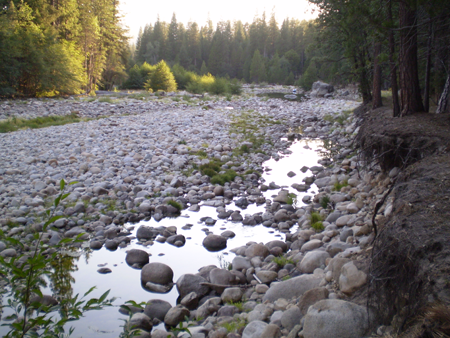
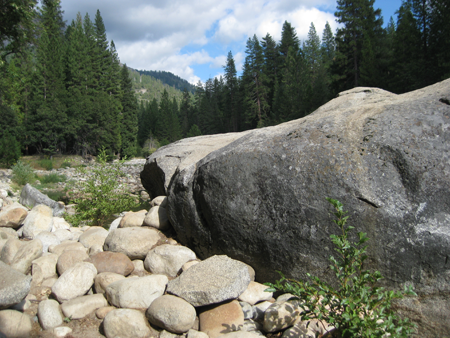
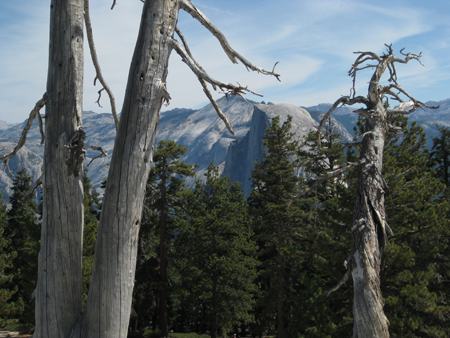
My family first came to Yosemite when I was a kid, and I’ve returned most years since then.  Mary and I started traveling to the park soon after we met and were able to get up here again this week.  Of all the seasons, late fall is my favorite.  Here are some photographs taken in Yosemite in autumn over the last half-dozen years.

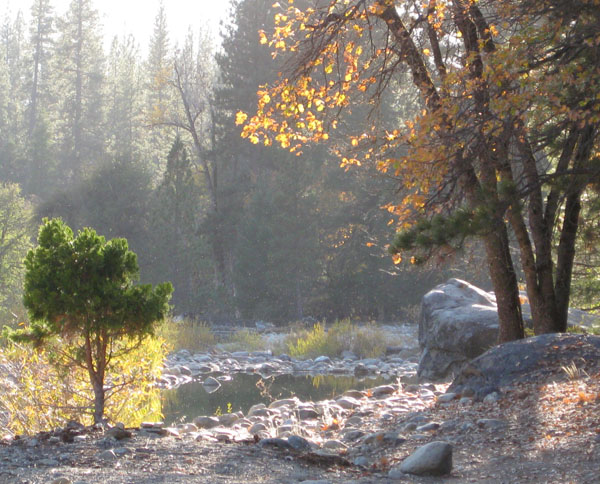
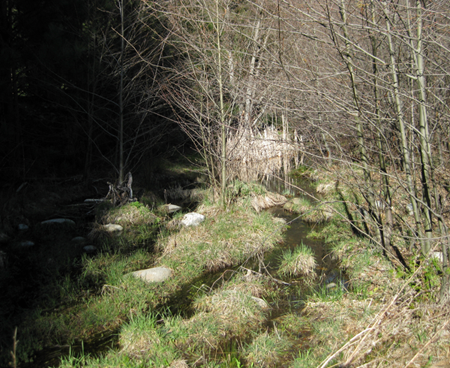
Merced River, south fork, Nov. 2009

Yosemite Valley, Nov. 2012. Photo by Mary.

Wawona. Nov, 2012.

Above Merced River, Nov, 2012.

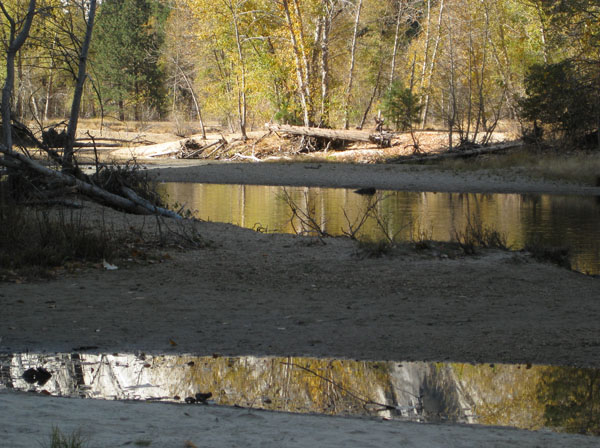
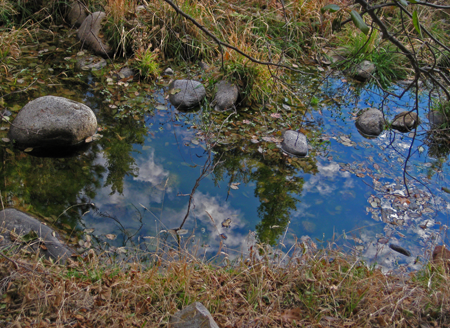
Pool by Merced River, Nov. 2012

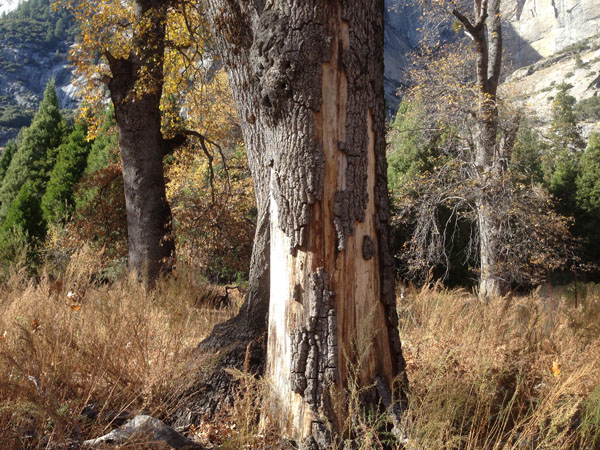
Yosemite is full of dramatic features and vistas, many made world famous by Ansel Adams, but often the feel of being in these mountains is best conveyed by what is right at hand or at one’s feet.

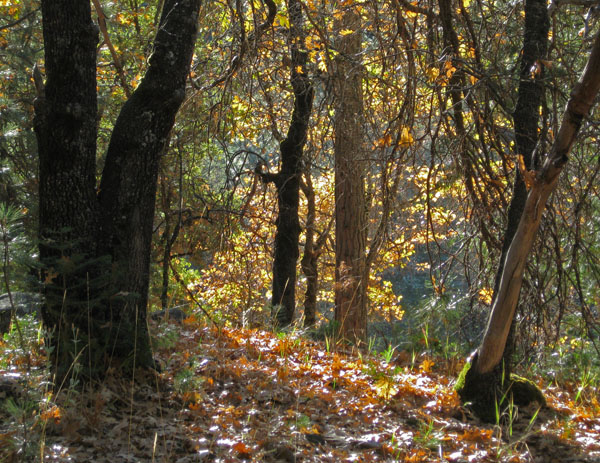
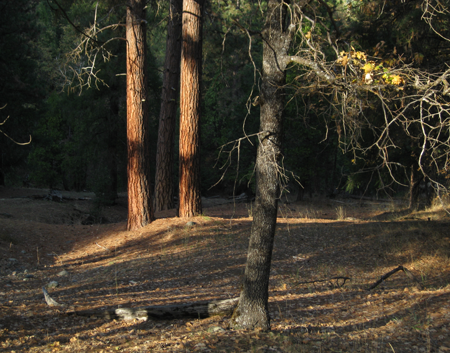
Wawona woods, Nov. 2012

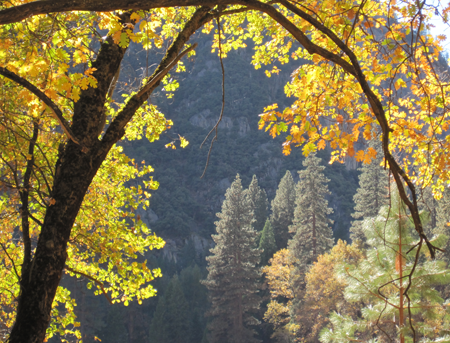
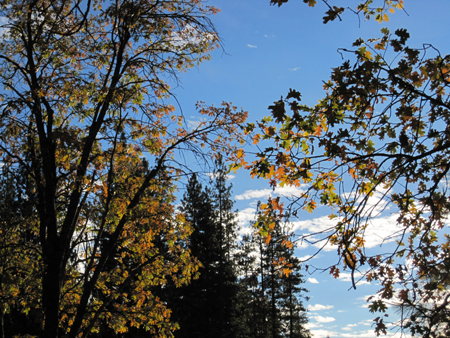
There aren’t enough different types of trees to rival New England fall colors, but I still never tire of those afternoons when the autumn light turns the oak leaves to gold.

Dry riverbed, Oct. 2010

Wawona woods, Nov. 2012

South Fork, Merced River, Oct. 2010

Half Dome from Sentinel Dome, Oct. 2010

Yosemite Valley, Nov, 2006

Afternoon sky, Wawona, Nov, 2012. Photo by Mary

Photographing, 2012. Photo by Mary

Wawona woods, 2012

Wawona, near the south entrance of the park, is one of the best kept Yosemite secrets. Hiking, swimming, camping, lodging, markets, a restaurant, and access to skiing in winter are all at hand, minus the crowds of the valley. Don’t tell anyone…

Wawona woods, Nov, 2012