A Family Ghost Story

I heard this from the time I was very little, a story told by my great-grandmother, Hannah Outwater, ne Shook. I was twelve when she died at the age of 88. Her gift of an animal hand puppet for my third Christmas was a huge catalyst in sparking my lifelong love of making and telling stories, but that is a tale for another time.

Hannah Outwater in her 20’s

When she was seven, Hannah, the seventh of eight children, rode with her family in a covered wagon from Ohio to Michigan. Her younger brother, Freddy, age two, didn’t survive the trip. They say he was flat on his back in the wagon with fever, but the evening he died, he sat up with a beatific smile and reached out his arm to angels no one else could see.  At least that’s the family legend, but it is a story for another time.

When they reached Kalamazoo, Hannah’s father, Isiah, rented a farm, and that is when the strange incidents began. Hannah’s older sister was of the age to go courting. The family would hear the wagon drive up bringing her home, open the door and find no one there. Sometimes during the night there was such a commotion in the barn it sounded like the horses were going to kick down their stalls, but when they went out to investigate, the family found the animals asleep.  And a reddish stain on a guest room floor could not be cleaned with any amount of elbow grease.

You have to imagine my great grandmother pausing to look around the room.  She knew how to build suspense.  It might be halloween – it was certainly winter, with the lights turned low.  Those were the days before the SciFi channel and Freddy Kreuger.  Before CSI and the horrendous headlines that have become all to common.

The old lady would lean forward and speak in a low voice so we would have to lean in too.  “Once we needed to move a big old chest in the cellar.  That’s when we found it.  Mind you, those were the days of dirt cellars, but in the far corner was a single patch of cement about six feet long.”

She would let that sink in, and then say, “We had been there about six months when my father heard the story.  The neighbors said a wealthy horse dealer came through town and spent the night with the people who lived there before you.  No one ever saw him again.  The couple who lived there said he left before dawn.  Funny that they moved away two months later.  We never understood where they got the money to up and go so suddenly.”

AFTERWARD

My sister and I and our friends grew up with that story, and after Hannah was gone, my mother told it.  Some ten years ago, however, while spending the night in a vacation cabin, I found a stack of American Heritage magazines, and one of them had an article on legends common in rural America a century ago – and there was the family ghost story!   Or so I think, because I didn’t have the sense to write down the magazine date, and later attempts to find it again in libraries or used bookstores never panned out.

Was it pure legend?  Was it born of a scandalous crime that was the talk of the midwest in the era before TV and tabloids?  Was it like certain crimes that became the stuff of ballads that are still sung hundreds of years later?

When I first found that copy of American Heritage, I thought it was very important to find out what kind of story it really was – exactly how true.  Now I don’t think it matters very much at all.  For me the story will always be true, whether it happened or not.
So Cold the River

Just arrived from Amazon and in my book queue (the short one): So Cold the River by Michael Koryta, which I learned about from an NPR interview/review during a recent homeward commute.

http://www.npr.org/templates/story/story.php?storyId=127561248

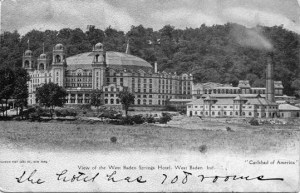
Koryta is a crime novelist whose father took him, at age eight, to see the ruins of the West Baden Springs Hotel in Indiana, once called the eighth wonder of the world.  He tried and failed to work the hotel into a crime novel, but it wasn’t until he decided on a venture into the supernatural that his story took off.

West Baden Springs Hotel, West Baden Indiana

The story involves a filmmaker hired to uncover and document the history of a dying man, and one of the clues is a bottle of “Pluto Water,” apparently from the lost river, “an evil force” that flows around and under the hotel.

It sounds like a tale to read around the fireplace on a dark and stormy night, but I’m not going to wait that long.

Our Heroes Have No Shame

For some time I’ve been mulling over the qualities that make fictional characters unforgettable.  Among other things, they seem to like themselves and champion themselves unconditionally.  They are comfortable in their own skins.   Even when they mess up badly, they are in their own corner.  We want to be like them, be our own best friends.

Something else came to mind recently in a writing critique group, when a member’s character felt “a sense of shame.”  The phrase did not ring true.  The characters we love  do not experience shame. That goes along with being their own best friends.

The most common definition of “guilt” I have heard is remorse for something I’ve done, while “shame” is remorse for what I am.  If I feel guilty about a particular act, I can make amends, vow to change, and eventually move on.  Not so when the voices of shame tell me that is how I am.  No one growing up in our shame based culture can escape it altogether (at least not without a lot of inner work), but our heroes do.

When Frodo Baggins says, “I will take the ring, but I do not know the way,” he does not then tell himself, “I should know the way.  Why don’t I know the way?  These people do.  What is the matter with me?”

Police detective, Alex Cross,  in James Patterson’s Along Came a Spider, is supposed to exchange a ten million dollar ransom for a kidnapped girl.  He’s been set up in a complex double-cross and loses both the money and the girl.  The national media trumpet his failure.  Reporters hound him.  His superiors pull him from the case, but he maintains his internal compass:

If I had screwed up the ransom exchange in anyay, I would have taken the criticism.  I can take heat okay.  But I hadn’t screwed up.  I’d put my life on the line in Florida.

Cross, whose character is so well portrayed by Morgan Freeman in the movie, battles politics, FBI secrecy, beaurocratic red tape, and betrayal by the woman he loves to stay on the case for two years to rescue the girl after everyone else has given up.  What keeps him going?  What allows him to believe in himself in the face of repeated missteps and the worst knd of notoriety?  Whatever it is we, the readers, want some!!

One thing our special characters all seem to have is someone who believes in them unconditionally. Frodo has Sam.  Alex has his partner, Sampson, and his grandmother, Nana Mama, who lets him know when she thinks he is wrong, but is always his supporter.

Kellen, the heroine of Sharon Shinn’s young adult masterpiece, The Dream-Maker’s Magic was raised by a mother who is convinced that she is truly a boy who was somehow bewitched into the shape of a girl:

…my mother watched me with a famished attention, greedy for clues.  I had changed once; might I change again?  Into what else might I transform, what other character might I assume…She never did learn to trust me…or accept me for who I was.  It was my first lesson in failure, and it stayed with me for the rest of my life.

Even through her painful fumbling for who and what she really is, Kellen somehow keeps her balance, learns to trust her own council, and on the way, finds her ally in Gryffin, a crippled boy:

…he always greeted me with a smile and my name.  I did not bewilder or surprise him.  He did not think I as trying to be something I was not, as my mother did; he did not think I was trying to break a chrysalis and become something I was meant to be, as Betsy and Sara surely believed.  He just thought I was Kellen.
I found this the most comforting thing that had ever happened to me. At times, when I lay awake at night, confused myself about what role I should take and what direction I should try to follow, all that kept me from slipping into tears was knowing that I was not completely lost if Gryffin knew how to find me.

Something in us longs to be brave, longs to be heroic.  We want to be true to ourselves, right wrongs, bring down the forces of evil, or simply learn how to live a happy life.

As the Buddha lay dying, his disciple, Ananda, asked who would be the teacher when he was gone.  Buddha replied:

be a lamp unto yourself, be a refuge to yourself.  Take yourself to no external refuge. Hold fast to the Truth as a lamp; hold fast to the Truth as a refuge.

Whatever our philosopy, this is the way I think we want to live.  The charaters in the stories we love give us hope that it is possible.

The Brave New World of ePublishing

Three years ago I spent a long weekend at one of the better known writer’s conferences, and one of the dominant themes was the impending revolution in publishing due to print-on-demand and eBooks.  One editor, discussing trends in the fantasy genre, explained that it just wasn’t cost effective for publishers to risk printing books by new or unknown authors, when their existing stable of stars brought in the bucks.  At the same time, other presenters painted a picture of a more egalitarian landscape where anyone could upload their gem to Kindle format, bypassing the kind of short-sighted  gatekeepers who rejected Harry Potter 23 times.

I once heard author, John Barth, describe a poetry reading given in the ’60’s by Allen Ginsberg.  Protesters disrupted the event, saying Ginsberg had no business sitting up on a stage, pretending to be special, because we are all poets.  Barth said, “Fine, we’re all poets, but given a limited amount of time, there are some poets I would rather listen to than others.”

Laura Miller, a literary critic, posted a recent blog article on the impending publishing revolution, saying, “be careful what you wish for.”  There will be gatekeepers.  It’s a dirty job, and if technology achieves an end-run around traditional sources of books, the gatekeeper function will fall to us – and we won’t even get paid!

http://www.salon.com/books/laura_miller/2010/06/22/slush/index.html

Richard Peck’s Characters: Blossom Culp

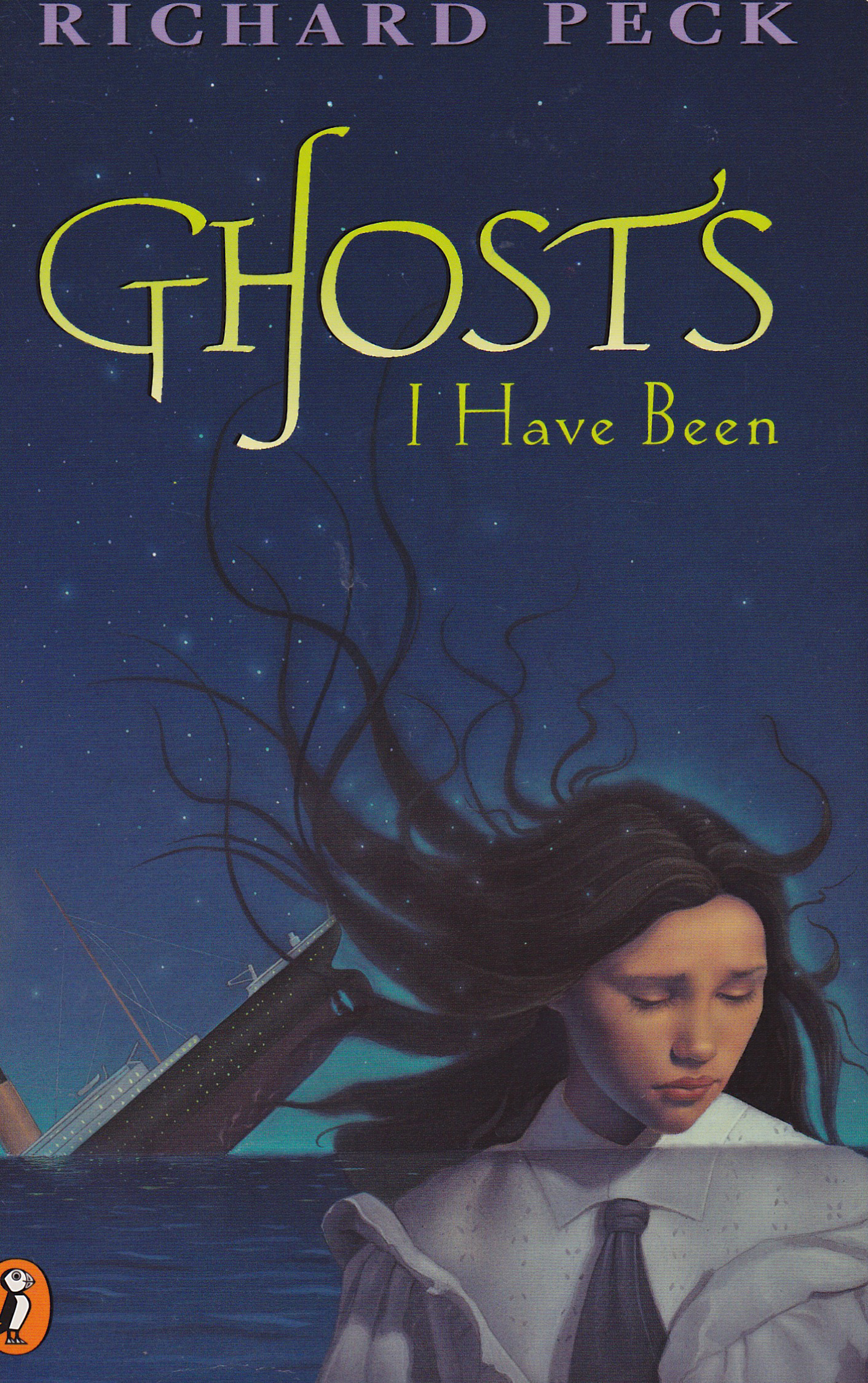
One of the most compelling story openings I know in young adult literature comes from Richard Peck’s, Ghosts I Have Been:

“I tell you the world is so full of ghosts, a person wonders if there’s a soul to be found on the Other Side.  Or anybody snug in a quiet grave.  I’ve seen several haunts, and been one myself.

When I heard Richard Peck speak of his work at a local Borders, someone asked how many times he rewrote his opening paragraphs.  “Probably seventy times, on average,” he said.  Such dedication to craft is one reason Peck’s career spans more than 39 years, includes 39 novels, a Newbery Medal, and the National Humanities Medal.

Of the many other reasons for Peck’s success, one of the most notable is his unforgettable characters.  Peck writes about outsiders, and the heroine of Ghosts, by circumstance and choice goes her own way:

There are girls in this town who pass their time up on their porches doing fancywork on embroidery hoops.  You can also see them going about in surreys or on the back seats of autos with their mothers, paying calls in white gloves.  They’re all as alike as gingerbread figures in skirts.  I was never one of them.  My name is Blossom Culp, and I’ve always lived by my wits.”

Peck, who believes that “a novel must entertain first before it can be anything else,” leads his heroine through episodes both side-splittingly funny and tragic.  Blossom’s friend Alexander Farnsworth (not that she’s sweet on him, she assures us) has fallen in with a rough crowd, who plan to go outhouse-tipping on Halloween night, 1913.  She teams up with Old Man Leverette so save his privy.  As the boys begin to push at the structure, Blossom, dressed as a ghost, jumps out:

“The candle flickered and guttered between my white veil and [Alexander’s] suddenly white face.  His arms fell from the door jamb, and he let out the high whinny of a fire-crazed horse…He keeled backwards and fell flat on the ground.  ‘A HAUNT!  I AM CURSED!’ he screamed and lay on his back like a turned turtle, with his fists jammed into his eyes.”

That’s only the start of the night’s trouble for the vandals, for Old Man Leverette is hiding nearby, his shotgun loaded with rocksalt.  Blossom has a talent for righting wrongs and what is imbalanced.  Declaring that there is more to be learned on the wrong side of the tracks than the right, she next takes on the “mean girls” of the town, members of the exclusive “Sunny Thoughts and Busy Fingers,” club.

CONTINUED

Story Water

Here is a take on the potential of stories from the 13th century poet and mystic, Rumi.

STORY WATER

A story is like water
that you heat for your bath.

It takes messages between the fire
and your skin. It lets them meet,
and it cleans you!

Very few can sit down
in the middle of the fire itself
like a salamander or Abraham.
We need intermediaries.

A feeling of fullness comes,
but usually it takes some bread
to bring it.

Beauty surrounds us,
but usually we need to be walking
in a garden to know it.

The body itself is a screen
to shield and partially reveal
the light that’s blazing
inside your presence.

Water, stories, the body,
all the things we do, are mediums
that hide and show what’s hidden.

Study them,
and enjoy this being washed
with a secret we sometimes know,

and then not.

Barks, Coleman (ed).  (1995).   The Essential Rumi. San Francisco:   HarperCollins.