Coexistence

cats and rooster

This is a scene I often pass during morning dog walks, behind a church that borders on a park. For at least a month, a lone rooster has joined a half-dozen feral cats who gather at this spot to enjoy the bounty of kibbles and bowls of milk that parishioners drop off. The rooster seems to fit in like one of the gang. Which makes you wonder…

Why can’t we all just get along?

Some blog reflections and an anniversary

830434-snoopy_large

I posted my first article here three years ago today – I thought it was the 30th until I looked it up a little while ago. There are more pressing dates to remember in June – our wedding anniversary for one, and the dog birthdays, but this occasion brings to mind some things I discovered that first summer of blogging.

A few days before my first post, I attended an all day blogging seminar hosted by the local branch of the California Writer’s Club. The teacher had an unusual qualification – he actually made a good living as a blogger.  He did this by running eight different blogs on eight different topics which gained him 50,000 – 80,000 hits a month.

Beyond passing along the mechanics of WordPress, the seminar was geared toward his approach, which aimed at drawing advertisers and eyeballs.  At first I tried to follow his rules, ones like “Posts should run between 150-250 words in length.”  I still mostly aim for the 150 minimum – I trust his research suggesting that Google’s search algorithms favor messages at least that long, but I’ve tossed almost all his other rules.  I did so because something unexpected began to happen  – blogging took on a life of its own.

I’d taken the seminar for the worst of reasons.  I had finished one novel and started another, and I fell prey to the notion, passed around in writing groups and magazines, that aspiring writers should migrate to social media “to build their platforms.”

From the start, this advice reminded me of something annoying that periodically happened in my technology day job.  During cyclical downturns, when vertical mobility dried up, upper management would dream up busy-work tasks, like “write a five year career plan.”  Given the dizzying pace of technological change, almost any kind of five year plan seemed like a joke.  Fortunately, my supervisor agreed, so I’d email him something like, “My plan is to still have a job in five years,” and he’d mark it “Done.”

Once the blogging door started to open, I did something similar with the concept of “platform:” borrowing the tech concept of “just-in-time inventory,” I decided to wait until I needed one!

That may be a long wait, as it turns out, because the “blogging door” was a new entryway into writing-as-a-way-to-discover-things.”  That was a door I’d let close on my fiction, because of inexperience more than anything else.

When I started my first novel, during a sabbatical from work, I would sometimes jump up at 5:30am, wide awake.  “I wonder what’s going to happen today?”  Later I realized the first novel was a mess, though I loved every minute of writing it.  I joined groups, attended seminars, and devoured how-to-articles.  Somewhere along the line, my stories stopped being mine.  Once I knew what was going to happen on any particular day, I was no longer interested.

The blogging door remains open.  Here I make new discoveries, surprising myself, and never know for sure where it’s going today.  I also get to share the amazing discoveries of others, like the post I re-blogged last week in which Kristen Lamb presents a simple but powerful way of keeping the doors of discovery open in fiction (Write FAST and Furious).

I enjoy many blogs that have a singular focus, and this week of milestones, I found myself recalling the words of that first blogging teacher, who advised that this is the only way to go.  I entertained the notion for maybe 60 seconds.  It simply wouldn’t work for me, a poster boy for the late James Hillman’s concept of “the polytheistic psyche.”

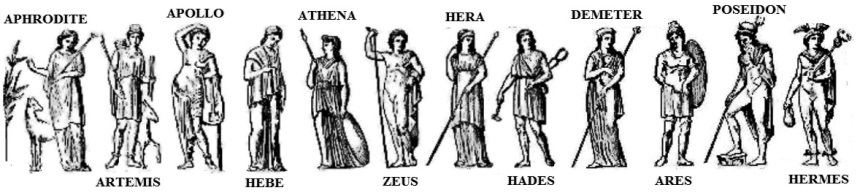
Hillman often used the Greek pantheon to illustrate his concept of the "polytheistic psyche"

Hillman often used the Greek pantheon to illustrate his concept of the “polytheistic psyche”

As Michael Ventura, a journalist and friend of Hillman’s put it:  “For too long Western thought has mistaken the impulse to unify for the entity itself (the psyche) that needs such an impulse because of it’s very multiplicity.”  

Ventura also said, “If you are the only one in the room, it is still a crowded room.”

***

In the beginning, I called this blog, “thefirstgate,” singular.  I discuss the source of the name, the opening of T.S. Eliot’s The Four Quartets, in my About page.  Then, as I discovered there are other interesting “first gates,” I made the name plural, and even registered the domain name, firstgates.com.

In the Spring of 2012, I received a notice that a similar domain name, thefirstgate.com (singular) had become available, and I could buy it.  I did so, and since then, I’ve played with the notion of changing the name to emphasize my original inspiration.

I began this post, intending to announce a change to the singular form.  Then I came upon this passage in Michael Ventura’s Shadow Dancing in the USA, 1985 (out of print).  Here he describes the theory of “the polytheistic psyche:”

“…the notion that we have not a single center, but several centers; that each of these centers may act independently of each other; and that each center has in turn various active aspects, or shadings; and that all these centers are unified more by an atmosphere, an overall mood and rhythm, than by anything as solid as…an ego.”

No way, after reading that, could I surrender an ounce of multiplicity!  So on the occasion of this anniversary, I will predict more of the same – not knowing quite what I’m going to say when I sit down to write.  False starts and dead ends on occasion, but hopefully, ongoing and interesting surprises for all of us.

Super 8: a movie review

Super 8 poster

Even if you didn’t know that Steven Spielberg was involved in the production of Super 8, 2011, you would think of him and the parallels to ET, 1982.  Both movies appeal to all ages, but center on the courage, creativity, and compassion of young people.  Best case, the adults need to be reminded of what really matters; worst case, these are the things they oppose.  Spielberg sat on the storytelling committee with director, J.J. Abams, and helped produce Super 8.  The film won numerous awards and nominations, for its special effects and the two young stars, Joel Courtney and Elle Fanning.

It is 1979 as the film opens.  Fourteen year old Joe Lamb (Courtney) mourns the death of his mother in a factory accident.  His father, Deputy Jack Lamb, blames the father of his son’s friend, Alice Dainard (Fanning), since his wife was working the shift of the elder Dainard, out with a hangover, when she died.

Meanwhile, Joe’s friend, Charles, is making a super 8 zombie movie for an international competition.  He enlists Alice as the love interest in the film, and she and Joe are soon smitten with each other.  One night they sneak out to film a scene at the station against the backdrop of a passing train.  As the camera rolls, a pickup drives onto the track and causes a major derailment.  The pickup’s driver, Dr. Woodward, their biology teacher, is badly injured, but pulls a gun and warns them to forget all they’ve seen or their parents will be killed.  As the kids drive away, an Air Force convoy arrives to secure the scene.  The convoy leader, Colonel Nelec, discovers a super 8 film cassette and sets out to find whoever made it.

Things in town start to get weird.  All the dogs run away to the next county.  Electronic devices begin to disappear.  All the engines in all the cars at a local dealership are stolen overnight.  Nelec’s forces surround the town and begin knocking at doors.  Joe and Charles sneak into Dr. Woodward’s house and discover why he was trying to derail the train.

There are plenty of nail-biting moments, and when things come out right in the end (you never really doubt it in this kind of movie), we get to see Charles’ zombie production, which is a charming ode to amateur movie making and the creativity of young people

Super 8 is well worth a viewing.

Celebrating 500 Posts with links to some of my favorites

Snoopy escritor

On such an occasion, I’d like to say something witty or wise, but wit and wisdom elude me, and in a way, the number speaks for itself.  Like one of those major birthdays – the big five-ohh for example – all I can manage is a stammered, “Wow…that’s a lot.  How did this happen?”

I more or less know how it happened, but that’s a story for another time.  For now I’m posting some of my favorites, gleaned from a quick review of all the posts.  I was aiming to cut the list down to ten, but it got a bit out of hand.

Enjoy!  I’ll have a few reflections on this blog later on, but for now I will just affirm that if you keep coming back, I will too.

Lighter than air, posted October 21, 2010
In the fall of 2010, we couldn’t figure out where to go on vacation, so we wound up visiting nearby Santa Rosa.  The posts that came out of this trip marked the point at which this blog, which I started the previous June, began to take off.  Because the pictures remind me of this marvelous event, this remains a feel-good post to me.

True Grit, pothos, and westerns that stick with you, posted January 22, 1011
I loved the 2010 remake of True Grit, and it inspired trio of posts on westerns that truly moved me.  I find the best western movies stir something like the vast western vistas do, which I called Pothos, a Greek word that means an insatiable longing for what lies beyone the horizon and is forever out of reach.

The world as shapeshifter:  a Hindu parable, posted February 13, 2011
I’ve had a lifelong interest in Eastern thought.  This is a great story and a good illustration of the Eastern view of the nature of creation.

A year of blogging, posted June 27, 2011.
I was just beginning to figure out what I was doing when this post was Freshly Pressed, which was wonderfully encouraging.

Shangra-La in Books, Movies and Legends, posted Oct. 31, 2o11
Something in us longs for an earthly paradise, and Shangra-La has been one of its names since David Hilton wrote Lost Horizon in 1933 and Frank Capra made the movie in 1937. As I said in this review, both seem dated now, but I still enjoy the portrayal of the legend.

The Empire Mine, posted November 28, 2011
With a visiting friend, we drove up to Grass Valley the Saturday after Thanksgiving to visit the Empire Mine State Park.  It was a perfect fall day and we lucked out because the Historical Society people were decked out for the Cornish Christmas celebration, so named because numerous miners were enticed to the area from Cornwall because of their expertise in hard rock mining. A fascinating glimpse, narrated by experts, who explained everything from the mine blacksmith shop to the owner’s mansion. The mine owners had a wonderful rose garden, and if you visit at the right time, you can get cuttings of roses that date back to the 18th century.

The Open Culture website, posted February 9, 2012
This is a site with wonderful free resources that you are going to want to check out and bookmark.

Life, the Movie: How entertainment conquered reality by Neal Gabler, posted March 1, 2012
This the single most important book I’ve reviewed on this blog. It goes a long way toward illuminating our modern world, which Gabler calls, “not just a post-modern culture but a post-reality culture.”

The Limits of Power:  The End of American Exceptionalism by Andrew Bacevich, posted August 21, 2012
This is the other essential book I’ve reviewed here.

The Icelandic posts, September 25 – October 18, 2012
I’ve been fascinated with Iceland since I did a report on the country in grade school.  Last fall we had the chance to travel there with a small group of storytellers to discuss Njal’s Saga and visit some of the places where the thousand year old events took place.  I was gratified to see how many people read and commented on my accounts of the sagas.  That gave me confidence to increase my work folklore since then.

Photographs from Iceland, first of two posts, October 3, 2012
Njal’s Saga: an introduction, first of four posts, October 10, 2012

The Princess Mary box, posted December 24, 2012
The Christmas Truce, which broke out on the Western Front almost a 100 years ago, has always seemed one of the most poignant moments in modern history. This past Christmas, I discovered its connection to a small brass box I bought as teenager in a flea market outside Paris.

Tales of the Dummling, posted January 8, 2013
This was a difficult post to write. It was long, it took three days, and I doubted that many people would read it. I was all the more delighted when WordPress Freshly Pressed it.  This was the third time I’ve had the honor, and this was the most meaningful because I was following one of my keenest interests, one that comments confirmed is shared by many others.

Remembering Ritchie Havens, posted April 22, 2013
Here is another chance to remember an extraordinary man and musician who left us in April.

The Worlds Revolve, posted May 13, 2013.
Now and then while writing, something both mysterious and familiar takes over the keyboard. This is the most recent time it happened here, and a post largely wrote itself.

Write FAST and Furious! Learning to Outrun “The Spock Brain”

Many writers will already know Kristen Lamb’s blog, but this article is worth rereading and rereading. She uses the metaphor of Kirk and Spock to discuss a classic method of bypassing the inhibiting part of our conscious mind. Such strategies are relevant to other arts as well: actors who practice improv, or visual artists who draw with the non-dominant hand to see what emerges. Enjoy this most encouraging post!

Author Kristen Lamb's avatarKristen Lamb's Blog

Many new authors slog out that first book, editing every word to perfection, revising, reworking, redoing. When I used to be a part of critique groups, it was not at all uncommon to find writers who’d been working on the same book two, five, eight and even ten years. Still see them at conferences, shopping the same book, getting rejected, then rewriting, rewriting…..

Sigh.

Great, maybe Kathryn Stockett, the author of The Help took five years and 62 revisions to get her story published. Awesome for her. And yes, her book was a runaway success, but this isn’t the norm. It’s playing Literary Lottery with our careers.

For most writers, it will be hard to have a long-term successful career if our pace is a book or two a decade.

Most authors who’ve made legend status were all talented, yes. But many were (are) also prolific. 

Does Writing Quickly Produce…

View original post 1,078 more words

The North Wind’s Gift: a trickster tale from Italy

If you haven’t already done so, I suggest you read the preceding post, Notes on Trickster stories, which provides a background and context for this article.  Both posts were inspired by “The North Wind’s Gift,” a tale from Italo Calvino’s Italian Folktales, 1956.  The story came to my attention in Allan Chinen’s discussion of tricksters and appealed because of its relative simplicity and relevance to our own times.
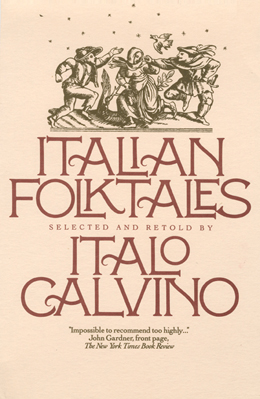
Italian Folktales

Here’s a synopsis of the story:

Once there was a farmer named Geppone who toiled in his fields every day of the year but could barely feed his wife and three children.  The North Wind blew at harvest time and ruined his crops.  Finally Geppone had enough and set out to find the North Wind and demand justice.  He reached the North Wind’s castle.  “Every year you ruin my crops,” he said.  “Because of you, my family is starving to death.”

“What can I do?” the North Wind asked.

“I leave that up to you,” Geppone replied.

The North Wind’s heart went out to the little farmer.  He brought out a box.  “This is a magical box which will give you food when you open it, but tell no one else about the magic or you’ll lose it.”

Geppone thanked the Wind and set out for home.  On the way, he opened the box.  Instantly a table appeared, piled with food.  When he got home, Geppone opened the box again and treated his family to a feast.  He told his wife not to tell anyone, and especially to say nothing to the priest, who was their landlord and a greedy man.

The next day, the priest spoke to Geppone’s wife and wrung the story out of her.  He summoned Geppone and  demanded the box on pain of eviction, offering seeds in return, which proved to be worthless.  As bad off as he was before, the farmer returned to the North Wind’s castle to ask for another boon.

At first, the North Wind refused, saying, “You ignored my warning.  Why should I help you again?”  Geppone pleaded, and reminded the Wind that he was still the cause of the family’s ruin.

“Very well,” said the North Wind at last.  He gave Geppone a magnificent gold box, but said, “Open this only when you are starving.”

On his way home, Geppone stopped and opened the new box.  This time a ruffian with a club jumped out and began to beat the farmer, who struggled to close the lid.  When he did, the ruffian vanished.  Geppone limped home, sore and bruised.  When his wife and children clamored to try the golden box, Geppone left the room.  This time two ruffians jumped out and began to beat the family.  Geppone slipped back into the room, closed the box, and the assailants vanished.

“This is what you must do,” he said to his wife.  “Tell the priest I brought home an even finer box, but say nothing else.”

Geppone’s wife understood and did as her husband instructed.  When the priest called the farmer and demanded the golden box, Geppone feigned reluctance, but at last agreed to trade it for the original box.  The priest rubbed his hands.  The bishop was due to join him for Mass the next day; a feast would be just the thing to win the approval of his superior.

The next day, after Mass, the priest, the bishop, and their retinue gathered for supper.  When the priest opened the box, six ruffians jumped out and beat the clerics.  Geppone, who was waiting at the window, took his time in closing the box to save them.

No one objected when he carried this second box home.  The priest never bothered Geppone again.  The farmer was careful to guard the North Wind’s gifts, and his family lived in ease and comfort for the rest of their days.

You can read the story as it appears in Italian Folktales here:  The North Wind’s Gift

***

It’s clear at the start of the story that we’re in a post-heroic fairytale world.  Geppone is not out to slay a dragon, rescue a princess, or win a kingdom – he just wants to survive.

Allan Chinen speaks of the different life stages that different fairytales address.  While the majority center on young people venturing into the world,  “middle-tales” like this have older protagonists with different kinds of problems.  From a Jungian perspective, Chinen notes that tricksters usually don’t show up in our dreams when we’re 18 and planning to take the world by storm – they visit us when we’re 40, with a mortgage, a couple of kids, and a car that needs an engine overhaul.

Geppone works from dawn until dark but can barely make ends meet.  His wife doesn’t listen to him, and the landlord threatens eviction.  This setup makes his story seem contemporary – if we’re not in this situation ourselves, one of our neighbors probably is.

We get the feeling Geppone has been down on his luck and taking it on the chin for a while.  Something finally awakens within him and spurs him to action.  As a result, he meets the North Wind, a wild spirit who will become his guardian and mentor and teach him the wiles of the trickster.

The North Wind is invoked in the Song of Solomon, in Aesop, and in Greek and Norwegian folklore.  He shows up in George McDonald’s novel, On the Back of the North Wind, in the stories of Hans Christian Anderson, and in Pokemon.  The North Wind is also associated with thunder gods like Zeus and Odin.  It’s not surprising that he is a shadowy trickster in Italy, where invaders and winter both arrive from the north.

Almost every successful fairytale character wins the help of a guiding spirit, and the North Wind’s help is just what Geppone needs.  It prompts him first to stand up for himself and ask for what he needs and then to learn enough strategy to overcome his oppressive priest and landlord.  To Jungians, fairytale allies like helpful animals, fairy godmothers, and nature spirits represent parts of the unconscious mind that are older and wiser than ego, which gets us into trouble in the first place.

What this means in practical terms is a vast subject, beyond the scope of a few blog posts.  Jung would suggest to patients who were comfortable in a religious tradition to return to it for guidance.  Much of Jung’s work aimed at helping people estranged from existing traditions who still needed to tap inner sources of wisdom.

In the “Power of Myth,” Bill Moyers asked Joseph Campbell where ordinary (i.e., busy) people might look to experience the wisdom of myth.  Campbell suggested we take 30 minutes or an hour a day in a quiet place where we can read what inspires us and perhaps keep a journal.

Just like this story, the psyche is home to ruffians and riches, and the old stories are not to be taken literally.  James Hillman, a prominent Jungian thinker, always insisted that literalism is the greatest enemy of inner wisdom.  So how does trickster wisdom manifest  in our world right now?  I don’t think we have to look very far.

A world that’s increasingly dysfunctional serves as a magnet for trickster energy, for good as well as for ill.  A Facebook friend mentioned that he once loaned out a book on trickster mythology and never got it back.  That fits the myths of trickster gods like Hermes who are also patrons of thieves.  Hermes may be the supreme image of the trickster.  As fluid as the metal which bears his Roman name, Mercury, he was the messenger between gods and humans who also conducted souls to the afterlife.  Patron of travelers, herdsmen, poets, orators, athletes, and inventors, his herald’s staff, the caduceus, is the symbol of healing to this day.

I find myself watching for positive manifestations of trickster energy, which usually turn up under the radar of corporate and government organizations which carry a vested interest in the status quo.  When you look, quite a few individuals and groups are trying out new solutions.  I’ll post at least one example in the near future.

In the meantime I would love to hear where you find trickster energy in yourself and in those around you.
Notes on Trickster stories

Many of you will have heard the old Chinese curse, “May you live in interesting times.”  We do, beyond any question.  With a longstanding interest in folklore, I often find myself wondering which, if any, of the old tales can speak to us now and illumine our situation?  I always come back to the trickster stories.

Br’er Rabbit, an Americanized African trickster, from an 1881 book cover by Frederick S. Church. Public domain

Trickster tales are told around the world and may be among our earliest stories; in some traditions, tricksters create the world and bring fire to humans.  Sometimes benefactors and sometimes criminals, tricksters are contrarians, rule breakers, restless beings who disrupt and disturb, who keep creation moving, dealing out life and death in turn.

Groucho Marx, Loki, all of Shakespeare’s fools, and many animals, from Coyote, to Spider, to Br’er Rabbit are tricksters.  We named our first rescue dog Kit, short for Kitsune, which is Japanese for “Fox,” another famous trickster.  The reason should be obvious in this picture:

Kit

Kit

We have to lock the windows when driving with Kit because she knows how to hit the window button with her paw to roll it down so she can hang her head out, bark at other dogs, and catch the breeze. If Kit had thumbs, we’d be in serious trouble!

Establishments have little use for tricksters, and it’s easy to see why.  We may like them in the movies, but no one wants the Three Stooges to work on their plumbing. Schools are ruthless in their suppression of tricksters.  And yet, in times when the norms break down and the culture looses its rudder, trickster energy may be what we need.  Free of cultural norms and concern for what is polite or even legal, tricksters focus on what will work in the here and now.

After interviews with twin tower survivors, researchers discovered that people waited an average of ten minutes before deciding to exit the buildings.  “Do you think we should leave?”  “Will we have to use vacation time if we go?”  “What about the report I have to finish?”  Once they decided to exit, survivors spent several more precious minutes logging out of their systems and locking their desks and file cabinets.

Researchers concluded from this and other studies, that the human brain is often dangerously slow in reacting to radically different events or disasters.  These are the times when we need trickster energy.  Unbound by convention, the trickster jumps on a desk and yells, “The sky is falling – get the f**k out!”

Allan Chinen, M.D., a psychiatrist and professor of psychiatry, wrote about tricksters from the Jungian perspective.  In 2012, I discussed his Once Upon a Midlife, an analysis of folklore aimed at that stage of life.  In 1993, Chinen published Beyond the Hero:  Classic Stories of Men in Search of Soul.

beyond the hero

Chinen argues that despite popular concepts and movies like Man of Steel, The Hero is not the core masculine archetype – the Shaman/Trickster is an older, wiser, and more primal energy.

Like most Jungian’s I have read, Chinen regards tricksters as primarily masculine archetypes.  I’m not sure how opinion stands in currently folklore studies; much work has been done with women’s tales in the last 20 years.  It is Gretel, after all, who uses trickery to kill the witch and save her brother.  Only by wiles can Bluebeard be defeated or brothers saved from various enchantments.

I suspect the difference is that full-time tricksters like Coyote are usually male.  You see it in children at play too, and sadly, it is overwhelmingly boys who get dosed with ritalin when they’re not docile enough for the modern classroom.  As Jung and Hillman both observed, what a culture defines as pathology may say more about the culture than the people it labels as defective.

Guardians of the status quo are wary of tricksters and with good reason.  They are almost always subversive – the Stooges only throw pies in the homes of the 1%, and Charlie Chaplin was no friend of the captains of industry.

Charlie Chaplin in "Modern Times."  CC-by-SA-2.0

Charlie Chaplin in “Modern Times.” CC-by-SA-2.0

To personify self-preservation; to point out the shadow of a dominant culture; to keep the flame of hope and spirit alive; to demonstrate the power to wit to those who are disenfranchised.  Scholars now believe the Br’er Rabbit tales performed such functions for slaves as the Coyote stories did for Native Americans on the reservations.  In all likelihood, these are the gifts tricksters have given for untold millennia.

Next time I’ll look at a classic trickster story that Allan Chinen told, with an eye to it’s relevance for the 21st century.

Sleepless in Hollywood by Lynda Obst

Have you been to the movies lately?  Like what you see?  Wonder if it’s a trend?

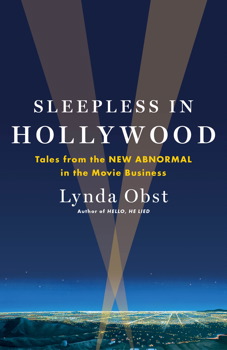
Today’s edition of Marketplace clued me in on the answer to question three via an interview with Hollywood insider Lynda Obst, producer of The Fisher King and Sleepless in Seattle.  Obst realized something had changed when her son said, “Mom, trying to get movies made because they’re good is so 2003.”  The interview concerned her new book, Sleepless in Hollywood:  Tales from the New Abnormal in the Movie Business.  

sleepless in hollywood

Obst says the “old abnormal” was when she could get movies made because they were good.  DVD sales financed half of studio profits and allowed production of the “smaller” movies she loves, like romantic comedies.  Then domestic DVD sales tanked at the same time as foreign viewership rose, particularly in China and Russia, where there’s an endless demand for our blockbusters and special effects.  You can make “small movies” anywhere in the world, she says, but so far, you can only make blockbusters here.

Which may explain why I’ve been to so few movies this year – when the trailers assault my senses with digitized special effects, I tend to give them a miss, with the exception of movies like Star Trek, because…well, it’s Star Trek.

Sleepless in Hollywood is now in my book queue, in part because Obst’s final chapter is called, “Does the future have a future?” and I want to know her answer to the question.

And a final note on 2013 movies to date – they’ve finally pushed us into the 21st century, with a subscription to Netflix, so there is at least one happy outcome.