The 21st Century May Be Bad For Your Mental Health

To appreciate this post, you need to know a little of how it came about.  Yesterday morning, in my dentist’s waiting room, I started reading an article in  the Nov. 14 Newsweek by Dr. Andrew Weil.  He and others have noted that modern affluence breeds depression.  They have also observed that the Amish, with a 19th century lifestyle centered on simplicity, have only 1/10 the amount of depression of other Americans.  Just as I hit this tantalizing statement, the dentist, who was running ahead of schedule, called me in.  After my appointment, I finished the article.  “Our brains aren’t equipped for the 21st century,” says Weil.

One of the things we are not equipped for is our 24/7, hi-tech, multi-tasking world, a point that made me chuckle as I pulled out my smart phone, photographed the pages, and emailed them to myself.  Just call me a poster boy for the legions of technically savvy neurotics.  It turns out I didn’t need to send the page to myself.  Weil’s article is available online, and I highly recommend it:  http://www.thedailybeast.com/newsweek/2011/10/30/andrew-weil-s-spontaneous-happiness-our-nature-deficit-disorder.html.

The article is taken from his latest book, Spontaneous Happiness, just released this month, where Weil says it’s not just technology that’s the cupric in our epidemic of depression.  Increasing numbers of psychologists and therapists identify one of our key problems as Nature Deficit Disorder.  Weil says:  

“Behaviors strongly associated with depression—reduced physical activity and human contact, overconsumption of processed food, seeking endless distraction—are the very behaviors that more and more people now can do, are even forced to do by the nature of their sedentary, indoor jobs.
………………………………………………
“Human beings evolved to thrive in natural environments and in bonded social groups. Few of us today can enjoy such a life and the emotional equilibrium it engenders, but our genetic predisposition for it has not changed.”

Weil discusses the bad news in detail, but doesn’t end there.  He is firmly in the camp of “positive psychology,” the discipline that concentrates on human wellbeing rather than pathology.  He summarizes positive measures we can take, things he discusses in greater detail in the book.

  • Find a mindfulness practice.  (I was impressed that Weil listed this as suggestion #1.  I’ll follow this up by posting some resources soon).
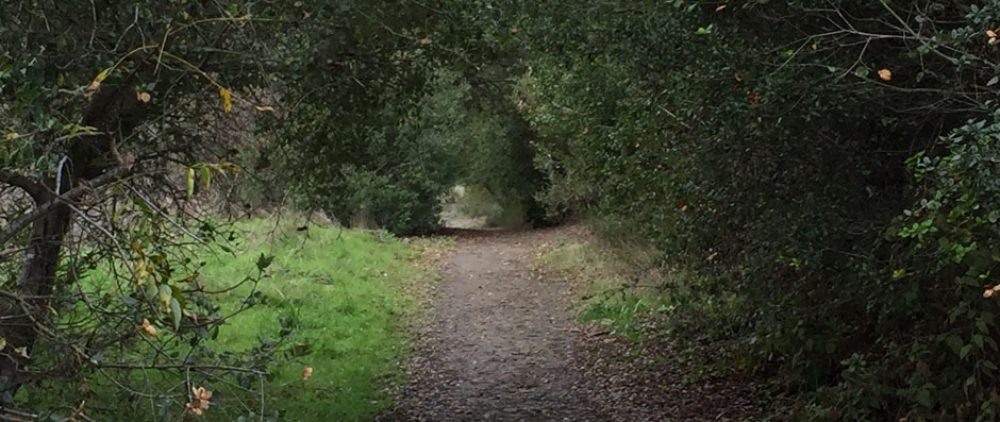
  • Spend as much time as possible outdoors.
  • Find some form of aerobic exercise.
  • Sleep in total darkness, if possible, and avoid very bothersome noise, even if it means wearing earphones.  Weil discusses why uninterrupted sleep, and freedom from noise pollution are important.
  • Attend to diet – he has written of this in detail in previous books.
  • Cultivate social relationships.
  • Spend some time each day unplugged from all forms of gadgetry.

Finally, Weil, like almost everyone else who writes on wellbeing, cites gratitude as a critical factor.  This morning I ran into an acquaintance who has had a number of physical problems.  He has paid a price, but also found something diamond-solid that is now at the core of his life:  three times he has been clinically dead, and he’s seen and experienced “the light,” that people in that extremity sometimes encounter.  He knows it is waiting for him, and meanwhile, shares his experience with others he thinks will benefit.  He says he intends to do so, “as long as God decides to keep me around.”

Simply encountering him put me in tune with the theme of the season, and reminded me of all I have to be thankful for.  That is my hope for everyone reading this – may you find unshakeable joy in your life just as it is, and may you be able to share it with others.

Handmade books

Recently, I came across an estimate of the number of ebooks that will be published next year. I think it was 3 million, but I don’t really remember, and I cannot recall if that was in the US or worldwide. Funny that such a huge number of books was such a non-event for my brain – or maybe it isn’t funny.  Maybe it’s very natural.  Add to that, say, 780,000, the number I remember for traditionally published books last year, and you get, 3,780,000 / 365 = 10,356.16 books per day in 2012.  Even if I am high by an order of magnitude, that’s still more books  being published in one day than I will read in ten years.

Of that total number, I’m guessing a dozen or so will matter to me.  The others will be non-events.  These reflections led me to recall when I was in art school, and there was a large revival of handmade paper as art and craft.  One thing people did with handmade paper was make books by hand.

Books!  Do you remember the sense of wonder books can evoke?  Remember how mysterious they were as when you were just learning to read?  The books you carried everywhere, as a kid and as an adult?  The books that opened new worlds to you or opened new ways of looking at this one?  Have you ever prowled used bookstores, remember stories of people just like you who discover hidden books on magic or other forgotten lore?

It must be this kind of love and fasciation that inspires the artists I picked at random while searching for “handmade books.”  There is nothing comprehensive about these choices .  There are far too many wonderful people making books these days for that.  Hopefully these few pictures will give an idea of what’s possible.  Check the links for further information.

Wooden Book by Barbara Yates

Barbara Yates is an environmental artist who recycles dead trees into art for parks and retreat centers

History of Western Europe by Brian Dettmer

Brian Dettmer’s work reminds me of a dream I’ve had on several occasions, where I am reading a book but cannot decipher the key passages.  Here is the link for his work and Barbara Yates’s:  http://mywiki.ws/The_Most_Unusual_Books_of_the_World

***

Handmade book by Geraldine Newfry

Check out the section on handmade books on Geraldine Newfry’s blog, The Creative Life Unfolds: http://newfry.typepad.com/newfry/handmade_books/

***

Handmade book by Lauren Evatt Finley

There are a number of step-by-step photos of the binding process in the handmade book archive section of Ms Finley’s blog, The Disarranged Studio:   http://laurenfinley.wordpress.com/category/handmade-books/

***

A tintype journal

Website for this tintype journal: http://www.thisnext.com/tag/handmade-books/

***

Handmade book by Carol Roemer

Carol Roemer is an artist whose primary medium for the last ten years has been handmade books. This is her website:  http://www.carolroemer.com/handmadebooks.html

***

This is the cover of a scrapbook “Garbonzobeenz1” made for Christmas photos of her first Christmas in a new house, with her first grandchild.

The website where I found this illustration, twopeasinabucket.com, is an extensive site devoted to scrapbooking, using traditional and digital tools. It should be of interest to anyone who won wants to explore this craft. http://www.twopeasinabucket.com/gallery/member/18824-garbonzobeenz1/1253837-christmas-magic-handmade-book/

***

And finally, here is an electronic pop-up book made by Jie Qi, a grad student in the MIT lab’s Hi-Low Tech group:

***

It’s interesting that many people who recognize the magical and iconic nature of books are visual artists and craftspeople.  It wouldn’t be the first time “outsiders” bring a fresh perspective to a discipline.  I’m not suggesting a fuzzy nostalgia for the old days:  I no more want to trade WordPress for a Gutenberg press than I want to exchange my mac air for an eniac.

What I am suggesting is that the work of these artists leads me to a deeper appreciation of the wonder of what we book creators are doing.

A Popular Writer Opens a Bookstore

“I have no interest in retail; I have no interest in opening a bookstore,” said Ann Patchett, whose Parnassus bookstore opened Wednesday in Nashville.  “I also have no interest in living in a city without a bookstore,” she continued.

Author Ann Patchett welcomes customers to Parnassus Books

Nashville, once called “the Athens of the South,” lost it’s last independent bookstore and its Borders, in what one local writer called, “a civic tragedy.”  Cultural leaders held meetings in the public library, and hatched such ideas as a co-op bookstore, with individual investments of $1000 to startup.  Nothing came of those suggestions.  Then Patchett, the best selling author of Bel Canto and Truth and Beauty, began to think of opening a store.

In April, she met with Karen Hayes, who had worked with a large book wholesaler and as a sales rep for Random House.  The two  became partners and co-owners.  Patchett, whose most recent book, State of Wonder, reached number 3 on the New York Times bestseller list, put up an initial investment of $300,00.  When she went on a 15 city book tour last summer, she was bursting with questions for the owners of all the stores she visited:  How many square feet?  How many employees?  What makes this store work?

“Put the children’s section in the back of the store,” (so if they bolt, they can be stopped before they hit the street).  “If you hang signs from the ceiling, people will buy what’s advertised on them.”  “Make your store comforting and inclusive, smart but not snobby.”  These were bits of advice she gained from others in the trenches.  Like other independent bookstores, Parnassus will use Google to offer ebooks to customers.  (“Novelist Fights the Tide by Opening a Bookstore,” by Julie Bosman, The New York Times, Nov. 16, 2011, p. A1).

Stocking the children's section

In an NPR interview, Ann Patchett said she felt nervous, “like the first day of school,” but added, “I actually think this is going to go really, really well.”  http://www.npr.org/2011/11/16/142413792/ann-patchett-opens-parnassus-books-in-nashville

Patchett says Parnassus is her “gift to the city.”  Compared to the bookstores Nashville lost, Ms Patchett’s store, at 2500′, is tiny, but she says, “This is the way bookstores used to be. This is the bookstore of my childhood, and I feel fantastic being back here.”

I think maybe all of us can remember the magic of childhood bookstores and wish Ann Patchett, Karen Hayes, and the city of Nashville great success with their latest enterprise.

Writer’s Digest Annual Writing Competition

I just received this announcement for the 81st annual Writer’s Digest writing competition, seeking entries in ten categories:

  • Inspirational Writing (Spiritual/Religious)
  • Memoirs/Personal Essay
  • Magazine Feature Article
  • Genre Short Story (Mystery, Romance, etc.)
  • Mainstream/Literary Short Story
  • Rhyming Poetry
  • Non-rhyming Poetry
  • Stage Play
  • Television/Movie Script
  • Children’s/Young Adult Fiction

As one would expect, there are nice prizes and nominal entry fees, with the top ten winners in each category to be named in the November, 2012 issue of Writer’s Digest.  Here is a link to the announcement page, where you can find links to the rules and regulations, as well a place to sign up for notification of the many contests WD holds every year, especially for short fiction and poetry.

http://www.writersdigest.com/competitions/writers-digest-annual-competition

If you’re interested in the Children’s/YA section, you will notice that although the category is listed on the main page, details such as word count are missing from the rules and the FAQs.  There is a “Contact us” link that gives phone number and email for questions like this.

Good luck to everyone.  I know several people who have been listed in the “top ten,” and it’s quite an honor, since the Writer’s Digest competitions always draw a large number of entries.

Back When Vampires Were Vampires

Bella Lugosi's Dracula

When I was 15, my family lived in Europe.  My room, at the far end of the house, opened onto a patio through French doors that you could unlatch with a butter knife.  I decided it would be fun to read Dracula late at night, after everyone else had gone to bed.  Dumb – really dumb!  I know I’m not the only one to seek the thrill of a scary movie or book and get a whole lot more than they bargained for.  Let’s just say that for weeks after that, I took a clove of garlic to rub the French door frame every night before bed.

When I first went to college, we had a saying:  “Wherever two or more are gathered, they will start a film society.”  Friday nights on campus, I watched, Nosferatu, 1922, which made Bela Lugosi’s count seem tame.

Count Orlock in Nosferatu

Then there was Carl Dryer’s 1932, Vampyr, a movie whose plot I have never been able to decipher, but whose haunting imagery gives a truly creepy feeling of being in a coffin and seeing the face of the vampire who killed you peering through the glass in the lid.

The young protagonist of Vampyr. Is he really dead or only dreaming?

Once upon a time, vampires were not sensitive hunks and hunkettes.  Team Orlock?  I don’t think so!  And trust me, you don’t want a date with Dracula’s brides:

Dracula's better halves? Don't you believe it!

But alas, we are so besotted with undead who love poetry and walks on the beach that not even the current owners of Bran castle in Romania, the one that inspired Bram Stoker, are immune to draw of vampire fandom.

Sign on the way to Bran Castle, Romania

It turns out that the castle that overlooks the town of Bran is not even scary, although the real Dracula, Vlad the Impaler, is supposed to have passed through the valley in the 15th century. And NPR correspondent, Meghan Sullivan, says it’s a little disconcerting to see t-shirts on some of the pilgrims proclaiming that, “All Romanians are Vampires.”  http://www.npr.org/2011/11/13/142256325/in-transylvania-sometimes-a-bat-is-just-a-bat

Castle Bran, which inspired Bram Stoker

I guess it will just have to fall to the next generation to restore a fictional world where, to paraphrase Garrison Keeler, “All the women are strong, all the men are good looking, all the children are above average, and vampires are nobody’s sweetheart!”

In Flanders Field the Poppies Blow

At 11:00am, on the 11th day of the 11th month of 1918, the insanity of the First World War came to an end. Though the United States holiday was renamed to Veterans Day after World War II, it is still known as Armistice Day in France and Belgium. It is known as the Day of Peace in Flanders Field, where many of the dead from the western front are buried and one of the most famous poems of this war or any war was written.

Poppies near the Connaught British cemetery on the western front

Poppies are an annual, summer-blooming wildflower whose seeds are carried on the wind.  They can lie dormant for a long time but will bloom if the earth is disturbed – as it was, of course, during the years of trench warfare.  In many parts of the line, in the summers of 1915, 1916, 1917, and 1918, the little poppies shone as the only symbol of life amid the devastation of no-mans land.

In May, 1915, Major John McCrae, a Canadian military doctor and artillery commander, noticed the poppies growing in the disturbed ground between the graves that surrounded his artillery position near Ypres.  When the chaplain was called away, McCrae was asked to conduct the burial service for a friend.  We think he began his famous poem that evening.

In Flanders fields the poppies blow
Between the crosses, row on row,
That mark our place; and in the sky
The larks, still bravely singing, fly
Scarce heard amid the guns below.

We are the Dead. Short days ago
We lived, felt dawn, saw sunset glow,
Loved and were loved, and now we lie
In Flanders fields.

Take up our quarrel with the foe:
To you from failing hands we throw
The torch; be yours to hold it high.
If ye break faith with us who die
We shall not sleep, though poppies grow
In Flanders fields.

***

***

Even more than McCrae’s poem, Armistice Day / Veterans’ Day brings to mind a song by the Scottish musician, Andy Stewart.  His song, “Young Jimmy in Flanders,” commemorates his uncle James who served as a piper during the war, and miraculously survived.  More than any other picture or poem or story, this ballad evokes for me the terrible sadness and anger at this conflict where boys playing bagpipes led troops against machine guns and poison gas:

He played his pipes to battle,
and the laddies died like cattle,
and the brandy was drunk in Whitehall,
a million miles away.

This song is recorded on Stewart’s fine album, “Fire in the Glen,” 1991.

http://www.youtube.com/watch?v=y-IhN7IVQdk

One More Way to Publish A Book

Think the new world of publishing is complicated these days? Here’s another option in the mix:  Espresso. That is the name of the new book printing device just purchased by the Sacramento Library.  Espresso is a $150,000 machine that works from digital files and can print and bind a softcover book, up to 800 pages in length, in about five minutes.  Only a few of the machines exist in California, and this is the only new model west of the Mississippi.  It comes to us through a grant from the California Library Association.

Printing costs are TBD.  Setup costs for original books are likely to run to $100, while ordering one of millions of books in available databases – titles no longer in print, or not to be found in bookstores or library shelves, are likely to be around $9.  Here are a few more things the downtown library plans to do with Espresso:

In connection with the original books, the library has started what it is calling the I Street Community Writing and Publishing Center.  The library will start holding writing classes in branches to try to replace the recently ended UC Davis Extension Creative Writing program.  “It’s really about working that connection between reading and writing and community,” said [Library Director] Rivkah Sass.  There are also discussions of using the machine to support 916 INK, a new program that includes publishing student authors as a key part of literacy education.  http://www.sacbee.com/2011/10/21/v-print/3992292/sacramento-library-will-unveil.html

I’ve never researched costs, procedures, and shipping options for print-on-demand, so I don’t know if this will be competitive for writers looking to self-publish quantities of books, but one exciting use comes to mind:  family memoirs, histories, and diaries.  Wouldn’t it be interesting to have the recorded thoughts of the ancestors who lived a few generations back?

In the first days of personal computers – of TRS-80’s, Commodore64’s, and Apple-IIe’s, there was a distinct, “Power to the People” ethic among the early adapters of gear that had once belonged only to corporate elites.  “Be careful what you wish for,” comes to mind when I confront my own elitist ideas on writing.  Everyone who has ever downloaded a really terrible, $0.99 ebook knows what I mean, and I did that a lot when I first got my Kindle.

Yet when I read of the library’s plans to offer and guide this advance in the democratization of publishing, I am filled with a lot of hope.  This Pandora’s Box is now fully open; there’s no going back, and up to us to apply creativity to the new tools.

I think it’s analogous to blogging.  There are hundreds of thousands out there, but given limited time, you have to be choosy.  Thanks for choosing The First Gates today!