Of Words and Wolves: Thoughts on Jack London

By the end of grade school, I knew, or sensed, that vast forces – parents, teachers, and church – were arrayed against me in a vast conspiracy to civilize me. My relationship with them had become one of wariness and secrets. I had friends of course, but after changing schools fairly often, I regarded friendship as a tenuous thing, subject to disruption at any time. I tended not to get too close to anyone.

My one constant companion was Ranger, the German Shepherd I had grown up with since the age of six. Once, alone in the woods in my coonskin hat, something exploded out of the brush at my back – a buck, with Ranger at his heels. The twentieth century vanished. We were back in the era when Daniel Boone would pack up and move when things got so crowded he could see the smoke of a neighbor’s chimney.

By the sixth grade, there weren’t any woods. We had moved from rural New York to the San Jose suburbs, where you had to look hard to find a decent tree to climb. Ranger hadn’t fared well either – he grew listless in our little fenced in yard, and within a year, developed a tumor. We put him down when he was six.  I was on my own and largely clueless.  And then, something wonderful happened.

They used to bring carts of inexpensive books into the sixth grade class, and one day I spent my lunch money on a paperback because the dog on the cover looked like Ranger. I hadn’t heard of Jack London or Call of the Wild, and though I loved to read, I didn’t yet know how deeply an author could speak to your soul.

For several years I followed Jack London through his dreams of silent forests, solitary men, dogs, and wolves.  I read everything of his I could find, but especially his tales of the Klondike – Call of the Wild, White Fang, and the collected of stories.  This past week I finally got to visit Jack London State Park and learn much I didn’t know about this author.  I didn’t realize what a toll his various adventures took on his health.  During his year in the Klondike, he:

” developed scurvy. His gums became swollen, leading to the loss of his four front teeth. A constant gnawing pain affected his hip and leg muscles, and his face was stricken with marks that always reminded him of the struggles he faced.” http://en.wikipedia.org/wiki/Jack_London

London tried to live out the dream of sailing to tropical islands.  He built a ship, the “Snark,” to carry him and his second wife, Charmian, on a seven year, round the world voyage.  Instead, plagued by mechanical problems with the ship, and health problems of his own, London sold the “Snark” after 27 months.  That was one of his heartbreaks.  http://www.parks.sonoma.net/JLStory.html Another was the miscarriages that prevented him and Charmian from having children.   A third was the fire that destroyed “Wolf House,” the 27 room, rustic mansion he and Charmain were building, at a cost of $80,000 pre-WWI dollars.  The house was nearly complete, and London remained severely depressed after its destruction.

 

Wolf House Ruins


In addition to these travels, London was constantly on the go. He’d been a war correspondent twice, had an active social life, tried unsuccessfully to make his ranch profitable, and wrote more than 50 books. For long stretches, he slept only 4 or 5 hours a night. His flesh could not keep up with his spirit, and he died in November, 1916, at the age of 40. The certificate lists the cause of death as uremic poisoning, complicated by hepatitis and kidney problems. The morphine he took for the pain of his other conditions apparently played a part, and though there was talk of suicide at the time, most historians now agree that if there was an overdose, it was accidental.  His correspondence and papers were always full of plans and projects for the future – his dreams were far bigger than his human capacity.


OF JACK LONDON’S WOLVES.
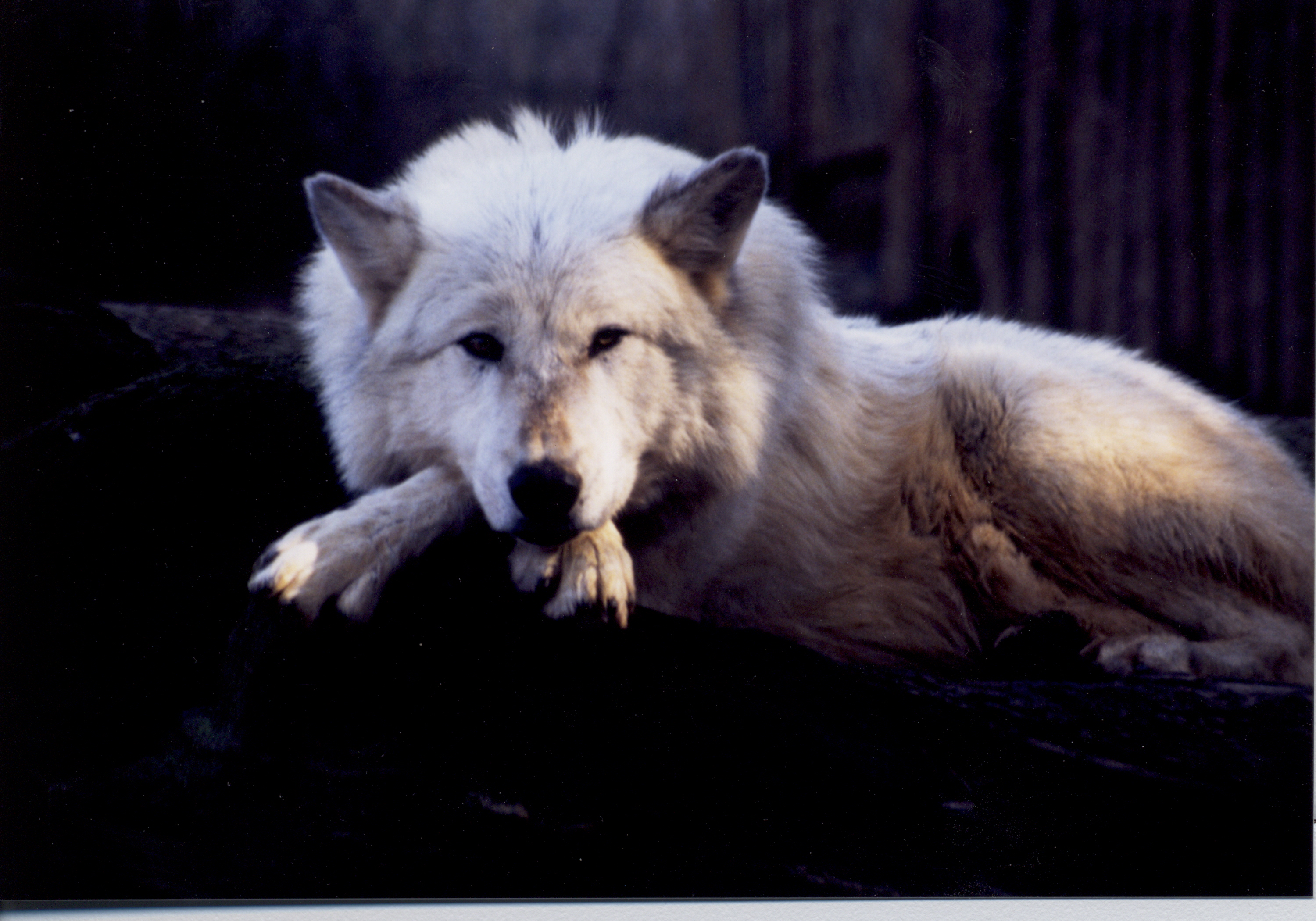
 

Sage at the Folsom City Zoo, ca. 1994


His best friend called him “Wolf.”  He named his dream home, “Wolf House.”  James Dickey notes how closely London identified with his totem animal, and says:

The reader should willingly…conjure up the animal in the guise of the mysterious, shadowy, and dangerous figment that London imagines it to be. We should encounter the Londonian wolf as we would a spirit symbolic of the deepest forest, the most extremely high and forbidding mountain range, the most desolate snowfield: in short, as the ultimate wild creature, supreme in savagery, mystery, and beauty.” – (Dickey’s intro to the Penguin edition of The Call of the Wild, White Fang, and Other Stories_

The “reality” of wolves as observed by biologists is very different, and Dickey says:

The mythic wolf that London “found” in his single winter spent…in the Klondike Gold Rush…bears in fact little resemblance to any true wolf ever observed. In studies…the wolf emerges as a shy and likable animal with a strong aversion to fighting. There is no evidence that any wild wolf has ever killed a human being in North America.

Reality and Truth can appear in different places depending on where and how we look for them. I don’t think I would have stayed up late as a kid – the old flashlight under the blanket trick – to read stories of lost trappers whose fires burn low while packs of shy, likable, creatures pace the perimeter.

Besides, it is the fact that wolves, like dogs, can accept humans as members of their pack, that allowed me to bond with several wolves when I was a volunteer at the Folsom City Zoo Sanctuary.  This was a marvelous opportunity I stumbled into – right place at the right time – and I often thought of Jack London, and imagined it as an inoculation of wildness – I got my fix without having to risk scurvy on the tundra.


A kiss from Redbud, a wolf pup, ca. 1996


OF JACK LONDON’S WORDS

Sometimes a degree of sophistication is a real pain in the ass.  I’d long lost my copies of Jack London’s books, so I picked up a collection on our visit.  I sat back that evening and looked at some of the stories, and noticed things I never saw as a kid:  in George Orwell’s words, “the texture of the writing is poor, the phrases are worn and obvious, and the dialog is erratic.” Yep – the agents at any writing conference would hammer him today.  And yet…

“The key to London’s effectiveness is to be found in his complete absorption in the world he evokes.  The author is in and committed to his creations to a degree very nearly unparalleled in the composition of fiction.  The resulting go-for-broke, event-intoxicated, headlong wild-Irish prose-fury completely overrides a great many stylistic lapses and crudities that would ordinarily cause readers to smile….Once caught in London’s swirling, desperate, life-and-death violence, the reader has no escape.” – James Dickey.

Fifty of Jack London’s stories and books have been made into movies. I’m not sure that can be said of any other author, let alone one whose youth was spent in abject poverty, and whose life was over at 40. And even those facts pale when the sight of a cold winter moon, or the scent of a pine, or the yip of a coyote in the distance sends shivers down the spine and spins you off, just for a moment, into arctic dreams.


Grave of Jack and Charmian London
 

More on, “So Cold the River”

(Warning: spoilers ahead)

It is rare and delightful to find a book I hate to see end.  It is rarer to find a creepy book I hate to see end, and this is the first time ever I have hated to see a story end when the most compelling character is the villain.

Campbell Bradford, the villain of Michael Koryta’s,  So Cold the River, is no ordinary bad guy; he not just a bad man, he is evil. This important distinction is made by eighty-something, Edgar Hastings.  “He [Bradford] put a chill in your heart. My parents saw it; hell, everybody saw it. The man was evil.” The only fictional villain I can think of in his class – as evil and fascinating – is Hannibal Leckter in Silence of the Lambs

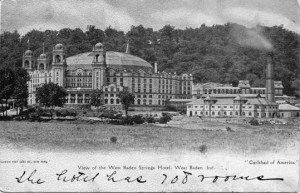
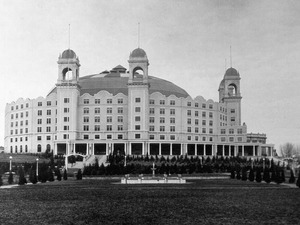
The evil Campbell Bradford is not the ninety-five year old Campbell Bradford who freaks out when hero, Eric Shaw, shows him a bottle of haunted “Pluto Water.”  This faux Bradford whispers, “So Cold the River,” and dies a short time later, sending Eric, a failed Hollywood filmmaker, to West Baden, Indiana, to learn the story of Bradford, Pluto water, and the newly restored West Baden hotel, (which actually exists), a once famous spa that was the domain of presidents, prize fighters, royalty, and gangsters.

The West Baden Hotel

The evil Campbell Bradford is a ghost, a very malevolent ghost, who possesses his great-great-grandson, Josiah, and later tries to possess Eric.  Bradford’s era is the roaring twenties, but his voice and tone suggest an earlier time.  Perhaps it is his fictional distance, the sepia toned feel of the old west that surrounds this villain, that works like the glass that allows us to watch a cobra in a zoo with an equal degree of fascination.  Imagine the Clint Eastwood of the sphagetti westerns as an angry psychopath, ready to sacrifice anything and anyone for his ambitions.  The ambitions of Campbell Bradford’s ghost drive the story.

“Look for the artifacts of their ambitions.”  That is Eric Shaw’s philosophy of documentary filmmaking, announced at the opening of the book.  The artifacts of Bradford’s ambitions are dead people. In the end, the mysterious Pluto Water, which carried Bradford’s spirit back to West Baden, allows Eric to survive his onslaught to tell the tale.

But Eric stops short of trying to unravel the whole story.  He will not seek the honey-flavored spring where Bradford lost his life.  Is the spirit really gone? Apparently. And yet, as Anne McKinney, who has devoted her life to watching the weather and waiting for the big storm cautions, “You can’t be sure what hides behind the wind.”

Sequeul anyone? I will definately read it if it comes.

How to Write a Great Novel

“Put your left hand on the table. Put your right hand in the air. If you stay that way long enough, you’ll get a plot,” Margaret Atwood says when asked where her ideas come from. When questioned about whether she’s ever used that approach, she adds, “No, I don’t have to.”

“How to Write a Great Novel,” is not a title one expects to see in an article in the online Wall Street Journal, but here it is. A friend sent this piece, dated Nov. 2009, which recounts some of the strategies eleven different authors use to deal with, “the daily work of writing, clocking thousands of solitary hours staring at blank pages and computer screens.

http://online.wsj.com/article/NA_WSJ_PUB:SB10001424052748703740004574513463106012106.html

Nicholson Baker rises at 4:00am and writes in the dark, on a black screen with gray type, then goes back to sleep and when he rises again, edits what he produced in the “dreamlike state.” For a recent novel about a “rambling professor,” he grew a beard, put on a floppy hat, and spent a lot of time creating the character’s voice which was “something I had to work on a lot in order to get the feeling of being sloppy.”

Hilary Mantel also likes to work in the morning, even before she has coffee  [yow!!!!!].  Mantel spent five years writing Wolf Hall, a Tudor historical drama, and kept a 7′ bulletin board in her kitchen to capture ideas jotted in the notebooks she carries everywhere.

Richard Powers lounges in bed all day and “speaks his novels aloud to a laptop computer with voice recognition.”

Junot Diaz, a Pulitzer-prize winning author, shuts himself in the bathroom and perches on the edge of his tub with a notebook when working on difficult passages.

Kate Christensen was “two years and 150 pages into her first novel,” when she discovered what the book was “really about.  She threw out her earlier work and started again.  The process repeated itself with her second, third, and fourth novels. Christensen, who won the PEN/Faulkner award in 2008, starts her mornings with housework, emails and phone calls “to avoid facing her work.”   In the past, she’s played 30 games of solitaire before typing a first sentence.

Michael Ondaatje writes in 81/2 x 11 notebooks, then cuts and pastes his sentences with scissors and scotch tape.  His prose will sometimes run four pages deep.

Kazuo Ishiguro, author of six books including “Remains of the Day,” which won the Booker Award, spends two years researching and one year writing his novels, but says sometimes they still don’t come together.  He showed his wife a draft of a story set in medieval Britain and she said, “This is awful. You have to figure out how they speak to each other. They’re speaking in a moron language.”

 These are interesting vignettes to read, because the authors vary so widely in their working habits:  some use computers, some write longhand.  Some make elaborate plotting diagrams, others get up early to sidestep the rational mind.  Some have trouble turning off the flow of words, and some approach the writing desk with trepedation. 

What they have in common is a very uncommon tenacity, and a willingness to arrange their lives and and working methods in very personal ways in order to coax imagination onto page.

The Murder Room

 I’ve been a fan of Sherlock Holmes through his many permutations, from Basil Rathbone to Robert Downey Jr., from Arthur Conan Doyle to Laurie R. King’s novels of the wife of Sherlock Holmes, so when I caught this title on an NPR interview this morning I stopped to listen:   The Murder Room: The Heirs of Sherlock Holmes Gather to Solve the World’s Most Perplexing Cold Cases, by Michael Capuzzo.

Capuzzo writes about the Vidocq Society, a group of 82 full members (and 150 associates), all experts in the field of crime solving, who meet once a month over lunch in Philidelphia to discuss and work on solving cold cases. 

Why 82?  Because that is how many years their namesake, the French detective, Eugene Francois Vidocq (1775-1857) lived.  Vidocq was a a former criminal, “a kind of Willie Sutton,” who made a deal with the police to help them fight crime.  In the process, he founded the first private detective agency, and inspired the stories of Conan Doyle and others.

According to Capuzzo, the Vidocq Society had an initial academic focus, the way people still put forth new theories on the identity of Jack the Ripper, but after a New York Times interview, they decided to turn their talents to working on cases where resolution is possible.  Members of various police departments as well as friends and family of victims are invited to the lunch meetings, and acccording to Capuzzo, the considerable talents of these sleuths has resulted in closing some old cases (he did not say how many in the interview).

Anyway, the story is worth a listen and the book looks to be an interestingread for those with mystery and CSI type interests. 

http://www.npr.org/templates/story/story.php?storyId=129210703


Angelology

When I first read the March 15, Time Magazine review of Danielle Trussoni’s, Angelology,  ( http://www.time.com/time/magazine/article/0,9171,1969720,00.html )I was struck by the killer premise: the heroic battle of an art historian and a young nun against the Nephilim, nasty, arrogant human-angel hybrids who have dominated world affairs for thousands of years.

When the reviewer compared it favorably to The DaVinci Code, I put it in my Amazon cart. Now I wish I had listened to the 100+ Amazon reviewers who gave the book 3 1/2 out of 5 stars.  They were too generous.

The characters, Sister Evangeline and Verlaine are good enough as action adventure heroes go.  Not every protagonist can be or must be unforgettable.  We like them enough to want to see them prevail.

Where the story really breaks down is in the interminable backstory, that fills the entire middle section of the book.  It slows the action to a full stop, and doesn’t really succeed in creating a suspension of belief.

There are several ways to draw readers into a fictional world that has fantasy elements.  One is simply to spin things that exist in our world, as Brown does in The DaVinci Code. The Gospel of Mary Magdalene, and DaVinci’s “Last Supper,” are real, and we’re all too ready to believe in nefarious religious cults.

The other classic tactic is to simply drop us into an alternate universe, as Orson Welles did in the famous/infamous War of the Worlds broadcast – simply announce that aliens have landed in New Jersey.

Trussoni begins Angelology in this manner – with a flashback to the discovery of a Nephilim corpse during  the “second angelological expedition” of 1943.  We’re hooked, especially when Nephilim menace Verlaine and Sister Evangeline before we quite know why.  All the elements of an exciting chase and forbidden romance are in place…and then the author manages to snatch defeat from the jaws of victory.

The story just stops.  If only an editor had reviewed the manuscript and suggested the simple, time tested device for action-adventure tales – sprinkle the backstory into the main action, but keep things moving.  Do not bore your reader to distraction.

Did I say Trussoni failed?  Well that may be an exageration – she has a movie contract and I don’t.  But as a reader, I have to conclude that a writer has failed when I skim or skip huge sections of their book and in the end regret the time and money I have invested in their story.  The following Amazon review by “MWA” sums up my reaction:

This Author may have had an interesting idea but the publisher’s rush to print to catch the wave of Vampire/Mythological/Faux Religious related sales certainly squashed it. The fact that the book is so poorly written is the fault of the people who are supposed to EDIT things prior to publication. This is actually painful to read up until about page 88 and then it is as if the absent editor came back from lunch and skimmed the rest. The worst thing about it is how obviously it is a set-up for another to follow! And a movie deal etc. etc. Enough is enough already.

http://www.amazon.com/Angelology-Novel-Danielle-Trussoni/dp/0670021474/ref=sr_1_1?s=books&ie=UTF8&qid=1280940731&sr=1-1

So Cold the River

Just arrived from Amazon and in my book queue (the short one): So Cold the River by Michael Koryta, which I learned about from an NPR interview/review during a recent homeward commute.

http://www.npr.org/templates/story/story.php?storyId=127561248

Koryta is a crime novelist whose father took him, at age eight, to see the ruins of the West Baden Springs Hotel in Indiana, once called the eighth wonder of the world.  He tried and failed to work the hotel into a crime novel, but it wasn’t until he decided on a venture into the supernatural that his story took off.

West Baden Springs Hotel, West Baden Indiana

The story involves a filmmaker hired to uncover and document the history of a dying man, and one of the clues is a bottle of “Pluto Water,” apparently from the lost river, “an evil force” that flows around and under the hotel.

It sounds like a tale to read around the fireplace on a dark and stormy night, but I’m not going to wait that long.

Our Heroes Have No Shame

For some time I’ve been mulling over the qualities that make fictional characters unforgettable.  Among other things, they seem to like themselves and champion themselves unconditionally.  They are comfortable in their own skins.   Even when they mess up badly, they are in their own corner.  We want to be like them, be our own best friends.

Something else came to mind recently in a writing critique group, when a member’s character felt “a sense of shame.”  The phrase did not ring true.  The characters we love  do not experience shame. That goes along with being their own best friends.

The most common definition of “guilt” I have heard is remorse for something I’ve done, while “shame” is remorse for what I am.  If I feel guilty about a particular act, I can make amends, vow to change, and eventually move on.  Not so when the voices of shame tell me that is how I am.  No one growing up in our shame based culture can escape it altogether (at least not without a lot of inner work), but our heroes do.

When Frodo Baggins says, “I will take the ring, but I do not know the way,” he does not then tell himself, “I should know the way.  Why don’t I know the way?  These people do.  What is the matter with me?”

Police detective, Alex Cross,  in James Patterson’s Along Came a Spider, is supposed to exchange a ten million dollar ransom for a kidnapped girl.  He’s been set up in a complex double-cross and loses both the money and the girl.  The national media trumpet his failure.  Reporters hound him.  His superiors pull him from the case, but he maintains his internal compass:

If I had screwed up the ransom exchange in anyay, I would have taken the criticism.  I can take heat okay.  But I hadn’t screwed up.  I’d put my life on the line in Florida.

Cross, whose character is so well portrayed by Morgan Freeman in the movie, battles politics, FBI secrecy, beaurocratic red tape, and betrayal by the woman he loves to stay on the case for two years to rescue the girl after everyone else has given up.  What keeps him going?  What allows him to believe in himself in the face of repeated missteps and the worst knd of notoriety?  Whatever it is we, the readers, want some!!

One thing our special characters all seem to have is someone who believes in them unconditionally. Frodo has Sam.  Alex has his partner, Sampson, and his grandmother, Nana Mama, who lets him know when she thinks he is wrong, but is always his supporter.

Kellen, the heroine of Sharon Shinn’s young adult masterpiece, The Dream-Maker’s Magic was raised by a mother who is convinced that she is truly a boy who was somehow bewitched into the shape of a girl:

…my mother watched me with a famished attention, greedy for clues.  I had changed once; might I change again?  Into what else might I transform, what other character might I assume…She never did learn to trust me…or accept me for who I was.  It was my first lesson in failure, and it stayed with me for the rest of my life.

Even through her painful fumbling for who and what she really is, Kellen somehow keeps her balance, learns to trust her own council, and on the way, finds her ally in Gryffin, a crippled boy:

…he always greeted me with a smile and my name.  I did not bewilder or surprise him.  He did not think I as trying to be something I was not, as my mother did; he did not think I was trying to break a chrysalis and become something I was meant to be, as Betsy and Sara surely believed.  He just thought I was Kellen.
I found this the most comforting thing that had ever happened to me. At times, when I lay awake at night, confused myself about what role I should take and what direction I should try to follow, all that kept me from slipping into tears was knowing that I was not completely lost if Gryffin knew how to find me.

Something in us longs to be brave, longs to be heroic.  We want to be true to ourselves, right wrongs, bring down the forces of evil, or simply learn how to live a happy life.

As the Buddha lay dying, his disciple, Ananda, asked who would be the teacher when he was gone.  Buddha replied:

be a lamp unto yourself, be a refuge to yourself.  Take yourself to no external refuge. Hold fast to the Truth as a lamp; hold fast to the Truth as a refuge.

Whatever our philosopy, this is the way I think we want to live.  The charaters in the stories we love give us hope that it is possible.

Richard Peck’s Characters: Blossom Culp

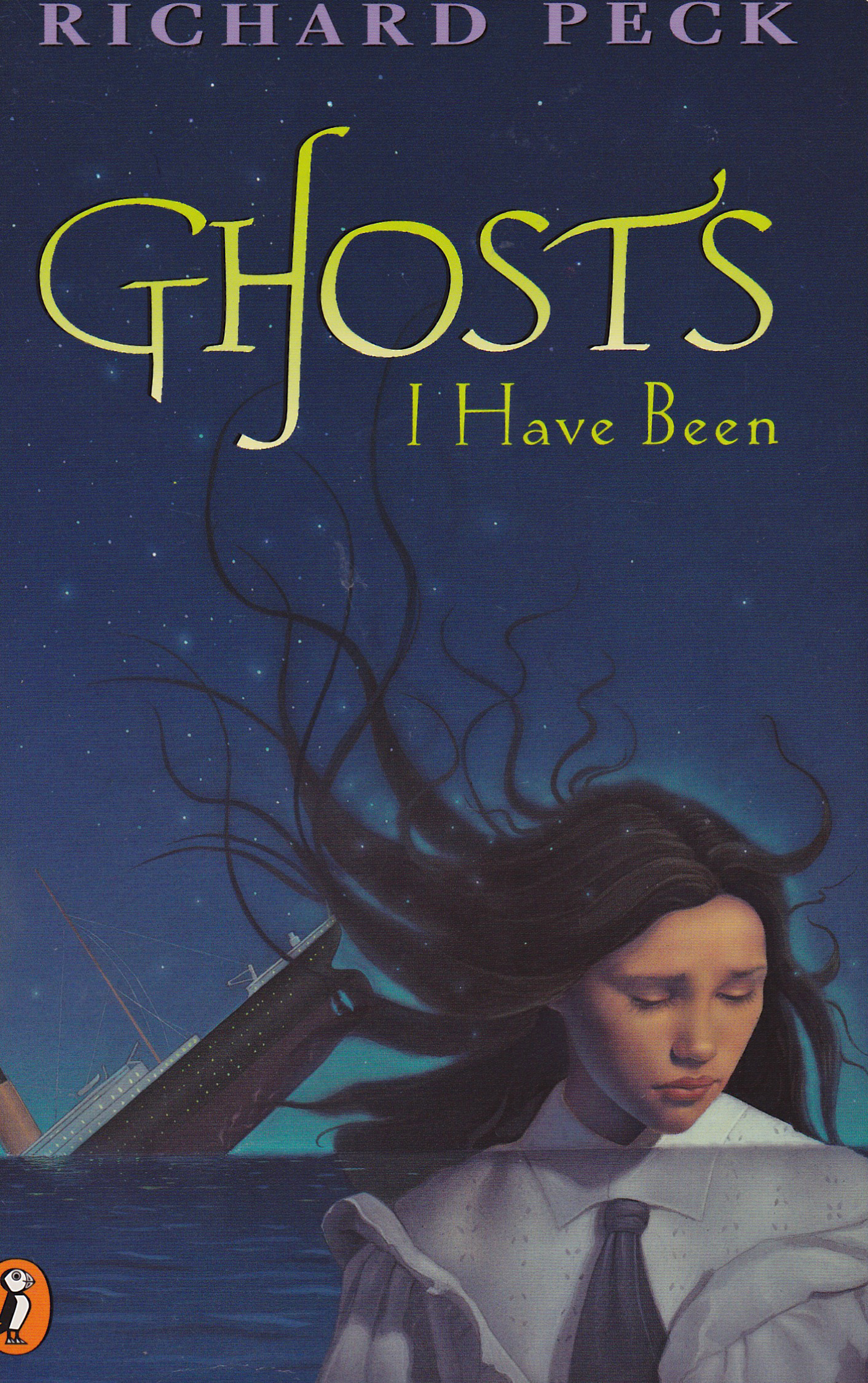
One of the most compelling story openings I know in young adult literature comes from Richard Peck’s, Ghosts I Have Been:

“I tell you the world is so full of ghosts, a person wonders if there’s a soul to be found on the Other Side.  Or anybody snug in a quiet grave.  I’ve seen several haunts, and been one myself.

When I heard Richard Peck speak of his work at a local Borders, someone asked how many times he rewrote his opening paragraphs.  “Probably seventy times, on average,” he said.  Such dedication to craft is one reason Peck’s career spans more than 39 years, includes 39 novels, a Newbery Medal, and the National Humanities Medal.

Of the many other reasons for Peck’s success, one of the most notable is his unforgettable characters.  Peck writes about outsiders, and the heroine of Ghosts, by circumstance and choice goes her own way:

There are girls in this town who pass their time up on their porches doing fancywork on embroidery hoops.  You can also see them going about in surreys or on the back seats of autos with their mothers, paying calls in white gloves.  They’re all as alike as gingerbread figures in skirts.  I was never one of them.  My name is Blossom Culp, and I’ve always lived by my wits.”

Peck, who believes that “a novel must entertain first before it can be anything else,” leads his heroine through episodes both side-splittingly funny and tragic.  Blossom’s friend Alexander Farnsworth (not that she’s sweet on him, she assures us) has fallen in with a rough crowd, who plan to go outhouse-tipping on Halloween night, 1913.  She teams up with Old Man Leverette so save his privy.  As the boys begin to push at the structure, Blossom, dressed as a ghost, jumps out:

“The candle flickered and guttered between my white veil and [Alexander’s] suddenly white face.  His arms fell from the door jamb, and he let out the high whinny of a fire-crazed horse…He keeled backwards and fell flat on the ground.  ‘A HAUNT!  I AM CURSED!’ he screamed and lay on his back like a turned turtle, with his fists jammed into his eyes.”

That’s only the start of the night’s trouble for the vandals, for Old Man Leverette is hiding nearby, his shotgun loaded with rocksalt.  Blossom has a talent for righting wrongs and what is imbalanced.  Declaring that there is more to be learned on the wrong side of the tracks than the right, she next takes on the “mean girls” of the town, members of the exclusive “Sunny Thoughts and Busy Fingers,” club.

CONTINUED