Saying goodbye to Missy

Missy, June 21, 2008 to July 11, 2024. RIP

On July 11, three weeks after her 16th birthday, we took Missy to the vet. Although she had other issues, our biggest concern was her back legs and hips. Walking and balance had grown harder for her since the new year. Joint and pain medications had given her some relief and we hoped the vet could do more. This time Missy stumbled and fell in the vet’s office. I’d brought a video showing how hard it could be for her to cross a room. Our vet watched it and said the problem was neurological, probably a spinal cord issue. She said it would not get better and she couldn’t do anything more. We made the compassionate choice. The hard one.

Missy’s passing was peaceful. We knew we had done the right thing, but there still are no words to describe what it was like to come home to a silent house, to the food bowl, the water dish, the bed, and the blankets that she would never use again. Those who have been through it know what it’s like. This wasn’t our first time, but in some ways it was the hardest.

*****

Missy was seven months old when we adopted her on Valentine’s Day, 2009. Her first owners were going through a divorce. There was shouting, and Missy was left by herself in a crate for long hours each day. During her formative months as a puppy, she never had a chance to bond with other dogs or humans. This deficit would be a problem all her life.

Her owners took her back to the breeder who gave her to nearby church that trained dogs to be companion animals for veterans with PTSD. Mary saw Missy and cuddled her in the church office and told me about the beautiful puppy she’d met who couldn’t stop trembling. On Valentine’s Day, the director of the program told Mary that Missy’s PTSD was worse than that of the veterans and asked if we wanted to adopt her?

Mary called me and I leashed up our other two dogs and brought them over. Missy instantly bonded with them. After watching them play and get to know each other, I picked Missy up. She fit in one hand and wasn’t trembling. I carried her out for a private chat. I asked if she wanted to come home with us and instantly knew the answer. By day’s end, she knew she had a home and a family. During those first few weeks, I felt I had known her in a previous life, something I never experienced with any other animal.

“It’s love, they say. You touch
the right one and a whole half of the universe
wakes up, a new half.” – from “On Choosing a Dog,” by William Stafford

Holly, our older dog, was slowing down. Missy and Kit, our other rescue, became inseparable – our dynamic duo. Most of the time, Kit was the ringleader and Missy the sidekick.

The happy memories of more than a decade of good health and good times with those two blend together, but many moments stand out, like the day Missy and I got caught in a rain shower during a walk in the park.

Missy and Kit always brought joy to our days, but never more so than during the pandemic shutdown. As often as possible, we’d start each morning with a walk in the park. We came to know other dog walkers and strollers, and sometimes those conversations were the only outside social contacts that day.

Kit had been diagnosed with a heart murmur in 2016. We’d been treating her with an increasing number of meds since then, but it caught up with her in 2021. The day after Christmas, she had a heart attack and died in her sleep the next night. Missy was never the same.

Though we moved her bed down to our room, at night she’d sometimes pace the kitchen where she and Kit had slept. We took her to doggie day care hoping she’d find new canine companionship, but without Kit, she was fearful and bared her teeth when other dogs approached. Sometimes we’d have to hand feed her to get her to eat.

More than any other picture, this image reminds me of that time. Missy appears to be gazing out at a world she does not understand.

In time, Missy settled into her role as top dog, enjoying the extra attention and morning walks and even getting the zoomies now and then, running six or seven laps around the house, something she’d never done in younger days.

She was never big on “traditional” canine pastimes. When she was younger, Kit would fetch a tennis ball until your arm was too tired to throw it, while Missy would wander off, uninterested. She was never a big fan of squeaky toys either, but she would invent her own little games. One such game led to one of my favorite photographs of her.

Last summer, before the trouble with her legs began, she went through a phase of hooking her front legs over the sides of her bed and using her hind legs to drag it out of whichever room it was in and into the hall. We never could figure out why.

Her bed was usually next to ours or in the meditation room where I sit at the end of the day. Missy usually joined me, but that summer she sometimes wouldn’t settle until she’d moved the bed into the hall. One evening she dragged it the wrong way – into a corner. It was hilarious and I made a video and this photograph of her efforts. Then I moved the bed into the clear so she could drag it the rest of the way out of the room.

July 24, 2023

I love this picture. This was not the last time she was playful, but it’s the last photo I have of one of her quirky styles of play. During her last six months, her physical and cognitive problems grew worse. She was less active, but up until the end, I think she felt loved.

Her vet sent a nice note that said, “You gave her a great life.” We always did the best that we could for her.

*****

“I wondered if God might have an easier time using animals to communicate who God is, since they do not seem as devious and willful as we are.” – Fr. Richard Rohr
A Family Ghost Story Revisited

Because Halloween is coming and because I’ve been looking at old family albums, I decided to re-post a story I first published in July, 2010, a month after I started blogging. It concerns the “family ghost story” my great-grandmother used to tell. Except it may have been a “rural legend” once told widely in the midwest. Since the timeframe was the 1880’s, it really doesn’t matter. The story still evokes the mystery and excitement of my childhood Halloweens…Enjoy!

*******************

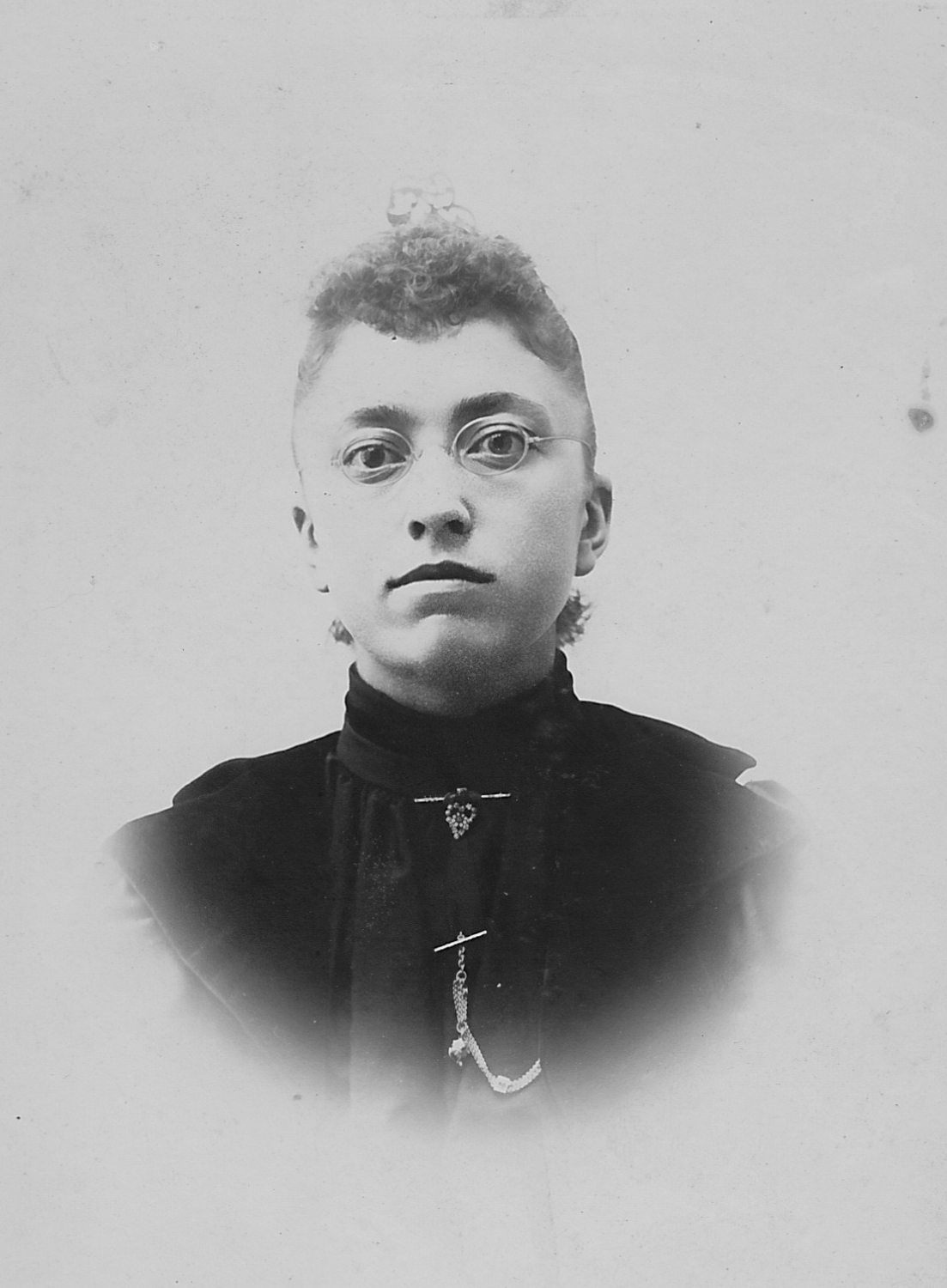
I heard this from the time I was little, a story told by my great-grandmother, Hannah Shook Outwater. I was ten when she died at the age of 88. Her gift of a hand puppet for my third Christmas was a huge catalyst in sparking my lifelong love of making and telling stories, but that is a tale for another time.

Hannah Outwater in her 20’s

When she was seven, Hannah, the seventh of eight children, rode with her family in a covered wagon from Ohio to Michigan. Her younger brother, Freddy, age two, didn’t survive the trip. They say he was flat on his back in the wagon with fever, but the evening he died, he sat up with a beatific smile and reached out his arm to angels no one else could see.  At least that’s the family legend. When I was young, Freddie’s child-sized fork lay in the silverware drawer.

When they reached Kalamazoo, Hannah’s father, Isiah Shook, rented a farm. Then the incidents began.

Hannah’s older sister was of the age to go courting. The family would hear the wagon drive up bringing her home, open the door and find no one there. Some nights the family heard such a commotion in the barn it sounded like the animals were about to kick it down. When they ran out to investigate, they found the cows and horses asleep and everything quiet. Then there was the reddish stain on the guest room floor they could never scrub out…

You have to imagine my great grandmother pausing to look around the room.  She knew how to build suspense.  It might be halloween – it was certainly winter, with the lights turned low.  Those were the days before the SciFi channel and Freddy Kreuger.  Before CSI and the horrendous headlines that have become all to common.

The old lady would lean forward and speak in a low voice so we would have to lean in too.  “Once we needed to move a big old chest in the cellar.  That’s when we found it.  Mind you, those were the days of dirt cellars, but in the far corner was a single patch of cement about six feet long.”

She would let that sink in, and then say, “We had been there about six months when my father heard the story.  The neighbors said a wealthy horse dealer came through town and spent the night with the people who lived there before you.  No one ever saw him again.  The couple who lived there said he left before dawn.  Funny that they moved away two months later.  We never understood where they got the money to up and go so suddenly.”

Hannah’s family moved not long after. And “No,” she said, they never quite dared to dig and see what was buried under the cement slab.

AFTERWARD

My sister and I and our friends grew up with that story, and after Hannah was gone, my mother told it. Some ten years ago, however, while spending the night in a vacation cabin, I found a stack of American Heritage magazines, and one of them had an article on legends common in rural America a century ago – and there was the family ghost story! Or so I think, because I didn’t have the sense to write down the magazine date, and later attempts to find it again in libraries or used bookstores never panned out.

Was it pure legend?  Was it born of a scandalous crime that was the talk of the midwest in the era before TV and tabloids?  Was it like certain crimes that became the stuff of ballads that are still sung hundreds of years later?

When I first found that copy of American Heritage, I thought it was very important to find out what kind of story it really was – exactly how true.  Now I don’t think it matters.  For me the story will always be true, whether it happened or not.

44 Years Ago Today…

Our wedding cake, June 19, 1976, Bandolier National Monument, New Mexico

In 1976, Mary and I were living in Santa Fe. We’d spent the spring planning a wedding for June. It would be small since family and friends lived on the coasts.

We’d arranged for a service on Saturday, June 19, in town, and after that, everyone would carpool to Bandolier National Monument for the reception. We’d then have the afternoon to explore the Anasazi ruins, and spend the night in the old stone lodge that dated from the ’20’s. This would be last year the lodge was open to visitors.

There were lots of glitches, as might be expected, but the most serious one happened the day before the wedding. I was working at a printshop that was failing for various reasons, and bouncing employee paychecks at irregular intervals. My coworkers urged me to go to the owner’s bank across the street to cash my check.

Heart thumping, I prayed that the cashier wouldn’t check the account, but unfortunately, she pulled down the ledger to look it up. “I’m sorry,” she said. “This account is $1,000 overdrawn so I can’t cash your check.”

“Please,” I said. “We’re getting married tomorrow. I’ll need to pay the caterers, and our guests are arriving tonight. If the account’s down a thousand bucks, what’s another two hundred going to matter?”

She thought about it for a moment, then smiled and said, “Have a beautiful wedding day,” as she counted out the cash.

Mary and me at the Bandolier lodge, June 20, 1976

We went back to work the following Monday, and immediately set about saving a month’s worth of living expenses. And then two months. Then we started to talk about moving back to California. Neither of us wanted to leave New Mexico, but in retrospect, it was clearly the right decision.

At times like this, the memories are precious and hardly seem dimmed by the passage of time.

*****

“How young we were!” – Edward Weston.

“Some folks trust to reason / others trust to might.
I don’t trust to nothin’ / but I know it come out right.” – The Grateful Dead

Remembering My Mother

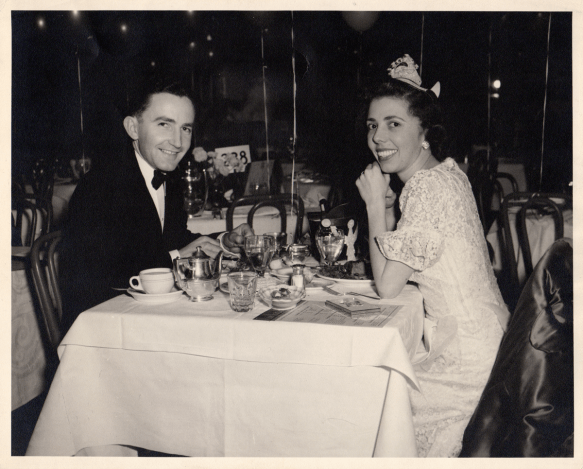
My mother and father, New Years Eve in Chicago, probably 12/31/1946

Forty-five years ago, at the start of the week before Mother’s day, my mother, June Patricia Mussell, spent a happy morning starting a new watercolor in the orchard in Saratoga where West Valley College now stands. She returned home around noon, happy with the start of her new painting.

According to my father, they had a nice dinner that evening, and fell into reminiscing about the life they had shared together. That night, just after 11:00, she collapsed on the bathroom floor. At age 52, she had suffered a massive stroke. A few days later, on May 7, two or three days before Mother’s Day, with no chance that she would regain consciousness, my father requested she be taken off life support, and she was gone. I was in Phoenix and flew home the next day.

Here are a few things that have recently come to mind about my mother these 45 years since the day of her passing. She had a lifelong love of art, nature, and literature. Hers was an imaginative nature, one that could turn even seeming mundane events into adventures. She had a spiritual  hunger too – both my parents did, but hers, I think was compelling, a driving force in her life. After I left home, we’d scoop each other on books worth reading. When I discovered  Lord of the Rings, I sent her a paperback set, and she fell in love with Tolkien too.

Not all of her attributes were beneficial, either to her or those around her. She was a lifelong worrier, resulting more than anything else, I believe, from the death of her father as the result of a freak accident, when she was only seven. She spent most of her life with an eye toward where the next blow was going to fall. That was a trait that I picked up, and still have to work to resist.

Like everyone else, at times, I had stormy relations with both of my parents. They’re gone now, and I’ve come to see them simply as fine people with flaws, like everyone else, who did the very best they knew how for my sister and me. In some cases, they didn’t even recognize the power of the gifts they gave. Here is one example that is worth telling in detail: Continue reading

Slender Threads

Dew on Spider Web by Luc Vlatour, Creative Commons.

“Sometimes a life can hang by such a slender thread.” – Kate Wolf

Yesterday, around dinner time, I took my wife to the emergency room with severe chest pains. This morning, a little before 9:00, she texted that she was going into surgery in 45 minutes. I hurried over, but had to drive to the roof of the parking garage to find a spot.

As I sprinted down the steps, I spotted an acquaintance, who I’d seen earlier in the week at a meeting, who did not look well at all. He was entering the oncology building. I called his name but he didn’t hear me.

By the end of the day, my wife was stable. Though not out of trouble or the hospital, her prospects are encouraging. Not so, I believe, the friend I saw. He’s elderly but notable for a heart that is both wise and kind. This is a man who clearly does not have much money. Exactly the kind of man that the oligarchs want to strip of healthcare.

I thought of what Buddha said at the end of the Diamond Sutra:

“So I say to you –
This is how to contemplate our conditioned existence in this fleeting world:
Like a tiny drop of dew, or a bubble floating in a stream;
Like a flash of lightning in a summer cloud,
Or a flickering lamp, an illusion, a phantom, or a dream.”

It was a sullen day, and windy, with a threatening sky. The kind of weather that reminds you of mortality, even without anything explicit on the horizon. Buddha didn’t flinch from difficult truths, but he did make clear, as the Dalai Lama continues to do today, that in the face of this fleeting world, nothing matters more than kindness to other living beings.

In the end – and we shall all make this discovery, sooner than we would wish – everyone’s life is a slender thread, and when it breaks, bank accounts do not matter. Nobility of soul does – very, very much.

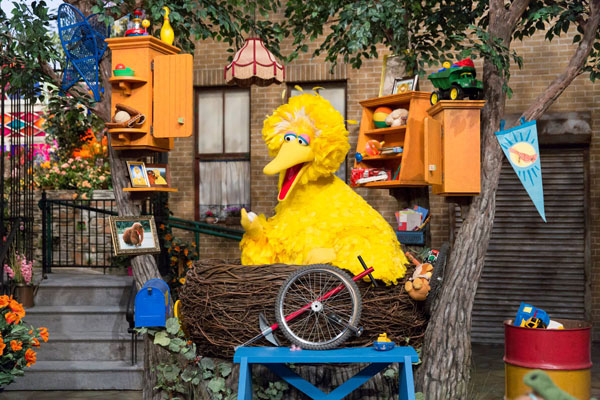
Notes from 2017 – Time to save Big Bird again!

46-bb-nest

Last week, the New York Times reported on administration plans to cut popular domestic programs, including funding for the Corporation for Public Broadcasting. The move would save $500 million a year, about 0.016% of the federal budget.

Said Heritage Foundation economist and presidential advisor, Stephen Moore, “I think it’s an important endeavor to try to get rid of things that are unnecessary.” 

Here are some of the things Mr. Moore considers unnecessary:

Sesame Street
Downton Abbey
Ken Burns “Civil War”
Ken Burns “Jazz”
Sherlock Holmes (several versions)
Poirot
Cadfael
The Midsomer Murders
Ken Burns “Baseball”
Shakespeare plays (many)
Victoria
The PBS Newshour
Nova
Masterpiece Theater
The Antiques Roadshow

These are just a few of my favorite programs, past and present. Add yours to the list

Politicos periodically try to defund PBS. Remember the rumor that one of the Teletubbies was gay?  But I think the real reason is apparent in this dialog from The Power of Myth series, one of the most popular television programs of all time. The conversations between mythologist, Joseph Campbell and Bill Moyer’s, which first aired in 1988, are as relevant as ever today:

Joseph Campbell on "The Power of Myth" series

Joseph Campbell on “The Power of Myth” series

BILL MOYERS: Would the hero with a thousand faces help us to answer that question, about how to change the system so that we are not serving it?

JOSEPH CAMPBELL: I don’t think it would help you to change the system, but it would help you to live in the system as a human being.

BILL MOYERS: By doing what?

JOSEPH CAMPBELL: Well, like Luke Skywalker, not going over, but resisting its impersonal claims.

BILL MOYERS: But I can hear someone out there in the audience saying, “Well, that’s all well and good for the imagination of a George Lucas or for the scholarship of a Joseph Campbell, but that isn’t what happens in my life.”

JOSEPH CAMPBELL: You bet it does. If the person doesn’t listen to the demands of his own spiritual and heart life, and insists on a certain program, you’re going to have a schizophrenic crack-up. The person has put himself off-center; he has aligned himself with a programmatic life, and it’s not the one the body’s interested in at all. And the world’s full of people who have stopped listening to themselves. In my own life, I’ve had many opportunities to commit myself to a system and to go with it, and to obey its requirements. My life has been that of a maverick; I would not submit.

BILL MOYERS: You really believe that the creative spirit ranges on its own out there, beyond the boundaries?

JOSEPH CAMPBELL: Yes, I do.

By now it should be obvious – this year’s crop of would-be overlords, like all of their kind, want “a world…full of people who have stopped listening to themselves.” It’s up to ALL of us to deny them the pleasure!

We know the drill by now…when this budget item comes up, call and write elected representatives. Make #SaveBigBird go viral on twitter. It worked last time an administration tried to evict Big Bird, and it will work again!

Ken Burns, Downton Abbey, Sesame Street, and Joseph Campbell cut across party lines. They invite all of us to listen deeply to ourselves. They remind us not to let others drown out the still small voice of our souls.

Notes from 2017 – The dreams of our ancestors

"The Sower" by Jean-Francois Millet, 1866-67, Public Domain

“The Sower” by Jean-Francois Millet, 1866-67, Public Domain

My paternal great great grandfather Gustav, a farmer, was born in the Alsace-Lorraine, a region on the French/German border that had been fought over since the time of Louis XIV. As a young man, grandfather Gustav, his two brothers, and their families emigrated to America in 1870 to avoid conscription into the armies of Napolean III during the Franco-Prussian war.

As one historian noted, the ancestors of most Americans of European descent came here as paupers, petty criminals, war refugees, draft dodgers, or religious fanatics. I certainly come from such stock. I’m alive today, in part because 150 years ago, the US was not afraid to admit refugees from conflict zones. As Bill Murray put it in Stripes, “We’re Americans! That means we’re mutts – the most lovable kind of dog there is!” Mixed breeds are often the healthiest too.

A century later, our open borders policy helped spark the technology-driven economic boom of the late 20th century. Andy Grove, one of the founders of Intel, was a Hungarian Jewish refugee who survived the Nazis and then the Russian takeover before before coming to America in 1960. Steve Jobs was the son of a Syrian refugee. If you’re reading this post on a laptop or smart phone, you can thank these two pioneers, as well as the space race in the 60’s, which thrived upon a universal respect for science and affordable education which drew the world’s best and brightest to our shores. Microelectronics and the connected world were among the results.
Continue reading

Imagining outcomes

This morning, I attended the funeral of a friend’s mother. She lived to be 92, had 14 great-grandchildren, was happily married for 49 years, and was lucid and even cracking jokes with those at her bedside until almost the end.

Almost everyone I talked or listened to commented on her outlook – positive, even when facing adversity. How central that seems to have been to this life well lived!

I’ve been thinking a lot about attitudes recently – actually almost daily, without coming to any clear conclusions. Through the course of the year, documented in various posts, I’ve been looking at views and outlooks, my own and others, from the perspective of which are helpful and which are not.

It’s easier to see in others. My mother lost her father when she was in grade school, as the result of a freak accident. I remember my mom in adulthood with a certain wariness, a backward glance over the shoulder, as if wondering when or how the next blow would fall. Be it nature or nurture, I’m coming to see how I carry the same trait, without even any such clear reason why. The good news is that when such things come to consciousness, we can look at them, and in observing they begin to change.

Along these lines, I remember an irreverent joke my father used to tell:

“Once there was a study to determine which children were optimistic and which were pessimists,” my father would begin. “One day a group of observers came through for a tour. In the first room they visited, a boy was crying his eyes out, even though the room was a virtual toy store, with shiny new bikes and every kind of playing you could imagine.

‘What’s wrong?’ one of the observers asked.

‘Everything’s so nice,’ the boy said. ‘I’m afraid I might break something.’

The group moved on to the next room, where they came upon another boy who smiled and sang as he shoveled his way through a mountain of horse manure.

‘How can you be so happy in all of this mess?’ an observer asked.

‘Easy,’ the boy said. ‘With all this shit, there’s gotta be a pony in here somewhere!'”

I know which boy I have been for most of my life. I also know which one I aspire to be!