The Shape-Changer’s Wife by Sharon Shinn: A Book Review

I’ve enjoyed several young adult fantasies by Sharon Shinn and reviewed one of them here http://wp.me/pYql4-iQ.  Before she published her first YA book, Summers at Castle Auburn, in 2001, Shinn had a solid reputation as an adult fantasy writer.  I recently finished her first novel, The Shape-Changer’s Wife, which won the Locus award for Best First Fantasy Novel in 1995. Shinn was nominated for the John W. Campbell Award for Best New Writer that year.  On top of these honors – all well deserved – long time readers of this blog will know I am fascinated by stories of shape shifters (check out three posts I wrote on the theme in Feb., 2011).

At the start of The Shape-Changer’s Wife we meet Aubrey, a young man with a sunny disposition who is already on his way to becoming a skilled magician. His master sends him to study with Glyrenden, highly skilled in the art of shape-changing:

“Learn everything he teaches you so well you can cast his own spells back at him,” the old wizard had said. “Glyrenden respects only those stronger than he is, and those he hates. If you cannot beat him, he will destroy you.”

With the optimism of youth, Aubrey brushes the warning aside and sets out. Even when local villagers react to Aubrey’s request for directions with narrowed eyes and cold responses, his hunger to learn drives him on.

Shinn is masterful in building a sense of menace, which begins the moment Aubrey steps into the 3″ of dust that cake the entry way of the shape-changer’s house.  It builds when he meet the uncanny servants – Orion, covered with hair except for his eyes and nose, and Arachne, a woman who fights a loosing battle against the dust, while muttering curses and shooting everyone hostile glances.  Above all, Aubrey is fascinated by Lilith, the shape-changer’s wife, whose emerald eyes seem to see right through him, who is silent and self-contained, and doesn’t react to anything like any other woman he’s ever met.

Shinn’s presents magic as matter-of-fact.  Shape-changing sounds dramatic to Aubrey, so he is dismayed when Glyrenden hands him piles of books on anatomy and science and makes him practice hours of concentration exercises.  “How can you change into something you don’t understand in all of it’s details,” the shape-changer asks.  In Shinn’s books, magic is seldom dramatic.  More often, it forms an atmosphere like the felt danger offstage in a Hitchcock movie.

By the middle of the tale, Aubrey is hopelessly in love with Lilith, even as he perceives that “She seemed to be fashioned from the idea of a woman, and not to be a woman at all.”  This and other related perceptions lead him to pierce the secret of Glyrenden’s house – why the townspeople fear him, and why no bird or animal will come anywhere near the wizard’s dwelling.  Aubrey learns that the only way to undo Glyrenden’s “barbaric spells” is to kill him or become a better wizard, and even if he succeeds, the spells may prove too strong to break.

“I came to magic with joy.” Aubrey says.  “I thought it was a splendid thing to take the well of power that I found within me and shape it to marvelous uses…But magic, I have discovered…is not inherently good in itself.  And some of it – yes, some of it is inherently evil.  There are wicked spells, savage spells, enchantments that are so black that even to know them withers the heart just a little, taints the soul.  And yet to be a great magician, to be a sorcerer of any ability or renown, those spells must be learned as well.  For if a magician does not know them, they can be used against him.”

With measured pace, Shinn has brings us through her imagined world to one of our oldest stories, that of tasting the fruit of the Tree of Knowledge.  The Shape-Changer’s Wife is also a love story, but told with a kind of restraint that is rare in the fantasy genre.

You seldom see titles by Sharon Shinn on the shelves of Barnes&Noble, and never her YA titles.  At first glance, her books are not the stuff of blockbuster series and lucrative movie deals, though I can see them as moody, gothic dramas.

Shinn is a wizard in her own right.  Beyond the pleasure I’ve gained from six of her novels, I return to them often to study the masterful way she can weave character and atmosphere into stories I cannot forget.

Sharon Shinn

King of Morning, Queen of Day by Ian McDonald: An Appreciation

My recent discussion of unlikely mentors and guardians http://wp.me/pYql4-1J8 reminded me of Tireseas and Gonzaga, two “mystical vagabonds” (book jacket description) in one of the best fantasy novels I’ve ever read.

Ian McDonald, a visionary author who lives in Belfast, published  King of Morning, Queen of Day in 1991.  I still pick it up to read certain passages or a random chapter, to study and enjoy the ideas, the writing, and characters.

The narrative follows three women of three generations who are alternately attracted and attacked by creatures of the Mygmus, a technical name for the infinitely overlapping worlds of Faerie.

“The Mygmus may be viewed not so much as a place, a spatio-temporal relationship, a quasi-Euclidean geometrical domain, but as a state.  The concept is a familiar one in modern quantum physics, in which time is not considered a dynamic process, but a succession of recurring states eternally coexistent.  Such thinking liberates us from our essentially linear concepts of time, with past, present, and future.”  So reads a manuscript given to one of the women by a strange group of deformed, “Midnight Children.”

The first of the women, romantic, Edwardian Emily, dreams of a faerie lover and seeks him out.  First her rapes her, and then she disappears.

Gonzaga and Tireseas help Emily’s daughter, Jessica, battle free of the otherworld threat, which is personified by her mother, who has become a demonic force.

Jessica’s daughter, Enye, modern young woman in Dublin, battles Otherworld manifestations at night with martial arts swords.  Gonzaga and Tireseas charge her blades with high tech wizardry as well as ancient charms that allows her to win her way into Faerie, redeem her grandmother, Emily, and return to modern day Dublin.  The author gives the ending a contemporary twist that I won’t reveal here.

McDonald’s characters are among the most vivid in any novel I can remember, painted with a sure touch both in broad stroke and detail.  Every December, for instance, I reread “Enye’s soliloquy” – my name for it, with a nod to Molly Bloom.  It’s her internal monologue, in response to the question, “Wouldn’t it be nice if we could have Christmas all year long?”  It’s a long single sentence paragraph – not quite as long as the one that ends Joyce’s Ulysses, but then Joyce doesn’t make me laugh out loud.  I’ll quote the whole thing next December.

With his first book, Desolation Road, 1988, Ian McDonald won critical acclaim, and an Arthur C. Clarke award nomination.  Like other cyberpunk authors at the time, his vision of the impact of  technology at the birth of the internet age continues to amaze.  As a quick aside in King of Morning, Queen of Day, McDonald throws out a challenge to fantasy writers that has largely remained unanswered in the 21 years since it was written.  In the same manuscript that defined the Mygmus, Enye reads:

“I have this dread that…somehow we have lost the power to generate new mythologies for a technological age.  We are withdrawing into another age’s mythotypes, an age when the issues were so much simpler…and could be solved with one stroke of a sword called something like Durththane.  We have created a comfortable, sanitized pseudo feudal world of trolls and orcs and mages and swords and sorcery, big-breasted women in scanty armor and dungeon masters; a world where evil is a host of angry goblins threatening to take over Hobbitland and not starvation in the Horn of Africa, child slavery in Filipino sweatshops, Colombian drug squirarchs, unbridled free market forces, secret police, the destruction of the ozone layer, child pornography, snuff videos, the death of whales, and the desecration of the rain forests.

Where is the mythic archetype who will save us from ecological catastrophe, or credit card debt…where are the Translators who can shape our dreams and dreads, our hopes and fears, into the heroes and villains of the Oil Age?”

Ian McDonald

I haven’t kept up with the work of Ian McDonald in the two decades since I first read King of Morning but returning to the book via the characters of Tireseas and Gonzaga reminded me to do so. McDonald published Planesrunner, his first YA fantasy, in December, 2011. Here’s the blurb:

“When Everett Singh’s scientist father is kidnapped from the streets of London, he leaves young Everett a mysterious app on his computer. Suddenly, this teenager has become the owner of the most valuable object in the multiverse—the Infundibulum—the map of all the parallel earths, and there are dark forces in the Ten Known Worlds who will stop at nothing to get it.”

I don’t know about anyone else, but this is my very next read.

An Interesting Take on the Publishing World

I’ve been following Kristen Lamb’s blog for a while.  I’ve picked up some useful writing tips, like the recommendation that led me to Save the Cat. http://wp.me/pYql4-1BC.

Ms. Lamb is also a keen observer of changes roiling the publishing industry, and her latest post is worth a look by anyone with an interest in that world.  The post is called,  “Bracing for Impact – The Future of Big Publishing in the New Paradigm.” http://warriorwriters.wordpress.com/2012/02/15/bracing-for-impact-the-future-of-big-publishing-in-the-new-paradigm/

The author makes several key points:

  1. The music industry was the first to get steamrolled by new technology.  They buried their heads in the sand and thought their customers were music stores when they really were music lovers.  I don’t buy CD’s anymore, do you?
  2. Kodak went bankrupt because management thought they were a film company.  They forgot the vision of George Eastman, their founder, who knew their customers cared about pictures, not film.
  3. Finally, Ms. Lamb quotes a startling line in an Author’s Guild report:  “For book publishers, the relevant market isn’t readers (direct sales are few), but booksellers.”   I read this a few times and found the analogy to a car wreck very appropriate. 

Ms. Lamb offer suggestions to traditional publishers – the same message she sent to their headquarters in the past, to no avail.  For instance, what if the Big Six developed their own ebook divisions where new authors could get a launch, and a print contract later if online sales were strong?  Why couldn’t they design apps for smart phones and e-readers, and set them up so that indie bookstores could help customers with downloads and get a commission in the process?

There’s much in this post of interest, including a link to another blog that details the latest turf war between Amazon and everyone else.   Everywhere you look are signs that traditional publishing has hit an iceberg.  Kristen Lamb, among many other things, does an excellent job in helping us sort this out.

Angels Incognito

The local California Writer’s Club branch hosts an annual short-short story contest every year.  I hadn’t intended to enter until this morning when one of those end-of-the-night inspirations slipped into awareness.  A story idea:  A reprobate is convinced that “they” are stealing our memories, and he is probably right.

I wrote the opening with relative ease.  We’ll see how it goes; openings are easy, but I also have a great fondness for this kind of character – the guardian or the wise one whose appearance is humble or even repulsive.  You meet him – he is most often male – in various guises in movies and fiction:

Mel Gibson in "Conspiracy Theory," 1997

He is found  in myth and scripture.  John the Baptist is a classic example, who must have dismayed a lot of the city people who came out to hear him.

John the Baptist

Tilopa, (989 – 1069) one of Tibetan Buddhism’s greatest teachers, was expelled from a monastery and made his living as a sesame pounder, a pretty low rung on the social ladder.

Tilopa

Once in a while, you meet someone like this in real life.  I read an account by a man who wanted to go to India in search of a guru, but then found his teacher, a Zen master, earning his living by fixing washing machines in a laundromat 12 miles away.

When my wife was a social worker at Loaves and Fishes, a local center that helps the homeless, she was startled one day as a small hispanic man climbed out of a dumpster in a parking lot. Significantly, his name was Jesus. Mary’s eye’s still light up when she tells what a joyful man he was.  The meeting was so unexpected, but left such a vivid memory, that she thinks of him whenever the subject of angels comes up.

These reflections led me to think of one of my all time favorite fantasy novels, King of Morning, Queen of Day, by Ian McDonald, 1991.  The story features a pair of otherworldly guardians who look a lot like bums as they craft powerful magical charms from bottle caps and debris.  McDonald came to mind when he published his latest novel in December.  I haven’t yet read the new one, but I’ll discuss King of Morning next time.

Meanwhile, has anyone else encountered an angel, a wise man or woman, a mentor or a guardian who showed up disguised as an “ordinary” person but then turned out to be anything but?

Gaia’s Secret by Barbara Kloss: A Book Review

I met Barbara Kloss a year ago at a California Writer’s Club workshop. We talked during the breaks, and later traded a few emails, based on a shared interest in young adult fantasy, but we lost touch when she and her husband moved to Phoenix.

Last fall, when Barbara emailed that she had published her first novel to Smashwords, I offered to review it here.  Due to the holidays and a penchant for multi-tasking, I am only getting to it now.

Daria Jones lives on a ranch outside of Fresno.  Her biggest worry is talking her overprotective father into letting her go away to college – that is, until her father disappears, and two non-human creatures show up at the ranch to kill her.  Family friends she has known all her life hustle her through a portal into Gaia, a world where magic not only works but can easily get you killed.

Gaia’s Secret introduces an appealing heroine whose 21st century sensibilities do not mesh well with the her destiny as a “special” child who was hidden away for her own safety.  Daria reacts as we might, with anger and fear, as all of her certainties crumble.  She doubts herself, her sanity, and her friends in turn.  It is her human failings, her pouts and impetuous actions, that make her so appealing, and save her from the “secret princess” cliche of so much YA fiction.

Early in the story, an ally of Daria’s father plays chess with her as her party hides from pursuit.  “You learn a lot about a person by their strategy,” he says.

“What about a person who has none?” Daria asks.

“Having no strategy is still a reflection of character,” her father’s friend replies.  “You’re impetuous and you don’t understand the consequences of your actions.  And you don’t have the patience to learn, which prevents you from making good decisions.”

Daria fumes but later admits that he’s right as her party ventures farther into a magical world where bad decisions become increasingly dangerous.

Structured along the lines of Joseph Campbell’s hero story, Gaia’s Secret also appeals as a quest tale and a romance, thought Daria’s temper and “bad decisions” lead to muddles on all fronts.  They ultimately deliver her into the hands of the traitor who started by sending assassins to kill her on earth.

Can Daria harness her newly emerging and uncontrolled magical powers in time to save herself, her father, and friends?  Since Ms. Kloss has said on her website that she is working on the sequel, I don’t think it’s a huge spoiler to say the answer is yes. http://scribblesnjots.blogspot.com/

Author, Barbara Kloss

Daria attains her quest in the end.  She and her father are reunited in safety.  She and her heart throb finally admit their love for each other, but that doesn’t mean things end happily ever after.

The world of Gaia is ruled by a king, and though it’s a magical world, as a young woman at court, Daria has far less freedom than she did in Fresno.  When temper overrules caution, and she mouths off to the king, she winds up with guards outside her door – for her “protection,” and no chance to marry the man she loves.  Good thing a sequel is coming.

A click on the book at the top of this post will take you to Smashwords where you can read the opening pages.  Those who enjoy  YA fantasy will probably choose to download the rest of this lively story with its feisty and endearing heroine.

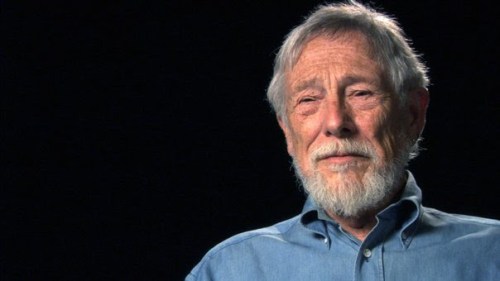
For All, by Gary Snyder

Gary Snyder

Fascinating as it can be, focusing on politics, as I have been doing lately, can overwhelm the thoughts with all that is wrong.  Take a step back, and the question becomes what is right?  And also, what isn’t touched by any of that?

Watching something that’s always right – the dogs running around the yard – I thought of this poem by Gary Snyder.  For All has long been one of my favorites, and it seems especially important now:  “I pledge allegiance to the soil of Turtle Island…”

For All

Ah to be alive
on a mid-September morn
fording a stream
barefoot, pants rolled up,
holding boots, pack on,
sunshine, ice in the shallows,
northern rockies.

Rustle and shimmer of icy creek waters
stones turn underfoot, small and hard as toes
cold nose dripping
singing inside
creek music, heart music,
smell of sun on gravel.

I pledge allegiance

I pledge allegiance to the soil
of Turtle Island,
and to the beings who thereon dwell
one ecosystem
in diversity
under the sun
With joyful interpenetration for all.

(from Axe Handles, 1983)

Career Suggestion for Newt: Science Fiction Writer

The Republican reality TV show is basically over.  The biggest difference I see between the “debate”/primary sideshow and American Idol is that I don’t think the winner of Idol is predetermined.

While the rest of us bit our nails once or twice as illusion kicked in and it seemed for a moment like Perry, could conceivably get elected, the men behind the curtain had their moment of fear in South Carolina.  You could almost hear Romney and the Republican honchos mutter, like Apollo Creed in Rocky I, “This guy thinks it’s a real fight!”

Don’t get me wrong – I am not a Gingrich supporter, but I am grateful to him for exposing the farce for exactly what it is.  The moment it seemed like he actually had a shot, the machinery kicked into high gear.  Bob Dole and John McCain got dragged in for endorsements.  Untold amounts of superPAC money flowed in to buy the election for the most qualified candidate, the one who appears to check the polls each week to see what he believes.

So Newt has to face the fact that the game was rigged, the status quo wins, and his political career will soon be over.  BUT, I have good news for him – a far greater opportunity is his if he chooses to seize it – rich and famous science-fiction author!

I used to think of Newt as a loose cannon, until I heard of his plan to colonize the moon.  I was delighted!  In this tapioca pudding election year, to hear a “serious” candidate talk of lunar outposts changed my estimation of him.  This man has too much imagination for politics!  He could be the next Ray Bradbury!  Think of it – he has enough name recognition to guarantee publication.  He could either devote himself to learning the craft or hire a ghostwriter.  Heck, if Sarah Palin can “write” a book…

All of us have known defeat in our lives, and it’s hard, but Newt, if you ever find yourself with enough time on your hands to read this blog, just please give it some thought.  And meanwhile, in the words of a very deep thinker, “Live long and prosper, dude.”

Of Inflection Points and eBooks

“Inflection point” is an interesting concept.  Originally a term from calculus, it signifies the mathematical point where a curve changes from convex to concave or vice-versa.

When I was at Intel, Andy Grove, the CEO, spoke of inflection points as key moments of transition in the life of a business or industry.  Here is a good definition of that usage from Investopedia:

“An event that results in a significant change in the progress of a company, industry, sector, economy or geopolitical situation. An inflection point can be considered a turning point after which a dramatic change, with either positive or negative results, is expected to result.”   http://www.investopedia.com/terms/i/inflectionpoint.asp#ixzz1kdT0EAcg

I don’t think we can clearly see inflection points until after the fact.  We can sense the importance of an event, but not be sure until we see the results.  Apple’s introduction of the iPod was such an inflection point, but even if Steve Jobs sensed it, the rest of us didn’t how thoroughly the way we listen to music would change.

A sadder inflection point became clear last week when Kodak filed for bankruptcy.  That was the moment, in 1975, when Kodak invented digital photography, but then chose not to purse it.

I spotted something last night that made me even more certain that Amazon’s introduction of the kindle will be seen as such an inflection point.

Last week I wrote about hearing a talk by Mark Coker, founder of Smashwords.  http://wp.me/pYql4-1DD.  Last night I saw that Coker is one of two keynote speakers, and is presenting three workshops, at one of the better writing conferences, the 28th annual San Diego State conference, taking place this weekend.

I attended the SDSU conference in 2007 because I’d met someone who sold her book there.  In 2007, one speaker talked about Print on Demand.  Ebooks were not even mentioned.  This year there are the same number of seminars on traditional publishing as there are on ebook publishing, and this in a conference that draws a lot of agents and editors. http://writersconferences.com/index.htm

I did a rough count of seminar topics, judging their their emphasis as well as I could by the titles:

39 seminars on craft of writing
8 seminars on how become traditionally published
8 seminars on how to e-publish
8 seminars on marketing or other topics
1 seminar on social media

To me, these numbers do not signify an inflection point; they signify an inflection point that has already passed.  Last week I heard an established writer say “the jury on ebooks is still out.”  I don’t think so.  I think the battle is already over.  When new technologies affect traditional media, be it music, photography, or writing, they always carry it toward greater democracy, toward putting ever more powerful tools in everyone’s hands.  This does not appear to be a reversible trend.

We all miss certain artifacts after they’re gone.  Some music lovers swear by the sound of vinyl, and while I don’t miss the darkroom, silver prints could be beautiful, and I love old kodachromes.

I hope we don’t see a day when paper books become collectors items, but nostalgia will not hold back the tide, especially when it’s grounded in both a sense of personal freedom and economic reality.  To paraphrase what a Zen teacher said about change:  we can be okay with it.  Or not be okay with it.  The one thing we cannot do is stop it.

Yep, thats me. How many artifacts of the past can you count?