Gaia’s Secret by Barbara Kloss: A Book Review

I met Barbara Kloss a year ago at a California Writer’s Club workshop. We talked during the breaks, and later traded a few emails, based on a shared interest in young adult fantasy, but we lost touch when she and her husband moved to Phoenix.

Last fall, when Barbara emailed that she had published her first novel to Smashwords, I offered to review it here.  Due to the holidays and a penchant for multi-tasking, I am only getting to it now.

Daria Jones lives on a ranch outside of Fresno.  Her biggest worry is talking her overprotective father into letting her go away to college – that is, until her father disappears, and two non-human creatures show up at the ranch to kill her.  Family friends she has known all her life hustle her through a portal into Gaia, a world where magic not only works but can easily get you killed.

Gaia’s Secret introduces an appealing heroine whose 21st century sensibilities do not mesh well with the her destiny as a “special” child who was hidden away for her own safety.  Daria reacts as we might, with anger and fear, as all of her certainties crumble.  She doubts herself, her sanity, and her friends in turn.  It is her human failings, her pouts and impetuous actions, that make her so appealing, and save her from the “secret princess” cliche of so much YA fiction.

Early in the story, an ally of Daria’s father plays chess with her as her party hides from pursuit.  “You learn a lot about a person by their strategy,” he says.

“What about a person who has none?” Daria asks.

“Having no strategy is still a reflection of character,” her father’s friend replies.  “You’re impetuous and you don’t understand the consequences of your actions.  And you don’t have the patience to learn, which prevents you from making good decisions.”

Daria fumes but later admits that he’s right as her party ventures farther into a magical world where bad decisions become increasingly dangerous.

Structured along the lines of Joseph Campbell’s hero story, Gaia’s Secret also appeals as a quest tale and a romance, thought Daria’s temper and “bad decisions” lead to muddles on all fronts.  They ultimately deliver her into the hands of the traitor who started by sending assassins to kill her on earth.

Can Daria harness her newly emerging and uncontrolled magical powers in time to save herself, her father, and friends?  Since Ms. Kloss has said on her website that she is working on the sequel, I don’t think it’s a huge spoiler to say the answer is yes. http://scribblesnjots.blogspot.com/

Author, Barbara Kloss

Daria attains her quest in the end.  She and her father are reunited in safety.  She and her heart throb finally admit their love for each other, but that doesn’t mean things end happily ever after.

The world of Gaia is ruled by a king, and though it’s a magical world, as a young woman at court, Daria has far less freedom than she did in Fresno.  When temper overrules caution, and she mouths off to the king, she winds up with guards outside her door – for her “protection,” and no chance to marry the man she loves.  Good thing a sequel is coming.

A click on the book at the top of this post will take you to Smashwords where you can read the opening pages.  Those who enjoy  YA fantasy will probably choose to download the rest of this lively story with its feisty and endearing heroine.

An Excellent Article on the Occupy Movement

“It is no longer sufficient to appeal to government to put things right; a corrupted system will not reform itself. We must create new systems, new modes of decision-making and interaction, and new forms of economic behavior to replace the old.”  

These words of Carne Ross, a former British diplomat come from an article in the Feb. 27, 2012 edition of The Nation, “Occupy Wall Street and a New Politics for a Disorderly World.” http://www.thenation.com/article/166122/occupy-wall-street-and-new-politics-disorderly-world

Thanks to blogger, Henry David Thorough for the link: http://deliberateobserver.wordpress.com/

A Great Site With Free Books, Courses, Movies, and More

http://www.openculture.com/

How about a website with four hundred free online classes from well known universities like:

  • “Introduction to Visual Thinking,” from Berkeley
  • “Virgil’s Aeneid,” taught by a Stanford professor
  • “Game Theory,” from Yale
  • “Science, Magic, and Religion,” from a class at UCLA

What if the same website had classical audio books:

  • Poets like Eliot and Ginsberg reading their own work.
  • MP3’s of numerous authors:  Jane Austen, Charles Dickens, Fitzgerald.  Mary Shelley, Frank L. Baum.  Wanna hear Beowolf, The Iliad, or Moby Dick on the morning commute?
  • Or perhaps as you sit there in traffic you’d like to while away the time with Gibbon’s complete Decline and Fall of the Roman Empire.

On open culture you will also find free ebooks by a similar set of authors.

And 450 free movies, much like you see on TCM, but with some hard to find gems, like Luis Bunel’s 1930’s surrealist classic, L’age d’Or, or the 1902 French science fiction clip, A Voyage to the Moon.

On Openculture, you can also find free language lessons, free textbooks and other goodies.

But wait, there’s more!

I found the Openculture link on a wonderful WordPress Dailypost by Sylvia V., who lists a total of six sites where she goes for inspiration.  Now, thanks to her info, we can do the same.  http://dailypost.wordpress.com/2012/02/07/inspiration-that-clicks/

Go I Know Not Whither, Bring Back I Know Not What – Part 2

We left Fedot standing outside a tall mountain at the end of the world.  The ancient frog who had been his companion couldn’t carry him further, but she was able to tell him how to proceed.  She advised him to enter a cavern, hide himself, wait for two men to appear, and do exactly what they did.

Everything happened as the frog foretold.  Two old men entered the cavern and called out, “Shmat Razum!  Come and feed us.”  Light blazed from candelabras, a feast appeared at the table, and the two men ate their fill.  When they were done, they cried, “Shmat Razum, take it all away.”  The feast disappeared and the lights went out.

When the men left, Fedot called “Shamat Razum, give me some food.”  Instantly a feast appeared.  Then Fedot did something exceptional.  He said, “Shamat Razum, come, brother, and sit down with me, let us eat and drink together. I can’t stand eating alone.”

The spirit – for that is what he was – thanked the hunter and told him the old men had never once asked him to share a meal in the 30 years he had served them.  Fedot said, “Come and serve me.”  Shamat Razum agreed and they left the cave together.

All along, Fedot has shown two attributes that will save him, qualities that are keys to success in many fairy tales.  Courage and conventional strength are not enough.  First in importance, Fedot is willing to listen to all “the spirits,” all the creatures who offer help and advice.  He also treats them courteously, as welcome guests and friends.  It makes little difference whether we call them spirits or archetypes.   Through his long career, James Hillman, the post-Jungian founder of Archetypal Psychology insisted we treat the figures in our dreams and fantasies with the same respect we would show to any flesh and blood visitor.

In modern terms, Fedot’s journey leads him steadily into the deeper layers of psyche.  His dove-woman wife is closer to the human realm than her mother, and her mother is closer  than the frog.  More distant from everyday life than any of them is Shamat Razum, a spirit whose nature and shape we never know, even though Fedot calls him, “brother.”  These are the critical characters of the story – the only two who are named.  Shamat Razum is the “I know not what” of the story’s title.  Through the rest of the tale, Shamat Razum manifests many qualities.  He is prophetic, he is a spirit of wind and air, and above all, he is a trickster.  The myths of many indigenous groups begins with a trickster who is their world creator.  For some Native American tribes, history begins when Coyote dives into the ocean to bring up the soil to make land.  No spirit is more fundamental.

Fedot and Shamat Razum leave the frog with the mother-in-law and journey on toward Fedot’s home.  When the hunter says he’s too tired to walk, his spirit brother picks him up like a strong wind and carries him through the air.  Shamat Razum finally stops at a small island where he lays out a scam to steal some magical implements.

“Three merchant vessels will sail by and stop at the islet,” he says.  “Thou must invite the merchants hither, hospitably entertain them, and exchange me for three wondrous things which the merchants will bring with them. In due time I will return to thee again.”

The two of them pull off their con job, reminding one of Hermes / Mercury, the classical trickster god, who is also the god of thieves.  We’re not in a world of classical heroes – no knights in shining armor.  Fedot’s life depends on letting go of illusions like that.  Shamat Razum has foreseen that the king will meet him with treachery, so he helps Fedot cheat the merchants out of objects that allow him to raise an army and navy.  In the final battle, Fedot’s kills the king and scatters his troops.  The people choose Fedot and his wife, who was hiding in the forest as a dove, to be their king and queen.  Together they rule the land with “wisdom, peace and grace.”

<

p style=”text-align:center;”>***

James Hillman once said, “If we had more stories when we were young, we’d need fewer therapists as adults.”  In his PBS series on myth, Joseph Campbell showed millions of viewers the treasures of wisdom that hide in old tales.  So what do we make of  Go I know not wither?

I think we have to approach interpretation with something like the courtesy with which Fedot meets the spirits.  In stories that are alive for us, we don’t start by asking what things mean.  We don’t ask what hobbits signify, or what part of the psyche orcs represent.  If someone has written a dissertation on Batman and the Riddler, I’m in no hurry to read it.  Older tales, like this one, are far enough removed in time and space that they’re not alive for us in that sense.  I think it makes sense to ask what it means – carefully.  Everyone has a right to their own answers.  Here are some of mine.

I look at this tale from the point of view of transition points in our lives.  When life and excitement drain from what we are doing, what then?  I believe this story suggests we listen to the small creatures of dreams and fantasy.  That we ponder the little impulse, the little whisper, the voice that says, “Wouldn’t it be nice to…?”  It means not giving in right away to our “rational” voices, the ones that say we have no time for such nonsense.

In speaking of “voices” we’re not talking of taking these things literally.  James Hillman insisted that literalism is the enemy of a soul-centered life, and Fedot does not wind up on a street corner, talking to imaginary friends.  According to St. Paul, the ability to “distinguishing between spirits,” is a gift from God ( 1 Cor 12:10), yet one that people like Campbell suggest we can learn to some degree.  Simply exploring and thinking about old stories, or keeping a dream journal, are ways to begin.

It’s a good bet that the answers we find, the paths we are shown, will not be ones we expect.  Shamat Razum, the way-shower, is a trickster, as hard to pin down as the wind.  If the answers to the turning points in life we’re easy to find, stories like this one would not have told for generations.  Carl Jung once said, “We make all the important decisions in life on the basis of insufficient information.”   Hearing the old tales and listening to imaginal voices may be one more way of getting a clue.

I welcome the comments of anyone who has read this far.  What did you make of this story, and what of you make of old tales in general?  Do you have any favorite collections or authors on the subject?  Please take a moment to post them and leave your impressions.

Go I Know Not Whither, Bring Back I Know Not What – Part 1

The title of this post comes from a Russian fairytale that has intrigued me for many years.  Like much Russian folklore, it’s complex and winds through many episodes, but the title summarizes the story.  Fairytale protagonists routinely draw difficult assignments – find the name of the little man spinning straw – but the task in this story seems impossible.  Life periodically sends us riddles like this.  At times we find ourselves on a quest for something, but we don’t know what it is or where to look.  This is a story for moments like that.

Illustration for Go I Know Not Whither by Ivan Bilibin (1876-1942)

Most folktales deal with the problems of youth – finding a place in the world, or a spouse, while avoiding giants and trolls.  Go I know not whither belongs to another class of tales that deal with the problems maturity brings.

Fedot, our hero, is an accomplished soldier, marksman, and hunter.  The king “favored him above all other soldiers.”  He’s at the top of his game – in other words, at the point in life where a mid-life crisis can hit.  But crises of disorientation don’t just visit at mid-life.  Fedot’s story relates to any time when the wheel turns, when life’s old answers no longer work, and the way forward is dark.

Ivan Bilibin illustration

Fairytale humans always need helpers – always.  These helpers are usually creatures that others despise, like wrinkled old women, dwarves, and frogs.  To succeed, a hero must see beyond appearances.  Courtesy is also a must to win the help of these beings who prove essential.

When Fedot wounds a dove in the forest and hears the little bird beg for its life, he listens.  The bird gives him special instructions.  When he obeys, the dove becomes a beautiful woman.  “You have won me,” she says.  “I shall be your wife.”

Fedot’s wife, lovely, clever, and skilled in the arts, soon draws the unwelcome attention of the king, who schemes to get rid of Fedot by sending him on a series of impossible quests.  Fedot’s wife is skilled in magic and helps him succeed in all but the final challenge, designed by the king with the help of the Baba Yaga, a notorious Russian witch.  On pain of losing his head, Fedot must “Go I know not whither and bring back I know not what.”

Though she cannot advise him, Fedot’s wife sends him to visit her mother, who also is at a loss, but calls the birds of the air, the creatures of land, and those of the sea, asking for guidance for her son-in-law.  By now, those who know Joseph Campbell’s work, will recognize a critical stage of the hero quest that Campbell called, “Meeting the Goddess.”  Fedot has met her in two aspects.  His wife first appeared as a dove, sacred to Aphrodite.  Now his mother-in-law is revealed as the Great Mother, for all creatures do her bidding.  Like her daughter, she doesn’t know the way, but she locates one who does.  A wrinkled old frog, with her deep and primitive wisdom, knows the way to “I know not whither.”

The frog leads Fedot to the end of the world where a river of fire surrounds a great mountain.  She carries him past the flames, then announces that she can go no farther.  Fedot must go on alone.  With all of his helpers inadequate to the quest, where is he going to turn?

Because this is a long story, I am going to break this post into two parts.  If anyone wants to peek at the outcome before then, here is the text of the story on Project Gutenberg:  http://www.gutenberg.org/files/34705/34705-h/34705-h.htm#ch7.  Enjoy!

To Be Continued

Music of Hope: “River’s Gonna Rise,” by Warren Haynes

Last summer, I posted about how much I liked Warren Haynes new solo album, Man in Motion. http://wp.me/pYql4-RV . Haynes, one of Rolling Stone’s 25 Best Guitarists of All Time, is best known for his work with the Allman Brothers and The Dead (that’s the Grateful Dead, minus Jerry Garcia).

I still enjoy the whole album, but lately find myself singing one of the cuts in particular, “River’s Gonna Rise”, almost like an anthem or a mantra of hope.  No accident.  On a youTube clips made last summer, Haynes said, “This is for the Occupy Protestors all over the world.”  Here’s a great clip of him singing it solo in a studio.  Listen and enjoy!

River’s Gonna Rise

Darkness hides the faces
Of we who hold the power
We don’t need to be rich
We only need to be free
Chains of oppression
Never gonna break
But a day will come when we hold the key

Bells will be ringing
Flames reaching to the sky
Higher and higher
Fueled by the winds of change
Sweet taste of freedom
Fresh on the tips of our tongues
And the dust of the past is all that shall remain

For All, by Gary Snyder

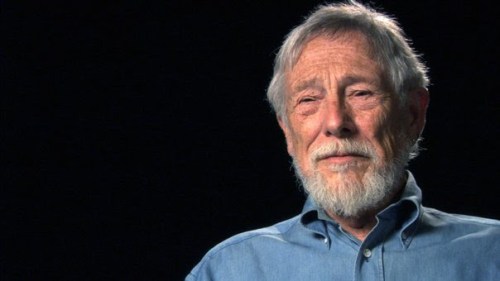
Gary Snyder

Fascinating as it can be, focusing on politics, as I have been doing lately, can overwhelm the thoughts with all that is wrong.  Take a step back, and the question becomes what is right?  And also, what isn’t touched by any of that?

Watching something that’s always right – the dogs running around the yard – I thought of this poem by Gary Snyder.  For All has long been one of my favorites, and it seems especially important now:  “I pledge allegiance to the soil of Turtle Island…”

For All

Ah to be alive
on a mid-September morn
fording a stream
barefoot, pants rolled up,
holding boots, pack on,
sunshine, ice in the shallows,
northern rockies.

Rustle and shimmer of icy creek waters
stones turn underfoot, small and hard as toes
cold nose dripping
singing inside
creek music, heart music,
smell of sun on gravel.

I pledge allegiance

I pledge allegiance to the soil
of Turtle Island,
and to the beings who thereon dwell
one ecosystem
in diversity
under the sun
With joyful interpenetration for all.

(from Axe Handles, 1983)

Stephen Colbert’s Super PAC is Worth a Million Dollars

Americans for a Better Tomorrow, Tomorrow, the Super PAC started by Comedy Central’s Stephen Colbert, filed papers with the Federal Election Commission yesterday stating that it has raised $1,023,121. “How you like me now, F.E.C? I’m rolling seven digits deep!” Colbert wrote in an addendum. http://money.cnn.com/2012/01/31/news/economy/colbert_super_PAC_filing/index.htm

Colbert, who has been using his show to explore the murky world of campaign finance added, “It’s the way our founding fathers would have wanted it, if they had founded corporations instead of just a country.”

Documents filed by Colbert showed that most contributions were less than $250, but listed some interesting exceptions.  Gavin Newsom, the Lieutenant Governor of California, gave $500.  Newsom said, “I applaud Stephen Colbert exposing the absurdity of our current political financing system. I’m proud to support Colbert’s message with a donation. And I like his haircut.”

It can hardly be an accident that Colbert filed his report on the same day that Mitt Romney completed his purchase of the 50 Florida delegates using Super PAC funds.

I spotted an interesting article in the morning paper, drawn from the Washington Post:  “GOP super PACs may give Obama a run for his money.”  Unusual so early in an election year – no high-sounding phrases about the will of the people or selecting the best candidate.  Just a bare statement of fact that the winner will be the one who buy the most airtime on TV.

On the January 20, Bill Moyers interviewed David Stockman, former budget director for Ronald Reagan, who shared his disillusionment:

“we also have to recognize the pessimism that the public reflects in the surveys and polls is warranted…The Congress is owned lock, stock and barrel by one after another, after another special interest…So how do we turn that around? I think it’s going to take, unfortunately a real crisis before maybe the decks can be cleared.” http://billmoyers.com/

On the same program, Moyers interviewed Gretchen Morgenson, a Pulitzer Prize winning journalist for The New York Times and author of the 2011 book, Reckless Endangerment: How Outsized Ambition, Greed, and Corruption Led to Economic Armageddon.

Morgenson agrees that another crisis, worse than 2008 is inevitable, because nothing has changed, and expects it to happen within the next 10 years.  After listening to her sadness and anger, Moyers asked Morgenson if there was anything that gave her hope, and she said yes:

“What makes me optimistic is that people are understanding this now, that Main Street gets it, you know, the thing that I found compelling about the Occupy Wall Street movement was that it seemed to be tapping into this anger. Previous to that there was just this kind of silence, you know, people were maybe too flabbergasted by what had gone on.
…………………………………..
But we still don’t know it all and until we do we can’t really protect ourselves going forward. But I do get a sense that there is anger, that there is rage and that maybe, maybe, just maybe somebody in Washington might pay attention to that.”