Workshop, Feb, 5: Make Yourself Irresistable to Editors and Agents

On February 5, the Sacramento branch of the California Writer’s Club is hosting a workshop called, Make Yourself Irresistable to Editors and Agents

Steve Liddick, who is in his second year of organizing workshops for the club, has posted a notice to Craigslist and asked us to spread the news:   http://sacramento.craigslist.org/cls/2146711302.html  I’ll be happy to email the brochure upon request (click the gravatar for my email). 

Times are 9:00-4:00, in the conference room of the Luau Gardens restaurant.  This is the club’s regular meeting venue, has wi-fi, and is close to the intersection of all the Sacramento freeways.  Steve said the presentation will be lively and enterataining, and everyone will have the option of a three minute, for-real pitch to one of the agents in attendance.  Price is $99 for non-club-members, $85 for members.

Steve organized the all day blogging workshop last June that got me started in this endeavor.  The California Writer’s Club also gives me a sense of connection to one of my writing ancestors – it was founded by Jack London.  If you haven’t seen my post on a visit to his ranch, please look in the October 2010 archive.

If you do decide to attend, I’ll see you there.

How Garth Nix Writes a Novel

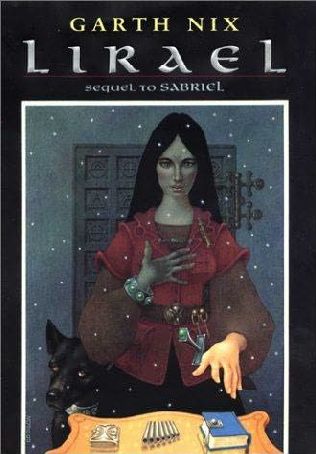
Who is Garth Nix?  He is a prolific Australian writer of young adult fantasy, whose “Abhorsen Trilogy,” (1995-2003) more than any other fiction, inspired my own current efforts, and “gave me permission” to write the stories I’m working on now.
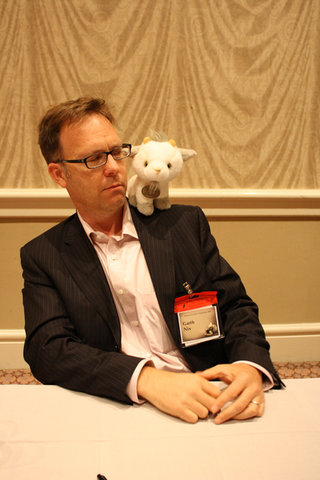
Garth Nix and Yokimo at World Fantasy Con 2009

Writing anything is better than not writing something perfect – Garth Nix

Abhorsens (there is only one at a time), are necromancers charged with keeping the dead, dead – the nastiest dead do not want to stay that way. We’re talking zombies before zombies were cool. In Liraeal (2001), my favorite book of the series, a young woman, apparently a washout from an academy of magical women, sets out with her only friend, the Disreputable Dog, and an inexperienced prince, to save a thinly disguised England and Scotland from several “Greater Dead” leaders of an army of reanimated corpses. Great stuff, like I said!

You can’t write if you don’t read – Garth Nix

Tonight I was browsing Garth Nix’s website (there is a permanent link on my Blogroll) and I came across the author’s account of the nine general stages he has gone thorough in the creation of his 14 novels.  http://www.garthnix.com/Nine%20Stages%20of%20a%20Novel.htm/a>

The nine stages are:

  1. Daydreams and Musing
  2. A Small Vision
  3. Building the Bones
  4. That First Chapter
  5. The Long, Hard Slog
  6. Sprinting Home
  7. Rest and Revision
  8. Revulsion and Dejection
  9. Parting Company

It is instructive to read all of his comments, but here is a summary:

Daydreams and Musing

This is about gathering ideas.  Nix says many people think coming up with ideas is difficult, but he says it’s easy, the fun part.  The difficulties come later.  Images, snatches of conversation, a hunch of a character, these are the the sort of things he gathers, like picking up rocks which “may or may not contain a useful gem.”   He gives examples:

  • The look of the sky in summer when a light rain is falling at sunset
  • Two old men bickering light-heartedly on the street about something that occurred forty years ago
  • The Venetian agents who stole the body of St Mark from Alexandria
  • A car with a cracked speedometer

A Small Vision

This, says Nix, is like a still from a movie he knows nothing about, but it will evoke a mood:

“Two old men are watching the rain from inside a car (with a cracked speedometer) as the sun sets in the distance, discussing their famous expedition to Alexandria to recover the body of St Mark and take it to Venice. The mood is somber and melancholic, something terrible is about to happen.”

Out of this, he is likely to build a scene, often, but not necessarily, the first one.

Building the Bones

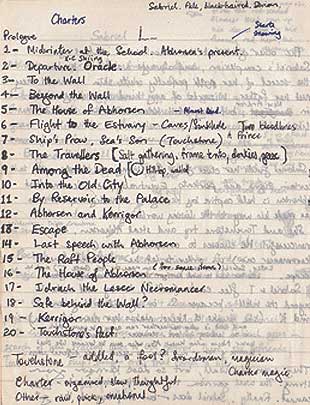
After weeks or months or even years, Nix will review any notes he has made, and write a very simple chapter summary.  He says he often does not know why he does this, since he usually diverges from any such plan within a few chapters, and by the half-way mark the book has little if any relation to the outline, but he notes that an outline serves other purposes:

…it makes me think about the overall structure of the novel, which I think kickstarts some subconscious process that will continue through the writing, monitoring the narrative structure. The second purpose is that it serves as a psychological prop. If I have a chapter outline, I presume I know where I’m going, even when I don’t really.

Chapter Outline for "Sabriel"


The First Chapter

By “first chapter,” Nix says he usually means “prologue,” and that once that and the chapter outline (in whichever order) are complete, the book usually rests for weeks or months.   During the interval he works on other things, and continues to think about the project, but doesn’t actually work on it.

The Long, Hard Slog

Nix always used to write first drafts longhand before copying them to a computer.  Now he is not likely to do an entire draft longhand, but usually the opening chapter(s) are first written in notebooks.  I never tell myself I am writing a 100,000 word book. When I sit down to write, I focus on the fact that I am writing a 2,000-4,000 word chapter. A chapter is a do-able thing. Even so, he calls it a slog, and says 90% of his writing time is an uphill battle to complete the first 2/3 of the novel.

Sprinting Home

At a late stage in the narrative, the writing will kick into overdrive, and the author will find himself working both day and night (he ordinarily likes to keep regular office hours and spend evenings with his family.  I think there is some relationship between the energy put into a book and the energy of the narrative, and when everything is building to the climax and resolution of the story I think that for me at least, it helps to keep at it, to write fast and really charge for the finish line.

Rest and Revision

Nix likes to let the story lie fallow for several weeks before doing revisions, though he says now that’s he is often working on deadline, he has only so much time before he has to send it off to an editor.

Revulsion and Dejection

Nix says, …halfway through a book I usually doubt my work, but I get over it and keep going. Often, when the book is done and has gone off to the editor, this doubt returns and I think that not only have I lost the ability to write, I’ve demonstrated this lack in the latest manuscript. He mentions several of his strategies for getting past this mindset on the website.

Parting Company

The final point he makes is the importance of letting go.   Before breaking into print, Nix worked as an editor at HarperCollins, and says,  In my years in publishing I often met authors whose whole self was entirely bound up in a single book, usually their first. Their lives would rise or fall depending solely on that book’s fate, and in this business, that’s an incredibly foolhardy and dangerous gamble to make.

Garth Nix first came to my attention through an interview in the arts section of the local paper.  I liked his matter-of-fact tone about his writing process then, and I like it on his website now.  He simply offers his process as one approach, not the approach, and the message is, you really do know what to do – now go do it.

Just write one chapter at a time and one day you’ll be surprised by your own finished novel – Garth Nix
The Forgotten Garden by Kate Morton

I choose new books in a variety of ways. Over the last year, I drove frequent round trips to the bay area and became a big fan of audiobooks. Earlier this month, while roaming iTunes, I came across this description of  The Forgotten Garden:

A foundling, an old book of dark fairy tales, a secret garden, a maze, an aristocratic family, a love denied, a mystery – The Forgotten Garden is a captivating, atmospheric, and a compulsive listen about the past, ghosts, family, and memories…

Ghosts, memories, identity – these are hot-buttton themes for me lately, and I did the download. As I got into the story, I wanted to study certain passages in detail, so being a newly-equipped Kindle wonk, I downloaded the eBook.

In 1913 London, a mysterious woman, “the authoress,” leaves a four-year-old girl aboard a ship bound for Australia, with strict instructions to wait for her on the deck.  The authoress never returns.  The child, who hits her head during the voyage, lands with no idea who she is.

A dockmaster takes her home, and he and his wife name her Nell.  On her twenty-first birthday, the dockmaster tells Nell the story, plunging her into a search to learn who she truly is:

Pa’s secret had changed everything.  His words had tossed the book that was her life into the air and the pages had been blown into disarray, and could never be put back together to tell the same story…This person she was, or thought she was, did not really exist.  There was no Nell O’Connor.

Nell never quite unravels the mystery, but when she dies in 2005, with “The authoress…I was supposed to wait,” on her lips, her granddaughter, Cassandra takes up the search.

The book spans over a century, largely focusing on the years 1913, 1975 when Nell travels to England to search for her past, 2005 when Cassandra does the same, and the turn of the century, when we meet the authoress, the mysterious Eliza Makepeace, as an impoverished child in the London of Jack the Ripper.  Eliza lives with her brother Sammy, a changeling….

A what???  A changeling – one of the strange creatures the fairies leave behind when they take a human child.

Some reviewers fault The Forgotten Garden for it’s slow buildup, its rambling style, its sheer length and focus on detail, but I think those very elements may add to the subtle strength of a story that can smoothly fuse what we think is real with what we think is not.  This is not your typical urban fantasy, in the way that Buffy is urban fantasy.  There are still places in Britain where you can walk outside on a moonless night and understand why people believe in other worlds.  Cornwall, where Nell lived as a child, is one of them, and Morton brings this into her story.

It is often the custom these days, for books and movies to open with white-knuckle action.  Perhaps that’s why I like audiobooks so much.  Something about the speaking voice, its rhythms and pauses, slows us down enough to allow the teller to weave the tale.  The point is magic, after all, and there are many ways to get there, some of them in danger of being forgotten.

Kate Morton - Authoress

Kate Morton’s website:  http://www.katemorton.com/

2010 in review

Thanks to everyone for stopping by in 2010!   I’ve enjoyed this a lot more than I expected, especially now that I think I have a clue on what I am doing.  I’m working on two new posts, and now that the New Year’s Stooge-a-Thon is over, I’ll get back to them any day now!

A VERY HAPPY NEW YEAR TO ALL – Morgan

Here are a few interesting stats from WordPress:

***

The stats helper monkeys at WordPress.com mulled over how this blog did in 2010, and here’s a high level summary of its overall blog health:

Healthy blog!

The Blog-Health-o-Meter™ reads Fresher than ever.

Crunchy numbers

Featured image

The Leaning Tower of Pisa has 296 steps to reach the top. This blog was viewed about 1,200 times in 2010. If those were steps, it would have climbed the Leaning Tower of Pisa 4 times

In 2010, there were 51 new posts, not bad for the first year! There were 154 pictures uploaded, taking up a total of 75mb. That’s about 3 pictures per week.

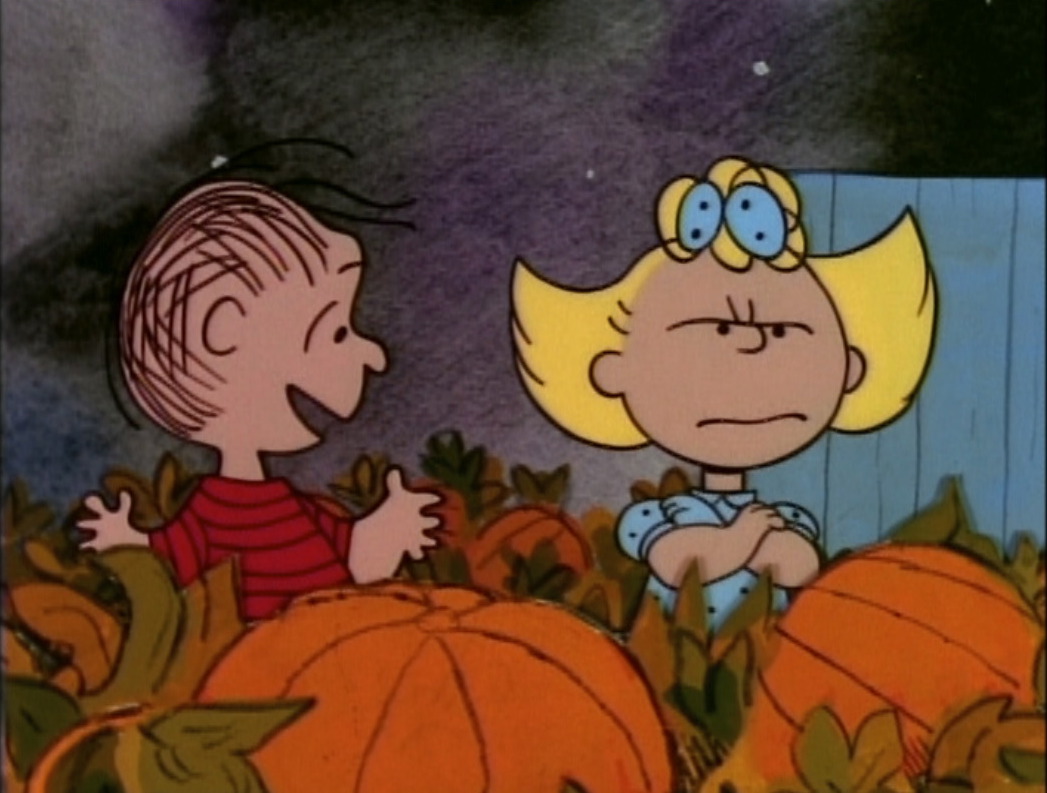
The busiest day of the year was December 4th with 64 views. The most popular post that day was Good Grief – A Visit to the Charles Schulz Museum.

Where did they come from?

The top referring sites in 2010 were mail.yahoo.com, en.wordpress.com, healthfitnesstherapy.com, facebook.com, and WordPress Dashboard.

Some visitors came searching, mostly for persephone, snoopy and woodstock, jerry uelsmann, hamster tish, and snoopy and woodstock christmas.

Attractions in 2010

These are the posts and pages that got the most views in 2010.

1

Good Grief – A Visit to the Charles Schulz Museum November 2010
4 comments

2

Hamster Collaborates with Nobel Laureate October 2010
3 comments

3

About June 2010

4

Also About July 2010
1 comment

5

“Tinsel,” by Hank Stuever, and other Christmas musings. November 2010
1 comment

Rebel Buddha: On the Road to Freedom by Dzogchen Ponlop

If I’d had any idea how good this book is, I would have read it much earlier. I have never come across a better introduction to Buddhism, one that is neither too esoteric nor too simplistic.  The author aims to present the core teachings, independent of custom, convention and eastern cultural trappings.  Some of his conclusions may seem surprising.  For instance, he clearly states that practicing Buddhism as a religion is fine, but it isn’t essential, because the Buddha’s central teaching is simply the importance of exploring the mind, including thought, sensation, and emotion, for that is where our suffering happens and where we experience it.

Dzogchen Ponlop’s experience as an easterner transplanted to the west makes him uniquely qualified to speak of this eastern tradition transplanted to the same soil.  When instructors at Columbia University asked him to introduce himself, he was at a loss.  Born of Tibetan parents in exile in India, and emigrating to New York City, he wasn’t sure who or what he was.

Dzogchen Ponlop Rinpoche

Such disorientation as a prelude to an unexpected opening of awareness parallels the realization of selflessness, which is central in Ponlop’s exposition of the Dharma or teachings.  We look in our body and mind for the “self,” and when we finally realize we cannot find it, thinking may stop, allowing us to experience a moment of pure, unconditioned awareness.  This, he says, is “our fundamental being, our basic, open and spacious awareness.  Imagine a clear blue sky filled with light.”

The fundamental cause of our suffering is clinging to a sense of self that is not only illusory, but divides ultimate and indivisible reality into a minefield of pleasures and pains, friends and foes, of the ego.  The Buddha’s terms “emptiness,” and “selflessness” have negative connotations in the west, but Ponlop explains that the actual experience of these states is anything but heavy or depressing.  “When we have a genuine experience of emptiness, it actually feels good…It’s not a vacuous place where everybody is desolate and moaning about something – that’s our ordinary life.”

***

Ponlop’s title, Rebel Buddha very naturally references the historical Prince Siddhartha, who abandoned all the privileges and responsibilities of a crown prince in his search for spiritual truth.  The title also calls to the indestructible potential for true freedom in each of us.  The rebel buddha within is that unconditioned awareness, “a trouble-maker of heroic proportions,” that will accept nothing less for us than the freedom that all the historical Buddhas discovered.  The actual word, “buddha,” does not refer to a few people only, but means, “awakened,” and is part of our own nature.  Even the willingness to investigate whether this is true can be enough to set our feet on the path.

Ponlop quotes from a famous teaching the historical Buddha gave to the citizens of a town who were confused by the conflicting teachings they had received from a number of itinerant preachers – not so different from what can happen to any seeker now who takes a few workshops an buys a few books on spiritual topics.  Buddha advised the citizens not to take the word of any authority or scripture, and not even to take his word, but to put the various teachings into practice, and “after observation and analysis, when you find that anything agrees with reason and is conducive to the good and benefit of one and all, then accept it and live up to it.”

There’s a lot of that in this book of Dzogchen Ponlop, a spiritual master who writes as a fellow traveller on the road.

A Kindle for Christmas: Thoughts on Ebooks

I wasn’t a stranger to ebooks.  I have apps on the iPod that I use for reading in places like doctors’ waiting rooms, but the screen is too small to look at for long at a time; it would never do on an airplane, for instance.  I have Kindle, Stanza, and Nook apps on my laptop as well.  It’s  great for reference materials, but not for kicking back on the couch with a mystery.

This year, after a lot of vacillation, I sent my letter to Santa, and he brought me a Kindle.  So far, I love it.  This no more negates my love of “real” books than enjoying an apple means I’m about to give up oranges, but it does raise some interesting questions.

After charging the device and reading the instructions, I jumped on Amazon to find something new to read, and I wound up downloaded half a dozen free Kindle books in rapid fire – indulging the rare guilty-pleasure of judging books by their covers.  Unfortunately, I deleted most of them after the first few pages; they were simply not very well written.

On one hand, I was reminded of the predictions of Laura Roberts, a literary agent who cautioned that the eBook revolution is not necessarily going to be a simple egalitarian paradise for creative people too long repressed by the publishing establishment.  In an article I quoted here in July, she said that when paid agents and editors no longer serve as screeners, we’ll have to do it for ourselves, on our own time and our own dime:   https://thefirstgates.com/2010/07/08/the-brave-new-world-of-epublishing

I find my somewhat ambivalent judgements interesting too.  (“Not very well written” in this case, a euphemism for “this book sucks.”)

I have often encouraged people by saying, “Everyone has a story to tell.”  That is, everyone. Is it a bad thing that anyone who wants to can now post their ebook to Amazon?  Aren’t many of my judgements arbitrary and conditioned by the literary and publishing status quo?

I suppose it boils down to something simple.  Everyone may have a story to tell, but that doesn’t mean I’m going to pay money to read it.  And given a finite amount of time, there are some books I want to read before the others.

My first new rule of thumb for managing the Kindle is this:  never pay for (an unfamiliar) book that does not have a print edition I can search through first.  I really understand why editors and agents emphasize the importance of the opening pages.

I’m sure there will be further revelations.

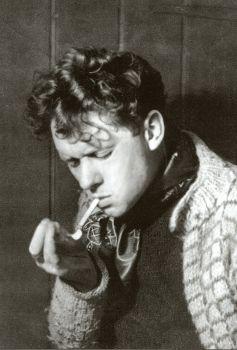
A Child’s Christmas in Wales by Dylan Thomas

My best friend gave me Dylan Thomas’ incredible prose poem back in high school. In whatever form – which now include recordings and at least one TV adaptation – it has been a part of every Christmas since then. I pass it on now, with best wishes for the holiday:

One Christmas was so much like another, in those years around the sea-town corner now and out of all sound except the distant speaking of the voices I sometimes hear a moment before sleep, that I can never remember whether it snowed for six days and six nights when I was twelve or whether it snowed for twelve days and twelve nights when I was six……

http://www.bfsmedia.com/MAS/Dylan/Christmas.html

Dylan Thomas

…Always on Christmas night there was music. An uncle played the fiddle, a cousin sang “Cherry Ripe,” and another uncle sang “Drake’s Drum.” It was very warm in the little house. Auntie Hannah, who had got on to the parsnip wine, sang a song about Bleeding Hearts and Death, and then another in which she said her heart was like a Bird’s Nest; and then everybody laughed again; and then I went to bed. Looking through my bedroom window, out into the moonlight and the unending smoke-colored snow, I could see the lights in the windows of all the other houses on our hill and hear the music rising from them up the long, steady falling night. I turned the gas down, I got into bed. I said some words to the close and holy darkness, and then I slept.


The King is Dead; Long Live the King!

The Oak King and the Holly King

As predicted by Las Vegas odds-makers, the Oak King scored a narrow victory today over his twin brother, the Holly King. The Winter Queen is reportedly in mourning, though she is expected to emerge – as she has since time began – in her guise as the Spring Maiden, on or about February 2, (aka, Imbolc, Candlemas, St. Brighid’s Day) to take her place beside the new reigning monarch. At least that is the story the old Britons told to explain how the darkest day of the year hides the seed of summer, and why the Winter King is likely to win the scheduled rematch on June 21.

Winter Solstice: the default explanation

Though I cannot prove it, I’ve always believed this tale of eternally battling twins must have gone into the making of the black-on-the-left vs. black-on-the-right episode of Star Trek.

Is this a real legend – one the Celts and Saxons actually told?   Robert Graves said as much in The White Goddess, suggesting that Balin and Balan, as well as Gawain and the Green Knight represent the eternally dueling pair in Arthurian legend.  Sir James Frazer’s earlier Golden Bough had a similar section entitled “The Battle of Summer and Winter,” although he told the story with only one eternally dying and reborn Divine King.

The Oak and Holly kings battle at a 2005 Winter Solstice ritual. Photo by Anderida Gorsedds.

Whatever you may think of the story, now that the solstice has arrived, may you stay warm and dry, and bask in the confidence that summer is coming around again.