What I’m Listening to Now – A World Undone by G.J. Meyer

I’m a huge fan of audiobooks and have been since the days of cassettes.  Audiobooks are great for travel, especially over repetitious routes.  I spent last weekend in the bay area to attend some Tibetan teachings, and I’ll be making more trips in the weeks ahead, so I wanted to find something to listen to on the road.

I usually favor action-adventure novels for travel, but this time I chose A World Undone: The Story of the Great War, 1914-1918, by G.J. Meyer.

The opening was so fascinating – history truly can be more fantastic than fiction – that I downloaded the ebook in order to read certain sections in detail.

But why choose such a tragic story for a road trip?

For several reasons.  Mostly because the Great War has held a haunting fascination for me since I read All Quiet on the Western Front when I was sixteen (the author, G.J. Meyer said something similar in his introduction).  Because of my father’s work, we were living in France when I read the book, and older people at that time remembered the war.  Several told us there wasn’t a family in France that didn’t lose a father, or husband, or brother, or son.  I remember sitting in old cafes and parks, thinking that everything must have looked the same to the young men in 1914 who would march into a maelstrom no could have imagined, least of all their leaders.

Like the Titanic two years earlier, the first world war was a tragedy we cannot forget because it marked a loss of innocence for the generation it consumed and for every one that came after.  As the title of Meyer’s book suggests, a world order was swept away in a horror no one wanted.

“Thirty-four long, sweet summer days separated the morning of June 28, when the heir to the Austro-Hungarian Empire was shot to death, from the evening of August 1, when Russia’s foreign minister, and Germany’s ambassador to Russia fell weeping into each other’s arms and what is rightly called the Great War began.”

An assassination should not have sparked a world war.  In that era, assassinations were commonplace.  In the years before 1914, presidents of the United States, France, Mexico, Guatemala, and Uruguay were killed, as were Prime Ministers of Russia, Spain, Greece, Bulgaria, Persia, and Egypt.  Kings and Queens of Austria, Italy, Serbia, Portugal, and Greece were murdered, and no armies were mustered.  This time things spun out of control through a series of errors and misunderstandings that makes one cringe when seen through the lens of history.

“Men with the power to decide the fate of Europe did the things that brought war on and failed to do the things that might have kept the war from happening.  They told lies, made mistakes, and missed opportunities.  With few if any exceptions they were decent, well-intended men…But little of what they did produced the results they intended.”

Those results reverberate down through the present day.  Think of Iraq, a nation of sects and ethnic groups that hate each other, created by European diplomats who understood none of that as they drew the borders.  Think of the lesson the world learned from the Armenian genocide – that most of the time, perpetrators can get away with “ethnic cleansing.”

Meyer describes in detail these “decent, well-intended men,” leaders of backward-looking monarchies and empires that were already out of date.  Kaiser Wilhelm owned 300 military uniforms but failed to understand how little glory there was in facing machine guns and poison gas.  Franz Joseph, Emperor of Austria-Hungary, didn’t even like his nephew, the Archduke who was assassinated, but he let his generals persuade him that punishing Serbia might restore some of his nation’s fading glory.

Such accounts go on and on and perhaps are the point of this post.  A hundred years ago, political leaders failed to grasp that the world had changed and required new methods and understandings.  Today I believe our political leaders have failed to grasp that the world has changed and requires new methods and understandings.  I spotted a fine example last Friday, just before I got in the car, in Time Magazine.  In her article, “Your Global Economic Mess is Now Being Served,” Rana Foroohar says:

“Not only are the fortunes of the world’s major markets and economies still very much tied together, but the root cause of their problems is the same:  dysfunctional politics.  There are economic solutions available that could calm markets and help countries avoid the risk of a double dip; what’s lacking is the political will to implement them.”

This take on the world economic situation is eerily similar to Meyer’s description of the political landscape a hundred years ago.  Nations are linked together even when they would rather not be, while leaders are lost in the mindsets of the previous century.  Nineteenth century poet, Matthew Arnold described the condition like this:

Wandering between two worlds, one dead,
The other powerless to be born

What does one do in such a situation?  There aren’t any clear answers, but a few thoughts came to mind as I mulled this stuff over during my trip.

It helps to think that most of our leaders are clueless instead of the villains I sometimes take them to be.  The thought reminds me that it’s as much a waste of time to indulge in anger as it is to believe they have any real solutions.

Our current politics and economics are mostly driven by fear.  During the run-up to World War I, the Austrian ambassador said, “Fear is a bad counselor.”  His words are as true today as they were a hundred years ago.  Making decisions based on fear is something I try to avoid, though clearly it’s sometimes difficult.  Avoiding most TV news programs is a good place to start.

And finally, there’s something like acting as if this was already the world I want to live in.  What that looks like can change from moment to moment.  Often it’s a matter of small gestures and courtesies.  And yet, if enough people acted in ways that went beyond us and them thinking…

There’s a man named Jean Jaures who did his best to stop the outbreak of World War I.  As a pacifist and a socialist, he was loved by some and hated by others, but Meyer says,

“As a leader, a thinker, and simply as a human being, Jaures stood out like a giant in the summer of 1914…he had dedicated his life to the achievement of democracy and genuine peace not only in France but across the continent…Everyone who knew him and has left a record of the experience tells of a sunny, selfless, brilliant personality, bearded and bearlike and utterly careless of his appearance, indifferent to personal success or failure but passionately dedicated to his vision of a better and saner world.”

Jean Jaures

In Meyer’s opinion, Jaures was the one man in Europe who might have been able to calm the war fever that gripped all of Europe at the end of July.  On the afternoon of July 31, 1914, a confused and unemployed 29 year old named Raoul Villain was walking through Montmartre with a gun in his pocket.  He was planning to travel to Germany to assassinate the Kaiser, when he saw Jaures and some friends enter a nearby cafe.  Ever careless of his own safety, Jaures sat with his back to an open window.  Forgetting the Kaiser, Villain fired two bullets into his head.  War was declared the next day.

Jaures reminds me of Gandhi and Martin Luther King, two other men whose lives and deaths ask us what kind of world we want to live in.  One way or another, our actions answer that question every day.

I know what kind of response I want to give.

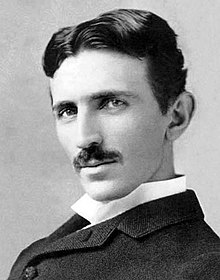
The Nikola Tesla Guide to Writing

Albert Berg’s Unsanity Files is one of the blogs I follow, enjoy, and draw inspiration from. Here is a uniqute take on Nikola Tesla, the famous inventor who held more than 100 patents. Albert discovered more than electro-mechanical genius in Tesla’s book, “My Inventions.” Here are several valuable principles about writing he discovered.  Enjoy

Albert Berg's avatarThe Unsanity Files

Those of you who follow my Twitter feed know that I recently finished reading a book called My Inventions by Nikola Tesla. Before reading this book, I had a nominal knowledge of Tesla. I read a short biography on him back when I was in high school, and I was aware of his hero status on the internet, but reading his life story in his own words gave me a new appreciation for the man.

As a child who grew up idolizing the likes of Thomas Edison, and dreaming of what it might be like to have a career as an inventor, Tesla has always held a special place in my heart. But as a writer, I realized that his approach to life was something I could emulate as a writer as well. What follows is a short list of the things I learned from Tesla’s life that I think could benefit writers…

View original post 1,223 more words

An Author’s Guide to Publishing in 2012, by Amy Rogers.

Those who have followed thefirstgates for a while will be familiar with Dr. Amy Rogers.

Amy Rogers

I reviewed her excellent first novel, Petroplague, in September, 2011 http://wp.me/pYql4-1ep.  In March of this year, she contributed a two part guest post detailing some of the rapid changes in today’s publishing landscape, an issue she follows in depth http://wp.me/pYql4-1MR.  Last Friday, Amy gave an updated presentation on  publishing options to the Sacramento branch of the California Writer’s Club during our monthly breakfast meeting.

Not long ago, there were only two publishing choices:  traditional publishing and the so called vanity press.  Now we have a spectrum of possibilities which keep getting harder to navigate.  Hybrid arrangements are multiplying:  traditional agencies offering ebook options, and agented independent publishing companies.

Rogers began her presentation by stressing the importance of every writer evaluating their individual goals.  Why do we want to publish this particular book?  How will we measure success?

Do we seek the implied approval that selection by a traditional publisher confers?  If so, do we have the time to invest in the process, knowing there is no guarantee of ultimate success?

If we choose to go the independent route, are we ready and willing to spend the time and/or money on five key tasks required for any book to be successful:  editing, cover design, layout, getting an isbn number, and marketing/distribution?

With a sense of our goals, Amy Rogers presentation, posted in full on her blog, will prove especially valuable.  A downloadable pdf version, is available too http://tinyurl.com/739ga5s.

After reviewing the presentation, take the time to explore Ms Rogers’ website, ScienceThrillers.com.  With a Ph.D in immunology, teaching experience in microbiology, and a writing career that began in grade school, Amy is uniquely qualified to write and review thrillers involving the depredations of “wee beasties.”  ScienceThrillers has grown to include reviews of books in multiple genres, publishing news, book giveaways, notices of writing contests, and her own quarterly newsletter.  It’s a site I’m very happy to recommend.

Houghton Mifflin Harcourt Files for Chapter 11

The Wall Street Journal reported last week that publisher, Houghton Mifflin Harcourt has filed for chapter 11 bankruptcy protection after reaching a deal with creditors to wipe out more than $3 billion in debt.  This will be the second major restructuring for Houghton in two years.  http://mediadecoder.blogs.nytimes.com/2012/05/11/houghton-mifflin-harcourt-enters-bankruptcy-process/

The Journal calls Houghton a major textbook publisher, and the company says it’s been hurt by state and local budget cuts to K-12 education programs.

Fans of Tolkien know Houghton as the American publisher of The Hobbit and The Lord of the Rings.  Several books I treasure are Tolkien  editions illustrated by Alan Lee, artistic director for Peter Jackson’s movies, whose drawing and paintings shaped the films, and in some cases, served as the the actual backgrounds for outdoor scenes.

These are kind of books I treasure as print editions.  At the same time, it’s easy to imagine a transition to ebooks could be a business saving move for the textbook division.  Industry watchers knew Houghton was in trouble as early as 2008, when it temporarily suspended new book acquisitions.  It’s hard to believe they are the only traditional publisher that is struggling for survival.

The Wind Through the Keyhole, by Stephen King: A Book Review

I recently said I look for “imaginative escapism” in summer reading, and Stephen King’s, The Wind Through the Keyhole, 2012, qualifies on both scores.

This book is a celebration of stories by a consummate storyteller.  It is structured as a frame tale, three levels deep – a story within a story within a story, something you find in some our oldest epics and story collections like The Odyssey and The Arabian Nights.

In case we we miss that connection, King says it another way through his main character, Roland Deschain, who tells his traveling companions, “There’s nothing like stories on a windy night when folks have found a warm place in a cold world.”  Later, during a story concerning his younger self, Roland says, “A person’s never too old for stories…Man and boy, girl and woman, never too old.  We live for them.”

This is the eighth of King’s Dark Tower Novels, and the first I have read, but the introduction caught me up well enough to proceed.  Roland Deschain is a gunslinger in Mid-World.  A gunslinger is a cross between a knight errant and an old west marshall.  Many gunslingers are descendants of “the old White King, Arthur Eld.”

Mid World borders our own and is “filled with monsters and decaying magic.”  In places, there are gates between the worlds, or places where “the veils are thin.”  Three of Roland’s companions come from New York.  The fourth is a billy bumbler, a talking, dog-like creature.

Roland and his companions – his ka-tet – barely have time to find shelter from a starkblast, a devastating storm, with winds like a hurricane, the sudden onset of a tsunami, and temperatures so cold that trees snap and explode.  While the friends shelter by the fire in the only stone building in a deserted town, Roland tells of one of his first assignments as a gunslinger.

In the first story, “The Skin-Man,” Roland rides with his partner, Jamie Red-Hand, to the desolate mining town of Debaria, where a shapeshifter has slaughtered dozens of people.  This a gritty western world, like the bleakest of early Clint Eastwood’s westerns, and the monster is more deadly than the bad and the ugly Clint faced down.

While talking to an 11 year old survivor of an attack, a boy whose father and a dozen others were slaughtered, young Roland tells the second tale, “The Wind Through the Keyhole,” about another 11 year old, Tim Ross, who goes on a dangerous quest to save his mother who has been injured by a treacherous step-father.  Tim sets off to find Maerlyn, aka Merlin, at the heart of The Endless Forest.

Picture an 11 year old on an Arthurian quest, who stumbles into a swamp filled with gators and is saved by a group of plant people who communicate telepathically and give him a strange disk with buttons and lights that speaks and answers his questions in a female voice.  Her name is Daria.  Once she tells him she’ll be “offline” for half an hour, “searching for a satellite link.”

Just when he’d begun to believe she really had died, the green light came back on, the little stick reappeared, and Daria announced, “I have reestablished satellite link.”

“Wish you joy of it,” Tim replied.

Well, why not?  Is a magical iPhone so different from an enchanted sword or magical ring?  A master storyteller like Stephen King can pull of escapades like this because he always has me asking the one question that really matters in storytelling.  To quote Neil Gaiman, that question is, “What happened next?”

There’s adventure, courage, cruelty, humor, horror and much more as Roland Deschain takes us in and leads us back out of three levels of story.  One constant throughout all the tales is the wind, and I think Roland speaks for King when he says:

In the end, the wind takes everything, doesn’t it?  And why not?  Why other?  If the sweetness of our lives did not depart, there would be no sweetness at all.

The Wind Through the Keyhole is a very satisfying summer read – and quite a bit more.

RIP Maurice Sendak

If you haven’t heard, Maurice died today of a stroke, at age 83.  Here is a nice five minute interview he gave in 2002 that ran on the PBS Newshour tonight.  It’s illuminating to hear him say, “I don’t know how to write for children.  I don’t think anyone knows how to write for children, and those that say they do are frauds.”

He goes on to say, “I write for me,” and adds that it isn’t always easy to be driven by something internally that is “riotous and strange.” What a great gift he gave to riotous strangers!

http://www.pbs.org/newshour/bb/entertainment/jan-june12/wildthings_05-08.html

A Bookstore Expedition

Lego Indiana Jones

I called it an expedition to motivate myself.  “Bookstore” these days means Barnes & Noble, and I don’t like to go there very much.  I think you’ll see why in the course of this post.

I went to look at their middle-grade fantasy books.  It’s time for summer reading, and some of the classics in this genre weave just the right spell of imaginative escapism:  books like Inkspell, Spiderwick, and  The Emerald Atlas.  Imagine my dismay when I got there and found the middle-grade section gone!  For years these books lived in the right-rear corner of the children’s section, but now all the signs said, “Young readers, grades 3-6.”  I looked through the children’s section and found a few familiar titles, but the group as a whole was no longer on display.

“Explorer” by Stephen Noble, http://www.stephennoble.com

The rationale became clear when I left the children’s section. Right at the entrance were two large racks of “Teen Paranormal Romance,” sporting the best display of any genre in the store – trade paperbacks with covers, not spines, showing. Marketing must have decided that closing the middle-grade commons would motivate younger girls to move up to a more lucrative market. Apparently books like Garth Nix’s Arthurian stories for boys, or Newberry winners like Lois Lowry and Madeline L’Engle, no longer warrant shelf space. A book or two might have been stuck in between the 3d grade readers, but if so, I missed them.

I don’t begrudge Barnes & Noble its marketing efforts, but it’s been many years since I discovered anything new in their stores.  Discovery used to be part of going to bookstores.  “Browsing” once was the order of the day, and some of those discoveries changed my life.  Like the time when I was 18, and on pure impulse, bought a copy of Folklore in the English and Scottish Ballads.  The spark that title ignited still burns.

Now I make most of my book discoveries online.  This morning, Amazon sent me an email, based on my search and reading preferences:  “Best Middle-grade books in May.”  Where am I likely to go to read sample pages and shop?

I went on my expedition a week ago, two days before Barnes & Noble and Microsoft announced their partnership to champion the Nook.  As I sat down to write this post, their merger seemed huge.  It’s not about the big six publishers anymore, is it?  The future belongs to the big three – Amazon, Apple, and B&N / Microsoft.

The big six had their chance to open ebook divisions, or even join ranks in a partnership, but sticking to rear-view vision, that boat has sailed.  Now its hard to imagine any business model that can save them.  Their mantra has been, “People will always want paper,” but will they?  I don’t know.  What follows is speculation as I look at the books on our shelves.

Books that are read only once – meaning the vast majority of paperbacks, will do fine as ebooks.  Most textbooks for most grades of school should do well as ebooks too, and lighten the load of student backpacks.

Coffee table books might warrant larger readers, which will probably soon be embedded in coffee tables.  You see desk mounted touch-screen computers on shows like Hawaii Five-O.  I bet it won’t be long until they appear in furniture stores.  Same with fine art prints for the walls – think of a blend of existing digital picture frames with wall mounted HDTV’s.

So what books do I really value in paper?  Books like Lord of the Rings and Wind in the Willows, books I treasure and read again and again, yet those are pretty rare purchases and won’t keep printers in business.

Spiritual books of all sorts, for I underline those and fill them with post-it notes.  How-to books, on subjects from  gardening to computer programming texts.  I used the latter until they fell apart at work.  Any book where I write notes in the margin.  Right now, ereader bookmarks and margin notes are inadequate, but this should be an easy fix in the future.  Software that lets me use my laptop keyboard when I plug in on USB will fix much of the problem.

I don’t want print to go away.  I don’t want to see used bookstores close or raise their prices to “antique” levels.  There’s magic in turning pages, in the smell of ink and paper.  I’ve read so many stories that begin when someone finds a mysterious, yellowing book of lore, that I can’t go into an old bookstore without wondering if “today will be the day.”  It’s hard to imagine those stories with mysterious, yellowing, kindles!

No, I don’t want print to go away, but it’s hard to imagine any other future for the printed word.  Can you?

The Secret Life of Pronouns

Who knew that pronouns can predict romantic compatibility, reveal power dynamics, lying, and who will recover from trauma?  James Pennebaker, a psychologist at the University of Texas at Austin has been tracking the truth of pronouns for 20 years.

James Pennebaker

He includes them in the group he calls “function words,” necessary parts of speech that are invisible to us in conversation:  the, this, though, I, and, an, there, that, he, she, where, when.  Pennebaker contrasts these with “content words,” which carry meaning and evoke images in our minds, words like, school, family, life, friends.

In a recent NPR interview, Pennebaker related that he and his students studied couples’ compatibility in the context of speed dating, http://tinyurl.com/7skcgf4.  Computers proved an essential tool for analyzing results, since try as we might, we really don’t hear function words.  By entering both the transcript and the speed dating outcomes, Pennebaker’s team discovered a strong correlation between matching function word usage and the decision to get together after the first meeting.  The computer predicted who would hit it off more accurately than the couples themselves.

This is not because similar people are attracted to each other, Pennebaker says; people can be very different. It’s that when we are around people that we have a genuine interest in, our language subtly shifts.

“When two people are paying close attention, they use language in the same way,” he says. “And it’s one of these things that humans do automatically.  They aren’t aware of it, but if you look closely at their language, count up their use of ‘I, and, the,’… you can see it. It’s right there.”

The other discovery Pennebaker discussed in the interview centers on power dynamics.  When two people with different status or power interact, the subordinate uses “I” much more frequently.  Pennebaker suggests self consciousness is the cause, concern about how we’ll be perceived.

Finally, Pennebaker weighed in on the My Fair Lady question:  if we change our language, do we change?  After 20 years of research, Pennebaker says no.  Change who you are and your language will change, but not vice-versa.

What’s interesting is that several people I respect claim that changing your handwriting changes personality.  Organize your penmanship, for instance, and other aspects of your life will follow.  This suggests the added visceral dimension makes the difference.  Makes you wonder – The rain in Spain falls mainly on the plain.  Probably doesn’t work as well on a keyboard…

You can read about Pennebaker’s research in The Secret Life of Pronouns, 2011: