Dreaming with animals

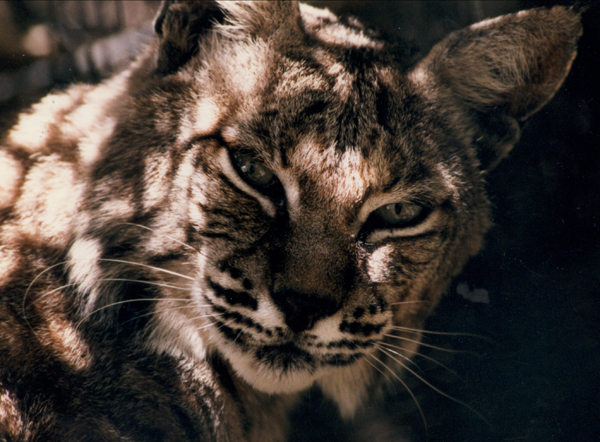
Bobcat, Folsom City Zoo Sanctuary - M.Mussell

Bobcat, Folsom City Zoo Sanctuary – M. Mussell

“What is the single greatest predictor of a hero’s success in folktales around the world?”

A professor who had studied the subject at length once posed that question in a psychology class. The answer, he said, was finding an animal helper. More than any other human or supernatural guide, an animal ally can lead the hero or heroine through trials and dangers to the end of their quest.

The professor was a friend and colleague of James Hillman (1926-2011) who loved animals and began collecting animal dreams in 1956.  Toward the end of his life, Hillman helped compile and update five decades of essays and lecture transcripts for a ten volume collection of his work.  Five volumes have been published to date, including Animal Presences, 2012, which I am currently reading.
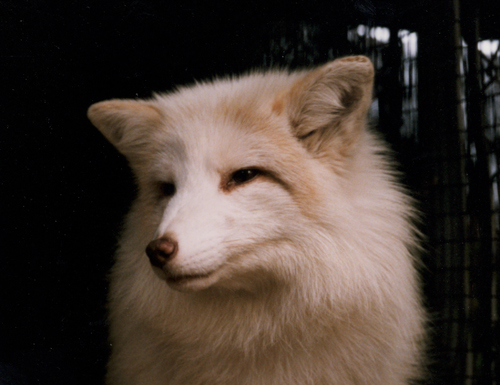
Vixen the fox, Folsom City Zoo Sanctuary - M. Mussell

Vixen the fox, Folsom City Zoo Sanctuary – M. Mussell

After serving in the US Navy, Hillman studied at the Sorbonne, at Trinity College, Dublin, and in Zurich, where he received a PhD from the University of Zurich and an analyst’s diploma from the C.G. Jung Institute where he served as Director of Studies until 1969.  Versed in Jungian psychology, he charted his own path which he named “Archetypal Psychology.”  His first major work, Revisioning Psychology, 1975, was nominated for a Pulitzer Prize.

With 18 volumes in Jung’s Collected Works, and 10 in Hillman’s, it is clearly beyond the scope of a blog post to compare and contrast these two complex approaches to the depth psychology.  That said, several broad generalizations are possible:

Jung’s psychology can be characterized as “monotheistic,” aiming at a realization of the “Self,” as the supreme archetypal principle.  Jung understood the Self as “the God image within.”  Hillman, by contrast, called the psyche “polytheistic,” and considered the Self as simply one of many psychic centers within us.  Our nature, as we experience it moment by moment, is more like a pantheon of many gods than the kingdom of single inner supreme being.

As a corollary to these differing models of the psyche, development for Jung was often imagined as an ascent, a kind of upward climb toward spiritual clarity.  For Hillman, growth was often a descent, leading to contact with the “Soul,” which for him was more like the “soul” of a blues musician or an artist than the “immortal soul” of organized religion.

Hillman was also concerned with anima mundi, the soul of the world.  How can people be healthy when the world is ailing?  Hillman had little patience with ego psychologies that pretend human health is possible when our cities are blighted and we work in sterile, windowless offices bathed in florescent light?  As a result, his method of approaching dream and fantasy was unique.  He shunned methodologies that seek to aggrandize ego by asking what the figures of dream mean.  He insisted we treat the beings who visit us nightly with the same courtesy we would show to a guest in the waking world.

“the animals are right here. You have to be careful you don’t say something stupid because the animals are listening. You can’t interpret them; you can’t symbolize them; you can’t do something that is only human about them.”

Sage the wolf, Folsom City Zoo Sanctuary - M. Mussell

Sage the wolf, Folsom City Zoo Sanctuary – M. Mussell

“the image is the teacher. We have to endure a laboriously slow method of dreamwork…A dream brings with it a terrible urge for understanding. We want dreams decoded for their meanings. But the dream, like the animal in it, is a living phenomenon. It goes on displaying itself, pointing beyond itself to ever further interiority if we can hold back the hermeneutical desire so that the image can elaborate itself.”

“I am suggesting that the dream animal can be amplified as much by a visit to the zoo as by a symbol dictionary.”

Something within us mourns the animals missing from our lives.  We wear their pictures on t-shirts and sometimes collect little animal figurines.  We cherish domestic pets in ways that might seem bizarre to earlier generations who weren’t as estranged from the natural world.  We thrill at the sight of Coyote or Deer moving through twilight woods at the edge of the housing tract, and we mourn them dead on the road as we drive to work.

Sly the Fox, Folsom City Zoo Sanctuary - M. Mussell

Sly the Fox, Folsom City Zoo Sanctuary – M. Mussell

We are energized when animals visit our dreams – sometimes.  We’d rather they weren’t fierce, threatening, or slimy.  We prefer majestic and noble: an eagle, a dolphin, or wolf will do nicely. We’re not so fond of ants or mice, pigs or slugs, skunks or rats.

With the natural world in tatters, however, anima mundi is not dreaming of Disney creatures and love and light.  That’s all right.  Black Elk said the Lakota people knew every being has it’s place in the medicine wheel.  And if we don’t know what’s broken in ourselves and in the world, said Hillman, we don’t have the slightest idea of who and what and where we are.

Aiko the bobcat, Folsom City Zoo Sanctuary - M. Mussell

Aiko the bobcat, Folsom City Zoo Sanctuary – M. Mussell

What animals have recently come to your dreams?  What did they seem to want? Don’t remember any animal dreams? Just ask. If you mean it, if you are truly interested and repeat the suggestion until it brings results; if you prime the pump by leaving a notebook and pen you your bed stand, the creatures will visit.

They want to be heard and are looking for those who will listen.

The season begins…

While strolling through Petco this morning to pick up some dog food, I decided to get a new rope toy for Kit, the older of two our two rescue dogs.  She never tires of chewing these things and nagging humans to throw it so she can play fetch.  I rounded a corner and stopped.  Dead in my tracks.  Stunned by the horror spread out before me.  On the dog Halloween costume aisle.

Let’s be clear – I don’t mean all canine Halloween outfits.  Some are funny, and some dogs seem to enjoy the attention.

Courtesy http://www.petsadviser.com, CC By 2.0

Courtesy http://www.petsadviser.com, CC By 2.0

What I came upon were princess and ballerina outfits.  I suffered an  instant flashback to the two hour wait I once endured at O’Hare Airport, sitting across from a woman whose poor little dog was dressed in a pink tutu.  I’m serious.  This really happened. I’ve never seen an animal look more miserable outside a vet’s waiting room.

Let’s face it, very few dogs can pull off a tutu with any kind of style and grace:

Courtesy http://www.petsadviser.com, CC By 2.0

Courtesy http://www.petsadviser.com, CC By 2.0

Our dogs are both females.  While they appreciate small accessories,  like an understated pumpkin scarf, they know that canine traditions at this time of year go deep – far deeper than any Disney concoction.

Wolfman-1941-2

They’re both working hard to release their inner wolves on October 31.

Okay, so maybe there’s more work to be done, but credit where it’s deserved.  I think they’re progressing nicely.

Longmire

Wallpaper_Longmire_S02a

Thanks to a tip from our niece, Theresa, we’ve discovered a promising mystery show on A&E.  Longmire, based on a series of award winning novels by Chris Johnson, premiered in June, 2012.  Now in its second season, the first years’ shows are available on Netflix.

In the pilot, we find Walt Longmire (played by Australian actor, Robert Taylor), sherif of the fictional Absaroka County, Wyoming, returning to work a year after his wife’s death.  He gets a call from his deputy, Vic (aka Victoria, played by Katee Sackhoff), formerly a Philadelphia homicide detective.  Joining her on a remote ridge, they discover a dead sheep and a dead man, both killed by bullets from an antique Sharps rifle.

The victim is a teacher whose wife thought he was in Laramie.  With more digging and the help of his Cheyenne Indian friend, Henry Standing Bear (Lou Diamond Phillips), Longmire discovers the dead man was the father of a 16 year old girl whose Cheyenne mother reported her missing three months earlier.  That could present new problems; Longmire isn’t popular on “the Res,” having jailed the tribe’s chief for extortion.  A gun expert warns Longmire that the Sharps rifle can kill a horse at 500 yards.  Such an antique sniper’s weapon would only be used “by a coward or a professional, and both can be very dangerous.”

Longmire echoes the square-jawed defenders of justice from earlier era westerns – he reminds me of the McLoud mysteries that starred Dennis Weaver from 1970-77. This show, like our times, is darker and more full of angst than the earlier series. Look for the show on Monday’s on A&E, or on Netflix.  I plan to.

The Rim Fire, day 22

rim fire

Smoke from the Rim Fire, photographed from the Glacier Point road some 30 miles south.  The photograph fails to convey the sense of scale of the smoke plume, even at this distance.

On day 22, the blaze is 80% contained.  It has burned 394 square miles of timber, watershed, and wildlife habitat.  More than 3,600 firefighters are on the lines, and efforts to contain this 3d largest fire in California history have cost $89 million to date.

A team of 50 scientists is moving into the burn area to assess erosion and mudslide dangers once the rainy season comes.  Of particular concern are the Tuolumne River and Hetch Hetchy Reservoir which provides drinking water to 2.8 million people in the greater San Francisco area.

The fire began when a hunter’s illegal campfire burned out of control.

Mad Mouse by Chris Grabenstein

mad_mouse

Officer Danny Boyle is excited.  After his efforts in solving the tilt a whirl murder, it’s an open secret that he will be offered a full time position on the Sea Haven, NJ police force.  During the week before Labor Day, Danny is celebrating with a few close friends on the beach late at night when a phosphorescent paintball slams into his ribs.  His friends are spattered, and one of them, Becca, is hit in the eye.

A frantic call to 911 brings an ambulance, which rushes her to a hospital, and summons Danny’s partner, John Ceepak, the quintessential detective, who had been home listening to his scanner, one of his hobbies when he’s not watching forensic shows on the Discovery Channel.

The next day, Doyle and Ceepak discover paintball vandalism on a mural outside a popular restaurant.  And as Danny and a waitress friend leave a dinner with the Chief of Police in honor of his promotion, both are hit again with paintballs, but this time there’s something more – a near miss from a rifle bullet that Ceepak identifies as the type favored by military snipers.  In the next attack, the sniper doesn’t miss; a shot to the chest sends Danny’s love interest to the hospital, unconscious and barely alive.  Clearly, it’s personal.

The shooter has been leaving trading cards at his sniper positions, all referencing the year 1996:  a card advertising The Phantom, a movie released in 1996; rookie cards for Derek Jeter whose debut year with the Yankees was 1996.  At scene of the first fatal shooting, one of the cards bears a note for Danny:  “You will never remember.  I will never forget.”

Danny was 15 in 1996.  He has only a few days to remember what he did then to trigger a killing spree ten years later.  Labor Day is approaching, and the Sea Haven Chamber of Commerce is hosting a “Sunny, Funderful Beach Party Boogaloo” concert, expected to draw 50,000 tourists.  Just like in Jaws, the mayor refuses to cancel the event; Danny and Ceepak must catch the sniper before he has 50,000 targets to choose from.

Mad Mouse, 2006 is the second book in Chris Grabenstein’s Boyle/Ceepak detective series set on the Jersey shore.  John Ceepak, ex-military, is highly disciplined and always plays by the rules.  Under the tutelage of his older partner, Danny is beginning to learn the virtues of discipline and rules.

Grabenstein’s mysteries are well plotted and avoid the middle-chapter slog that often plagues detective novels.  The author’s humor and irony, channeled through Danny’s narration, finds ample scope everywhere in the resort town setting and in his descriptions even of passing characters:  “He has this receding hairline coupled with wavy swept-back hair that makes him look like he might sing country music, only he’s wearing clunky glasses with a paper clip pinned through one hinge, and country stars seldom do that.”

The combination of compelling detectives, a setting where there is always more to see, and a well imagined and written crime made Mad Mouse a pleasure to read.  I’ve already started the third book in Grabenstein’s Sea Haven series.

The Wet Rat Brigade

Back when I was in grade school _______________ (insert a phrase like, “When dinosaurs roamed the earth”), school resumed after Labor Day.  To add salt to the wounds, there really were essays and/or discussions along the lines of, “How I spent my summer.”  Fortunately, a blog makes that whole exercise obsolete, but just because the morning began in unusual fashion, I offer a mini-retro style essay called:

How My Labor Day Began

I woke up to see the streets damp (not really wet) with the first rain since May if I am remembering right.  A pleasant and cool morning, so after a cup of coffee, I leashed up the dogs for a walk in the park.  As I opened the door, the skies opened up as well.  After a flash and the crash of nearby thunder, all three of us did a 180, back into the house for breakfast.

Fortified by cheerios and kibble, we set off again, and this time the downpour did not resume until we were out in middle of the park.  I don’t know how to describe what a magical moment it was.  I haven’t had that much fun in the rain since those bygone grade school days, when I took my mother’s warning that I would catch pneumonia as a challenge.

True, I called a halt after one lap around the baseball fields because the drops got fat and hard I thought we might be in for hail.  But nobody melted and good times were had by all.

wet missy

Little wet Missy (now dry) and I wish you all a wonderful Labor Day and a Happy Start to Fall!

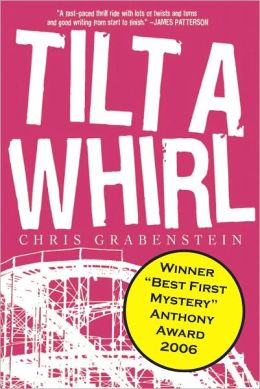
Tilt A Whirl by Chris Grabenstein: a book review

tilt a whirl

A recent detective novel recommendation from Amazon sent me to Chris Grabenstein’s website.  What caught my attention was Grabenstein’s series of mysteries set on the Jersey Shore, in a town called Sea Haven, a thinly veiled reference to Beach Haven, where my family vacationed during three summers when I was a kid and we lived in upstate New York.  To this day, I have fond memories of those trips.

The second thing that attracted me was Grabenstein’s writing credits.  He won two Anthony and three Agatha awards in seven years, and wrote for The Muppet Show, a truly impressive credential in my estimation.

I decided to start with the first book in the series, Tilt A Whirl, 2006, both because I loved the seedy amusement park in Beach Haven as a kid, and because the kindle edition cost $0.99.

John Ceepak and Danny Boyle, two Sea Haven cops, are breakfasting at the Pancake Palace, discussing a tricycle theft – the usual sort of summer crime in town – when a 12 year old girl runs up the street in a bloody dress screaming that someone killed her father, Reginald Hart.  Someone emptied a 9mm clip into Hart as he sat beside his daughter on a tilt a whirl car in the Sunnyside Playland before it was open.  Hart was a billionaire real estate tycoon though many called him a slumlord.

Ashley Hart describes the shooter as a local vagrant and drug user known as Squeegee because he sometimes works for tips at Cap’n Scrubby’s Car Wash.  But that night, when Ashley is kidnapped from her mother’s gated mansion, Ceepak and Boyle realize there is a military precision to the crimes far beyond the capacity of an aging hippie who is missing too many brain cells.  The puzzle twists and turns and had me guessing right up to the epilogue.

Puzzling mysteries alone are not that rare.  The best detective stories also have settings that fascinate and sleuths we love to hang out with:  221B Baker Street with Holmes and Watson; the Navajo reservation with Chee and Leaphorn;  St. Mary Mead with Miss Marple or the Orient Express with Hercule Poirot.

I enjoy Grabenstein’s Sea Haven, for I share his love of Americana – of ice cream shops called “Do Me A Flavor,” or the “Scoop Sloop,” in a town “best pictured on one of those perky placemat maps dotted with squiggly cartoons of buildings like The Shore Store, Santa’s Sea Shanty, and King Putt Golf.”

Chris Grabenstein and Fred

Chris Grabenstein and Fred

His detectives are a study in contrasts and yet a complimentary pair.  Danny Boyle, the narrator, grew up in Sea Haven.  He’s a part time summer cop, in large measure because it gives him an edge with vacationing college girls in the pubs on Saturday night.  John Ceepak is new in town, fresh from a 12 year stint as an MP in the army that ended after a tour of Iraq.  The son of an abusive alcoholic father, Ceepak lives by “a Code” that his partner, Boyle admires but doesn’t fully understand:  serve and protect; never lie, cheat, or steal – ever.

The two men are bound together by a growing mutual admiration and a love of Bruce Springsteen.  By the end of the Hart affair, Danny Boyle decides to apply for full time duty.

Tilt A Whirl reminded me of a couple of chick-lit detective novels I’ve read.  I think that’s due to the humor and irony of Boyle’s first person narration.  His upbeat, “lemme tell you what happened” tone makes you want to buy him a beer at The Sand Bar and hear all about his latest case.  A lot of Danny’s humor is couched in food references, as when he describes a witness as “a few fries short of a Happy Meal,” or when, after a break in the case, he says, “I’m feeling kind of jazzed, like you do after chugging two cans of Red Bull and snarfing down some Hostess Ding-Dongs.”  I think that’s what the male equivalent of chick-lit would sound like.

The author researching beach food at Beach Haven, NJ

The author researching beach food at Beach Haven, NJ

Danny Boyle has a thoughtful edge as pronounced as his irreverence.  In a key thematic passage, he quotes a math teacher who once explained Chaos Theory in terms of a tilt a whirl:  “if the operator keeps the whole thing going at the proper speed of 6.5 revolutions per minute, it’s practically impossible to predict what will happen next…The teacher called it ‘mind-jangling unpredictability.’ Chaos Theory in action,’  for two tickets a ride.” 

Tilt A Whirl was a page-turning mystery that was also a lot of fun.  I downloaded the next book in the series, Mad Mouse, also published in 2006.  Stay tuned for an update on that.

“Self-publishing Boot Camp” in Sacramento, November 2

The Sacramento branch of the California Writer’s Club has put on some fine day-long seminars, including the one that got me started blogging (presumably, most people reading this think that’s a good thing).

The Club just announced a seminar in self-publishing to be held November 2.  I invite every one with the interest and geographical proximity to check out the flier: Boot Camp two-pager

I was planning to wait before recommending this event, but today I spotted these statistics on Kristin Lamb’s Blog.  In her August 30 post, “Digital Age Authors & The Ugly Truth About ‘The Good Old Days’ of Publishing,” Lamb says:

“As of 2004, only one out of NINE traditionally published authors ever saw a second book in print and 93% of all books published (traditional and non-traditional) sold less than a thousand copies (per Book Expo of America statistics).”

In other words, no path into print is easy, but now there’s a greater menu of choices than just a few years ago.  The CWC workshops I’ve attended have been excellent, and I’m planning on going to this one.