A Walk in the Park and Minor White

The other day, I fired up Google to look at opinions on the appropriate age for protagonists of young adult vs. middle grade fantasy. The reason, as I have said here recently, is that I am reviewing all my ideas and assumptions about the story I’m working on. Everything is on the table.  I was thinking of the greater freedom middle grade fantasy allows; as one blogger put it, “in middle grade, tall ships and laptops can exist in the same universe.”

Opinions on the age divide between the two genres varied, and in particular, no one seemed to know where to put a 14 year old lead character – what I am currently leaning toward for my heroine.  She started out 14, became 16 for a while, and is probably going to get younger again.

At the end of this search I was not only frustrated with the lack of clear answers, but also slightly disgusted with myself.  I have written about not being bound by rules, and these are the most inane sort of rules.  I remembered my very first post on this blog, when I quoted from Neil Gaiman’s editorial notes for the collection of stories called, Stories (William Morrow, 2010).  Gaiman says:  “I realized that I was not alone in finding myself increasingly frustrated with the boundaries of genre:  the idea that categories which existed only to guide people around bookshops now seemed to be dictating the kinds of stories that were being written.”

The next day, Mary and I were walking in the local park and I was relating the results of my search and grousing a bit.  I said, “It would be nice to forget the whole business of getting published.”  She shrugged and said, “Why don’t you?”

Why don’t I indeed?  And we’re not talking here of the old cliche, “I just write for myself,” which implies indifference to quality or being read.  We’re talking of what T.S. Eliot meant when he said, “Take no thought for the harvest but only for the proper sowing.”

Why don’t I?  The reason is simple.  I’m still learning my craft as a writer, still a little hungry for external validation, but I have travelled this arc from apprentice to journeyman before.  I thought of the words and photographs of Minor White who influenced me more than anyone else when, after two years of college, I changed majors and schools to study art and photography.  Minor White’s dedication to photography as a spiritual practice was one of the reasons I went.

White, (1908-1976), began taking photographs in 1938 after spending five years writing poetry.  In 1946, Ansel Adams invited him to join the faculty of the first American fine arts photography department at the California School of Fine Arts in San Francisco.  White’s work always had an inward focus; he evolved the concept of “equivalents,” a word first coined by the photographer, Alfred Stieglitz, who served as a mentor for White’s and Adams’s entire generation.

Equivalents are photographs, often of mundane subjects, that are seen with an almost visionary regard for form and light.  At their best, “equivalents” evoke powerful and even semi-mystical responses in the viewer, unrelated to the literal meaning of the image.  Later in his working and teaching career, White wrote extensively of Zen and camera work.

Snow Door by Minor White

Zen has always been associated with certain arts, traditionally, painting, poetry, archery, flower arranging, and the tea ceremony. Zen Master Dogen (1200-1253) wrote a manual for cooks.  My friend, Rosi Hollinbeck, has written about the inspiration she gets from Natalie Goldberg who writes about writing from the perspective of a long time Zen practitioner:  http://rosihollinbeckthewritestuff.blogspot.com/2011/03/book-for-writers-and-lovers.html.

For me, it was Minor White who opened a doorway into the practice of art as a spiritual discipline.  At the core of any such discipline are moments of selflessness, where the subject-object split disappears, and mindfulness replaces concern for the “product.”

I hadn’t thought of Minor White in some time, but the memory brought a great sense of relief, because I remembered that once before I had learned a craft well enough that it sometimes became transparent, became a doorway to “the still point in the turning world.”  Sometimes I didn’t realize when it was happening; sometimes I did, as with this image of a crumbling barn in western New York.

"Near Oswego, NY," 1973, by Morgan Mussell

Seen from this perspective, the answer to Mary’s question, “Is it possible to forget about results in writing,” becomes, “It is necessary!”

I was fortunate enough to meet some of the great photographers of White’s generation – Ansel Adams and Imogen Cunningham.  I never met Minor White himself.  It’s probably just as well.  He was a heros then, and some heroes can loom so large it is hard to let them go when the time comes.

Minor White, 1973. Photo by Robert Haiko

I don’t really have heroes now; heroes are for young men.  What I have is tremendous gratitude and respect for those who, like Minor White, served as mentors and guides.  These are people who found a way to walk their own individual paths, and in doing so, showed us that it remains possible.

The Inklings and Stuff

The Inklings was the name of an informal literary group at Oxford that met for nearly two decades, between the early 1930’s and 1949.  Fans of fantasy literature know that regular members included authors J.R.R. Tolkien, C.S Lewis, Owen Barfield, Charles Williams, Neville Coghill, a Chaucer specialist, and Hugo Dyson who had been a member of the club that spawned the Inklings, “The Coalbiters,” a group founded by Tolkien to discuss Icelandic myth.

The Inklings discussed, among other things, myth, religion, and what we now call fantasy “world-building.”  Tolkien read chapters of Lord of the Rings and Lewis read his Narnia books.  They met on Thursday evenings in Lewis’s college rooms, and often shared lunch on Tuesdays at the Eagle and Child pub, commonly called, “The Bird and the Baby.”

The Eagle and Child Pub, Oxford

Nowadays we call such literary clubs, critique groups.  You often hear fans of fantasy literature say, “Oh, to have been a member of that group!”

Lately I’ve been thinking of the downside of such associations.  If you were C.S. Lewis, what would you have done when Tolkien told you not to publish Narnia?  “You will embarrass yourself,” he said.

I also think about the first Harry Potter book, which would never have been blessed by any critique group.  J.K. Rowling broke too many rules.  For starters, she mixed elements of middle-grade fantasy with young-adult fantasy, and by all conventional rules, that is a no-no.  The problem is, conventional rules lead to conventional books.  Check out some book-jacket blurbs at the local Barnes & Noble to see for yourself if that’s true.

I can clearly remember when it wasn’t like this.  In the eighties I used to hang out at a quirky fantasy bookstore.  I could go in with a theme in mind like, “spirit guides in contemporary urban fantasy,” and walk away with a couple of titles the owner pointed out to me.  Try that at the Barnes & Noble!

Learning and practicing conventional wisdom is a part of mastering any craft.  I went through it in art school.  It was necessary, but eventually became like wearing mental blinders that prevented me from appreciating or producing work that ventured beyond certain boundaries.  The problem was, I could not see past the filters even when I started wanting to, because I had spent so much effort learning the rules.  Only with the passage of time – a lot of time – did my rigid ideas relax and dissolve.

Is there any way to speed up the process now?  Because now I know what is really at stake:  it’s about recapturing a spirit of freshness and play as a reader and a writer.

***

This morning I found myself rereading notes I had taken in March when I attended a retreat with Edward Espe Brown, an event I posted about at the time.  No wonder!  Brown is one of the least doctrinaire people I have ever met.  Here is the story that really stuck with me:  Brown was leading a meditation session, and as leader, his role was rather formal.  One day he sat down and reviewed his inventory of meditation techniques – which was extensive – to choose one to practice that day.  A sudden inspiration arose in his mind – Why don’t you just touch what is inside with warmth and kindness?

That is a very revealing exercise.  One of the first things that comes up for me you could call the “inner achiever.”  I bet most of us learned early in life to be virtuous and hard working.  Play only after you get your work done, and so on.

It’s easier to see the dynamic in meditation where nothing else is going on.  I tend to procrastinate more in attempting such a strange (warmth and kindness?) exercise in writing.  Yet a timed period of freewriting in the morning, before the daylight mind is fully awake, can lead to a startling result – it can open a doorway into play and an unexpected abundance of ideas.

I do this freehand in spiral notebooks and tell the inner achiever these are “warm up exercises.”  And after repeating this for a few days, I’ve witnessed ideas pouring onto the page, in such a profusion that it’s sometimes hard to keep up.  Try it and see.  For me it was something of a revelation.  I’ve done free writing before without experiencing this, but I suspect I was secretly harboring agendas along the lines of self-improvement or self-discovery or something like that.

Where are all these ideas going?  I really don’t know, and I am determined not to ask.  It’s too adult a question – “Are you engaged in an educational form of play?  Is this leading toward a measurable goal?  I have no idea.  I don’t even know if these ideas are “mine” or if “me” and “mine” have any meaning while this is going on.

Here are some other notes I jotted down when Edward Brown was here:

  • What is precious in us doesn’t come and doesn’t go.  It is not dependent on performance.
  • You can’t figure it out.
  • Focus on what is beyond thinking – and that means what is in the heart.

Finally, he posed a stunningly simple question:  Are you going to be a rule follower or are you going to be you?

You can’t just make a simple decision on that one and then do some warm up exercises.  What was it that C.S. Lewis knew about himself and his work that kept him going when Tolkien told him Narnia wasn’t fit to publish?

That is a very important question for any writer who wants to listen to others without losing his or her own inner center of gravity.

A Day With Edward Espe Brown: Zen, Cooking (and Writing Too)

When Edward Espe Brown was head cook and baker at the Tassajara Zen Center in the mountains above Big Sur, he had a serious problem with biscuits.  As described in the recently updated, Complete Tassajara Cookbook, no matter what he tried, he couldn’t get them “right” – right to himself that is.  Other people raved about the biscuits.

Then one day he realized he was comparing them to the Pillsbury biscuits that he had enjoyed as a kid. He actually tasted his own biscuits and was amazed at how delicious they were. Brown writes:

Those moments – when you realize your life as it is is just fine, thank you – can be so stunning and liberating. Only the insidious comparison to a beautifully prepared, beautifully packaged product makes it seem insufficient. The effort to produce a life with no dirty bowls, no messy feelings, no depression, no anger is bound to fail – and be endlessly frustrating.

The Sacramento Buddhist Meditation Group, http://www.sbmg.org/,  hosted Brown for a one day retreat last Saturday.  First you need to know that Brown is an ordained Zen priest and Dharma heir of the late Shunryu Suzuki Roshi, the teacher who, more than any other, first put Zen on the American cultural map.

Then you need to understand that Edward Brown is one of the funniest men I’ve ever met.  A lot of Zen teachers and students come off as stern and unsmiling, but Brown reminds me of Steve Martin and the late Leslie Nielsen, in his ability to crack up a room of 50 people with the lift of an eyebrow or the subtlest “Who, me?” expression.  As in his cooking, so in his teaching, Brown has gone his own way.  Learning to trust your own heart and find your own way was the core of the message he gave on Saturday.

Brown relates that one time he was the meditation leader during a three month retreat with 20 students at Tassajara.  One day, as he debated which technique to practice, an unexpected thought bubbled to the surface:  “Why don’t you just touch what’s inside with warmth and kindness?”  He spent the rest of the session in tears and left the organization not long after.

No cookie-cutter biscuits, no cookie-cutter Zen, no cookie-cutter life.  “Are you going to be a rule follower or are you just going to be you?” he asked on Saturday.  That particular quote is highlighted in my notebook for its importance to anyone trying to write.

“Are you going to be a rule follower or are you just going to be you?”

***

Edward Brown leads The Peaceful Sea Sangha.  The website has a calendar of his activities, a recent article about his cooking, and a large number of Dharma talks available for free download.  http://www.peacefulseasangha.com/default.html

Says Who?

This post is about judging ourselves negatively based on unexamined or under-examined beliefs.  What got me thinking in this direction was the recent exploration I did on ebook publishing.  I’m guessing that most unpublished writers long for the validation that acceptance for traditional publication confers:  “Now I am somebody!”  In fact, those ebook authors who have launched their careers by non-traditonal means have also done an end-run around our customary who’s-who assumptions.  New game, new rules.

I want to consider some of the ideas we use to bludgeon ourselves.  I’m not talking about (relatively) small issues:  I wish I had a nicer lawn. Nor am I considering such serious and potentially clinical issues as a pervasive, non-specific, feeling that I am just no good: I am not up to taking on original sin, in any of its many variations.

I’m talking about the dozens of ideas we or our friends have used to put ourselves down.  Reasons I am a loser:

  • Because I didn’t make the little league team.
  • Because I am dumb in math
  • Because girls think guys in the math club are nerds.
  • Because I’m not as pretty as my sister.
  • Because I didn’t get into my first choice college.
  • Because I don’t like my job.
  • Because I am not married.
  • Because my marriage is on the skids.
  • Because I don’t have any children.
  • Because the kids are out of control, which means I’m a terrible parent.
  • Because I got skipped over for a promotion.
  • Because I can’t handle my new job.
  • Because I got laid off.
  • Because I hate this town and want to live in (fill in the blank).
  • Because I can’t get get my book published
  • Because I want to be somebody.

Something in that list may bring to mind some past or present hot button issues.  Ideas like this can be incredibly painful, but interestingly, the moment our minds change, the issues and pain disappear.  We can see this by considering past ideas, the ones we no longer believe.  One day in grade school, I had a revelation:  I don’t really care about little league – I was just trying out because everyone else was. Instantly, all the inferiority vanished.  I was no longer a loser just because I wasn’t good at baseball.  Soon enough, however, new limiting ideas filled the void and I was a loser again.

That dynamic should make us very suspicious!

It made Cheri Huber suspicious.  Huber, a Zen teacher who is also versed in modern psychology, has made it one of her special missions to take on the voices of self-hate she finds so rampant in our culture.  Huber travels and teaches internationally, is a prolific author, has a regular radio talk show, and hosts workshops both online and at “The Zen Monastery Peace Center,” in Murphys, CA.  http://www.cherihuber.com/index.html

Huber is the author of twenty books, most of them published by “Keep It Simple,” an independent press she and her sangha founded back in the ’80’s.  Perhaps her most pervasive theme is contained in title of one of her most popular books:  There Is Nothing Wrong With You:  Going Beyond Self-Hate.  In the introduction, she writes:

Every spiritual path tells us that what we are seeking is inside us.  Society, the world, others, conditioning, teaches us as children to stop looking to ourselves in order to know what is so for us, and to begin to look to others in order to know what is right.  We first learn to look to parents, then teachers, then friends, lovers, husband or wife, children, Jesus or the Buddha or God – all “out there.”  The love, the acceptance, the approval is out there (emphasis added).

Huber sometimes uses the model of “sub-personalities,” to illustrate the origin of the self-hating voices.  Simplistically, sub-personalities are a series of “mini-me’s” living inside my psyche, with the power to take possession of my awareness from time to time.  Some of them hate me.  Some of them do nothing but whisper poisonous thoughts, and of these, Huber says:

You can listen to the voices that say there is something wrong with you.  It’s actually very helpful to be aware of them.  Just don’t believe them.  Most of what we have been taught to believe we had to be taught to believe because it isn’t true.  This is why children have to be conditioned so heavily!  We would never have reached these conclusions on our own!

I sat in a one day retreat with Cheri Huber in the summer of 2005, and got a sense of her deep commitment to this particular work.  It was clear from her comments that she had come from a starting place of crippling inferiority and lack of self worth.  She now seems like a joyous person, and one who believes her process is open to everyone, and judging by the numbers of people who threw themselves into the work that day, quite a few others have found it true for them.

As you learn to sit down, sit still and pay attention, you begin to glimpse that which sees through the illusion, beyond the voices of society’s conditioning, back to the original being.  And slowly that perceiving becomes more real than all you’ve been taught to believe…you begin to see with a much broader view…you begin to be the love, acceptance, and compassion you have always sought – Cheri Huber.


Silence

A busy couple of days:  not only a bit of  furious blogging, but finishing up three separate writing projects and reviewing manuscripts for two critique groups.

This morning I attended the California Writer’s Club monthly breakfast and talked with a retired psychiatrist about what’s broken in our mental health care system (hint:  a drug for all that ails you).

After breakfast I came home, and finding this week’s Time in the mailbox, read one of the lead articles, “Are America’s Best Days Behind Us?”

After that it was time for final proofing and submission of entries to two of the writing contests I’ve mentioned here.  The submissions are on their way, one electronically, one by snail mail.  I’ll have results (or lack thereof) in June and November respectively.

Finally – finally, it was time to brew a cup of coffee in my new French Press (which I am just starting to master), kick back, and enjoy one of life’s greatest luxuries – SILENCE.

Strangely enough, I realize I can’t really say what silence is. It isn’t just lack of noise; the yard guys came with their leaf-blowers, and though I do not enjoy the sound, it didn’t throw me out of inner stillness today (though it sometimes does).

Silence is not just about lack of thoughts, though it does seem to be about experiencing them as impersonal events, like the weather.

Inner silence is not just about meditation, though paradoxically, I would not have found a way to get there if I had not been looking for it in meditative disciplines for years and years and years.

I didn’t learn to find silence on a meditation cushion, but at work, among the cubicles.  I didn’t find it through some technique, but because I quit smoking and really missed the hourly time-out-from-everything I used to enjoy when I’d step outside every hour for a cigarette.

I missed those time-outs long after the nicotine was out of my system.  I took to going outside every hour for ten minutes, thought at first I just did a lot of inner whining as I watched other people light up.

Then, at some point, it simply happened:  I found my time-out mojo, my inner stillness.  For me, it has to do with listening.

I think anyone can find it, it’s really easy.  What happens when someone says, “Hey, listen, what’s that?”

Silence is what happens!   Thoughts and distractions return soon enough, so you listen again.  Distractions come, listen again.

Maybe sounds work best for me because they are not my dominant sense and I really have to pay attention.  Thinking of attention I remember a Zen story that goes something like this:

A student goes to the master and says, “Sir, what is the key to enlightenment?”

The master says, “Pay attention.”

A few moments later the student says, “I am paying attention.  What is the secret?”

“Pay attention.”

The student begins to get flustered.  “I am paying attention.  Are you going to tell me or not.”

“Yes.  Pay attention.”

You get it, and presumably the student got it eventually too – the doorway into one of life’s greatest luxuries.

What Do I Really Know?

I’ve been very busy with writing lately, but in a one step forward, two steps back kind of way.  It has also been a time of discouraging words, to paraphrase “Home on the Range.”  Discouraging words about the never-so-crowded playing field for those trying to get into print.  Discouraging result (or lack thereof) from yet another writing contest I entered in the fall to no avail.  This is stuff I ordinarily blow off, but right now I’m in a doldrum phase in my novel.

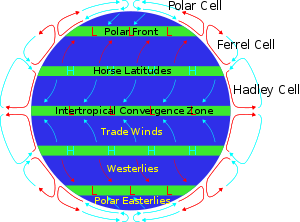
**Doldrums** –  Popular name for the “intertropical convergence zone,” just north of the equator, where winds of the northern and southern latitudes combine, causing extended periods of light or non-existant breezes.  (When my writing hits the doldrums, I Google way too much!)

I picked up a hand full of early chapters of the book to review, but found I was still too close to do any kind of evaluation.  A mass of questions arose:  This seems okay but is that all is – just okay?  Is this still the story I want or need to tell?  Should I take an extended break to write some short stories?  Should I take a non-fiction break.  Would it help to just walk away for a while?

When questions like this bounce around my head, I think of a section of Jack Kornfield’s marvelous book, A Path With Heart.

After a traumatic event, a former student came to Kornfield in a state of great confusion.  Lot’s of well meaning people, each with some claim to spiritual expertise, had been giving her contradictory advice, and she didn’t know who to believe or which way to turn.

Kornfield told her the 2500 year old story of a group of well-meaning spiritual seekers who faced similar confusion.  The sought out the Buddha to ask his advice.  He told them to take no one’s word for the truth, not even his, but to test what they heard for themselves and see which teachings led to “welfare and happiness…virtue, honesty, loving-kindness, clarity, and freedom.”  Kornfield reminds us that “in his last words, the Buddha said we must be a lamp unto ourselves, we must find our own true way.” Based on this teaching, Kornfield posed a question to the woman:

I asked her to consider carefully what she actually knew herself.  If she put aside the Tibetan teachings, the Sufi teachings, the Christian mystical teachings, and looked in her own being and heart, what did she know that was so certain that even if Jesus and the Buddha were to sit in the same room and say, “No, it’s not,” she could look them straight in the eye and say, “Yes, it is.”

Through great good fortune, I know what that truth is for me in the spiritual realm – I’ve written about it, or around it, or hinted at it in the “No-Self” series I posted in November and early December.  What startled me and led to this post was the realization I do not know what the equivalent truth is for me in writing.  What do I know beyond what any expert may say?  What have I hammered out of my own experience?  What is “my own true way?” I’ve been mulling it over, and if I don’t know the truth, I’m pretty darn sure of a few things:

  • In writing as in living, my own true way seems most likely to manifest when the me gets out of the way, and that implies that the first thing necessary, the main thing to take a break from, is attention to results.
  • Whatever kind of writing it is, when it comes alive, it is surprising.  If I am writing honestly, I learn things about myself and about the world.  “Oh, I didn’t quite realize I felt that way, but I guess I do.”
  • On a spectacular day like this, in between winter storms, it’s time to get outside and breathe some fresh air.

Keeping an eye on truths like these, even if they are not quite eternal verities, may be enough to spark a breeze in the doldrums and get the ship moving again.

Rebel Buddha: On the Road to Freedom by Dzogchen Ponlop

If I’d had any idea how good this book is, I would have read it much earlier. I have never come across a better introduction to Buddhism, one that is neither too esoteric nor too simplistic.  The author aims to present the core teachings, independent of custom, convention and eastern cultural trappings.  Some of his conclusions may seem surprising.  For instance, he clearly states that practicing Buddhism as a religion is fine, but it isn’t essential, because the Buddha’s central teaching is simply the importance of exploring the mind, including thought, sensation, and emotion, for that is where our suffering happens and where we experience it.

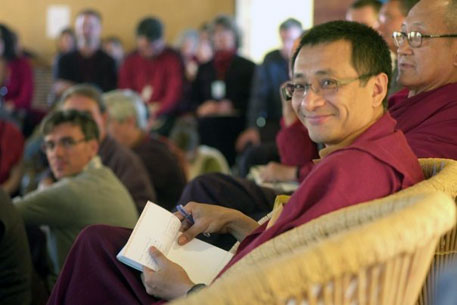
Dzogchen Ponlop’s experience as an easterner transplanted to the west makes him uniquely qualified to speak of this eastern tradition transplanted to the same soil.  When instructors at Columbia University asked him to introduce himself, he was at a loss.  Born of Tibetan parents in exile in India, and emigrating to New York City, he wasn’t sure who or what he was.

Dzogchen Ponlop Rinpoche

Such disorientation as a prelude to an unexpected opening of awareness parallels the realization of selflessness, which is central in Ponlop’s exposition of the Dharma or teachings.  We look in our body and mind for the “self,” and when we finally realize we cannot find it, thinking may stop, allowing us to experience a moment of pure, unconditioned awareness.  This, he says, is “our fundamental being, our basic, open and spacious awareness.  Imagine a clear blue sky filled with light.”

The fundamental cause of our suffering is clinging to a sense of self that is not only illusory, but divides ultimate and indivisible reality into a minefield of pleasures and pains, friends and foes, of the ego.  The Buddha’s terms “emptiness,” and “selflessness” have negative connotations in the west, but Ponlop explains that the actual experience of these states is anything but heavy or depressing.  “When we have a genuine experience of emptiness, it actually feels good…It’s not a vacuous place where everybody is desolate and moaning about something – that’s our ordinary life.”

***

Ponlop’s title, Rebel Buddha very naturally references the historical Prince Siddhartha, who abandoned all the privileges and responsibilities of a crown prince in his search for spiritual truth.  The title also calls to the indestructible potential for true freedom in each of us.  The rebel buddha within is that unconditioned awareness, “a trouble-maker of heroic proportions,” that will accept nothing less for us than the freedom that all the historical Buddhas discovered.  The actual word, “buddha,” does not refer to a few people only, but means, “awakened,” and is part of our own nature.  Even the willingness to investigate whether this is true can be enough to set our feet on the path.

Ponlop quotes from a famous teaching the historical Buddha gave to the citizens of a town who were confused by the conflicting teachings they had received from a number of itinerant preachers – not so different from what can happen to any seeker now who takes a few workshops an buys a few books on spiritual topics.  Buddha advised the citizens not to take the word of any authority or scripture, and not even to take his word, but to put the various teachings into practice, and “after observation and analysis, when you find that anything agrees with reason and is conducive to the good and benefit of one and all, then accept it and live up to it.”

There’s a lot of that in this book of Dzogchen Ponlop, a spiritual master who writes as a fellow traveller on the road.

The Blogisattva Awards

Yesterday, December 8, was celebrated by some Buddhists as Bodhi Day, a commemoration of the 8th day of the 12th lunar month, when Shakyamuni Buddha is said to have reached enlightenment.  Here is the event as imagined in the excellent movie, Little Buddha:   http://www.youtube.com/watch?v=2xV8xgWlZy0&feature=related

In commemoration, the finalists for the 2010 Blogisattva Awards were announced.  These commendations are given in various categories for “excellence in English-language Buddhist blogging,” aka, “the Buddho-blogosphere.”

Blogisattva: a portmanteau combining the English word for ‘blog’ [which is ‘blog’] with the Sanscrit word for ‘being’ [which is ‘sattva’]. The letter ‘i’ is used as caulk to hold the word-tiles together. Thus, Blogisattva means BLOG BEING.

But as the website notes, this is first and foremeost about excellence in blogging and is only about Buddhism in so far as that is what flavors how we blog and what we write about.

The “what we write about” of these links is life itself:  the joys and pains of raising children, caring for parents with Alzheimer’s, wondering if John Lennon was a boddhisattva, and many many thoughts on the effort to practice meditation and live wisely and compassionately in an ever more complex and confusing world. 

There is now a permanent link here in the right hand column.  Click it for some intriguing and thought provoking articles.