Shangri-La in Books, Movies, and Legend

I recently wrote a short story about a group of people trying to find Shangri-La. For decades, the name has stood for an earthly paradise, difficult to attain. The name was so popular in the 30’s and 40’s that before it was renamed Camp David, Franklin D. Roosevelt named the presidential retreat ground, Shangri-La. After my story was finished, I began to research this mythical place about which I realized I knew very little.

The name, “Shangri-La” entered public awareness through a novel and a movie, which I will discuss today. In my next post, I will explore the Tibetan legend of Shambhala from which core elements of the story may derive.

In David Hilton’s 1933 novel, Lost Horizon, Hugh Conway, a world-weary British diplomat and WWI veteran, along with three others refuges from an uprising in India, board a plane that is hijacked to the remote mountains of Tibet. They crash land in the snows and find their pilot dead. The group is rescued by a postulant lama named, Chang, who leads them to the hidden lamasery of Shangri-La, high above a fertile and temperate valley. Here Conway finds peace, the stirrings of love, and a sense of purpose when the High Lama tells him he has been chosen to oversee the mission of Shangri-La – to preserve the best of modern civilization during a world war the lama, (who is 300 years old), has seen in vision.

Did Hilton foresee WWII when he wrote his book in the early 30’s? Perhaps, but he also studied a 1931 National Geographic account of an expedition to the borders Tibet. Unexpectedly temperate valleys lie along the Nepalese border, and Hilton may also have read of the legend of Shambhala, with a similar prophesy of a world war. This prophesy is part of the Kalachakra teaching cycle the Dalai Lama presents, most recently in Washington, DC, last summer.

Lost Horizon won public notice only after Hilton published, Goodbye Mr. Chips, the following year. Because it was later published as Pocketbook #1, Lost Horizon has been mistakenly called the first American paperback.

Frank Capra read Hilton’s book and immediately decided to make the movie version. Production began in 1936, with a budget of $1.25 million, the largest for any film at the time. After a $777,000 cost overrun, Lost Horizon, was released in 1937 to critical acclaim. A New York Times reviewer called it, “a grand adventure film, magnificently staged, beautifully photographed, and capitally played.” It won Oscars for Art Direction and Film Editing, and was nominated for Best Picture.

Both the book and the movie seem dated now. The romantic vision of humans-as-noble-savage will not appeal to our modern sensibility. The idea that people will be good if freed from want echoes both the pacifism that flourished after the first world war and the socialism that grew in response to the hard times of the ’30’s. I believe in the “higher vibration” of certain places, yet when Chang tells Conway the healing properties of Shangri-La have even eliminated human jealousy, it breaks my “suspension of disbelief.”

Even with this kind of flaw, I enjoyed the book and the movie. The specifics of the Lost Horizon’s 75 year old vision may be dated, but the archetypal longing for a golden age and heaven on earth is not. The book and movie tap into this, and the tale of paradise found then lost evokes our longing for the Garden of Eden, Atlantis, Avalon, and Shangri-La. “We are stardust / We are golden / and we’ve got to get ourselves back to the Garden,” sang Joni Mitchell in her song about Woodstock, another manifestation of longing for a world of peace and joy.

This longing will not go away because it expresses our true nature, according to the view that gave birth to the legend of Shangri-La. Next time we’ll look at the legend of Shambhala, which carries predictions that will echo some we have seen in Lost Horizon.
Contagion: A Movie Review

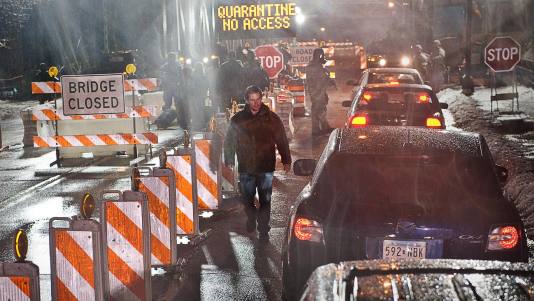
We’ve all seen pandemic movies before.  Andromeda Strain, The Stand, Outbreak, and 12 Monkeys come to mind, but all of these add something extra to the disease:  aliens, demons, time travel, or a government ready to nuke a California town.  Contagion adds something too, but unfortunately, it is all too plausible – visions of cracks in the thin veneer of order that covers our 21st century civilization.

First, let’s establish that such a disease is plausible.  Dr. Fatimah Dawood, an epidemiologist with the CDC confirms that animal viruses could combine to produce a deadly virus against which humans have no prior immunity.  Contagion is a vision of what people most feared during the H1N1 outbreak two years ago.

Can you imagine looting and outbreaks of violence if there was not enough food to go around?  What about people willing to profit from the distress or death of large numbers of their fellow human beings?  Can you imagine local governments delaying the closure of shopping malls at the start of an epidemic because of the Thanksgiving shopping weekend?  If not, please send me the location of a portal to the universe where you live.

Director, Steven Soderbergh, set out to make a scary and realistic disaster movie set in our post 9/11 and post Katrina world.  He builds and maintains suspense with restraint and subtlety.  Contagion opens with a dark screen and the sound of a woman coughing.  Then we see Gwyneth Paltrow reach into a bowl of nuts at a crowded airport bar.  Twenty seconds into the movie and I was gripping my seat.  The tension remained compelling throughout this two hour film.  As with many books and movies of the action/adventure genre, I didn’t deeply connect with the characters.  There were two many stories going on at once, and perhaps I instinctively held something back, not knowing who would live and who would die.  Most critics have given Contagion three stars out of four and I would agree.  Because of my emotional distance from the protagonists, I wouldn’t call it a great movie, but it is very very good.

We learn at the end of the film exactly how the virus mutation occurred.  Strangely enough, I thought of the novels of Thomas Hardy, where seemingly minor coincidence leads to disaster.  Hardy’s vision of the unfathomable relations between events actually mirrors certain concepts of modern science.  I remember hearing a pithy quote about the beating of a butterfly’s wings affecting weather on the other side of the globe.  One early 20th century physicist – I do not remember his name – said, “Bend down to pluck a flower and you affect the most distant star.”  What do the world views of Thomas Hardy, modern science, eastern religion, and Contagion, have in common?  A sense that events are connected and impact each other in ways beyond what the rational mind can ever grasp.

What is conspicuous by its absence, in the movie as in our culture, is a parallel understanding of ways that our fellow humans are interconnected for good or ill.  Some of the medical workers demonstrate selflessness and compassion, just like certain religious orders during the plague years in Europe, who ministered to the sick until they fell ill.  One thing the CDC people have in the movie which no one else does, is information.  We know from Katrina that orders, and curfews, and martial law, combined missing information, can drive people to the breaking point.

We identify with Mitch Emhoff (Matt Damon) and his daughter and hope we could do as well as they struggle to stay alive and keep their humanity while the social order crumbles.  Lawlessness is muted in Contagion, but it is there, and I found myself wondering what I would do, after standing in line for hours at a military food distribution point, only to have the rations run out and a soldier say, “You’ll have to come back tomorrow.”  What would I do?  Walk away like Emhoff or charge the empty truck like some of the others in a futile display of fear and frustration?

Contagion is a movie I will be thinking about for some time.  As an extra dividend, my hand washing habits instantly improved.  I’m sure yours will too if you see this movie.

Cowboys and Aliens: A Movie Review

Can you guess what this movie is about? I couldn’t, not with precision.  I was expecting something whimsical and set in contemporary times.  Instead, we are transported to 19th century New Mexico, with bad-ass cowboys, really bad-ass aliens (think, Sigourney Weaver aliens), noble Apaches, and a beautiful pistol packing mama who is – lets just say, not from around these parts.

We open with Daniel Craig as a western  badman, who brings the same cold-eyed killer vibe to this role as he does to his other life as James Bond.  True, his circumstances are a little bit odd – his memory is gone, he wears a strange bracelet, and his wound looks suspiciously like he’s been probed.  But after a lot of opening violence, and with Keith Carradine as marshal, Harrison Ford as the cattle baron, and several appealing secondary characters – the preacher, the kid, and the barkeep – I found my belief pretty well suspended by the time the saucers flew into town to harvest the good citizens.

Harrison Ford and Daniel Craig facing long odds

We get romance, redemption, coming of age, and finding one’s courage, but more than anything else, this is a good old fashioned shoot-em-up, with some nail-biting moments, and bad guys you can hate with abandon; they are despicable, disgusting, and slimy.

Like a phoenix, Olivia Wilde is reborn in flames

If you want to be stodgy and boring, you could ask why these creatures with intergalactic technology want gold so badly, but when you get right down to it, although they are big and tough, they are not the sharpest tools in the cosmic shed.  This is a job for good old American know-how and grit, and a wee bit of help from “beyond the stars.”

Leave the stodgy questions at home, and you’ll have a very good time.

The Government and the Marx Brothers

Where's the Seal?

Back in college, one of my professors gave me an idea I’ve never forgotten.  He spoke of myths that shape and inspire our national consciousness, and how they always relate to a past that is not only gone but may not even have happened.  It must have been back in the 70’s, because he referenced the gun-in-the-rack, survivalist twist on the rugged individualism that Bonanza brought into our living rooms once a week.

The Cartwright boys get the job done

I’ve been thinking of myths of politics lately for one simple reason.  In following the current debate in Washington on the debt ceiling, I’ve come to a conclusion I have never reached before, through good times or bad – until now.  Quite simply, I think we are fucked.

Perhaps not over this particular crisis, for I don’t think any politician who wants to get re-elected – all of them, in other words – wants to get stuck with the blame for a national default.  But I think this “debate” reveals how utterly disfunctional our system has become.  Handwringing over the gummint has probably always been a national pastime – I finally believe it is justified.  Still, I prefer laughter and even creative thinking to handwringing, so I have been mulling over what myths I believed about about our leaders in the past, and what might be a better fit now.

Back in the days when my favorite TV show was “Leave it to Beaver,” I watched  Mr. Smith Goes to Washington with my parents: a rugged individualist from Montana takes on the system, and proves that right and integrity still can prevail.

Jimmie Stewart fights the good fight

Soon after I saw Mr. Smith, for a few brief years, we had Kennedy’s Camelot:  “Ask not what your country can do for you; ask what you can do for your country.”   Fast forward six years and there was Kent State and with Crosby, Stills, and Nash singing, “Soldiers are gunning us down.”  It’s been a roller coaster ride since then with ups and downs, times of malaise and times of letting the good times roll, but all along, at least for me, there was the faith that we can make things better.  Our system may be flawed but it works.  There was always someone to believe in, someone like Senator Robert Byrd, a real-life Jimmie Stewart who carried a copy of the Constitution in his pocket.

Sen. Robert Byrd, one of my heroes

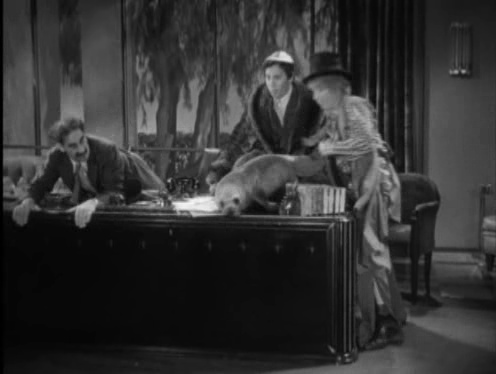
Senator Byrd is gone now, and so is my faith that we can right ourselves in time to avoid driving off a cliff.  What kind of myth fits that?  I’ve been mulling it over for several weeks, and it came to me yesterday, thanks to Turner Classic Movies.  They aired my favorite Marx Brothers film, Horse Feathers, and there it was:  my latest take on the current state of our government:

Do you think there’s a kinder way to depict our current crop of elected “servants?”  If so, please let me know!

After Potter

Of course it is happening in your head, Harry, but why on earth should that mean it isn’t real?  –   Albus Dumbledore

The fact that everyone is weighing in on Harry Potter stands as a tribute to the impact the saga has had on us all.  There’s no doubt the release of the final movie is most poignant for those who grew up with the series; a span of 13 years for the books or 10 for the movies is huge when you are young.  Some of those who picked up The Sorcerer’s Stone in grade school have finished college.

Annie Ropeik, an intern at NPR suggests three adult fantasies for the “Hogwarts Grad.”  She calls one of them, The Magicians by Lev Grossman, a cathartic examination of the nature of magic and our relationship to the stories we wanted to live in as kids — required reading for anyone trying to recover from a lifelong love affair with a fictional world.  http://www.npr.org/2011/07/14/137802346/3-grown-up-books-for-the-hogwarts-grad

Note the language Ropeik uses, especially the word, “recover,” which suggests that a love affair with a fictional world is something we should fight the way someone “in recovery” uses the 12 steps to fight for freedom from an addiction.

I’ve been sensitive to this kind of nuance ever since one of my psychology professors, a colleague of James Hillman and Joseph Campbell, recommended The Neverending Story by Michael Ende with the comment that, “It’s about our culture’s war on imagination.”  Can we graduate from the fictional worlds we have loved and lived in?  Should we even want to?  According to Hillman, our greatest danger is literalism, the mind that is closed to fantasy, or rather, refuses to see the fantasy in all our realities and the reality of our fantasies.

Today may be a day to mourn the end of an era, but it is also a day to celebrate the gifts we have received from Rowling, the young actors, and everyone who worked on the movies.  They have given us an unforgettable world of imagination and dreams where courage and friendship matter, even when the odds are bad, in the struggle of good against evil.

Harry Potter Fan Fiction

Harry, Ron, and Hermione in The Sorcerer's Stone, 2001

Fan fiction did not begin with Harry Potter or the internet.  According to Lev Grossman’s article, “The Boy Who Lived Forever,” in the July 18, issue of Time, xeroxed fanzines appeared after the premier of “The Man from U.N.C.L.E.” in 1964, and really took off with “Star Trek.”

In the broader sense, telling original stories with borrowed settings and characters is nothing new at all.  Homer did not create the Trojan War, Achilles, or Odysseus.  Shakespeare did not make up either King Lear or Henry V.  But with the internet and Harry Potter, fan fiction has exploded.  There are more than 2 million pieces on fanfiction.net and more than a quarter of these are based on Potter – everything from short stories to full length novels.

The final movie will not be the end of original Potter creations

Grossman explodes most of the stereotypes of those who write and read these tales.  One 38 year old writer and actress says it’s like character improvisation.  A best selling fantasy writer whose novels have been optioned by Peter Jackson says, “Fanfic writing isn’t work, it’s joyful play.”  This raises the key question of why writer’s of fiction write.  Joyful play, a platform, and an appreciative audience are there – and it’s not like many creators of “original” stories get to leave their day-jobs.

Well known authors fall on both sides of the unanswered copyright issue.  J.K. Rowling and Stephanie Meyer encourage new fiction based on their characters and worlds.  Orson Scott Card, Anne Rice, and George R.R. Marin, author of A Game of Thrones do not, and threaten lawsuits.  It may or may not be coincidence that the authors Lev Grossman names as supporting fanfic are more recent and write for a younger audience than those who are in opposition and write for adults.  So far, all cease and desist requests have been honored, so there are no legal precedents in the world of fiction, though court cases involving music have been liberal in their interpretation of what constitutes “fair use.”

This begs the interesting question of who a character or world belongs to.  Groosman says that until recently:

Writers weren’t the originators of the stories they told; they were just the temporary curators of them.  Real creation was something the gods did…Today the way we think of creativity is dominated by Romantic notions of individual genius and originality and late-capitalist concepts of intellectual property, under which artists are businesspeople whose creations are commodities they have for sale.

Personally, I have always loved the poet’s invocation at the start of The Odyssey:  Sing in me, muse, and through me tell the story… 

In my experience, the “I” does not invent worlds or characters.  Whether you call it the muse, the gods, or the collective unconscious, fictional worlds and imaginal people come from somewhere else.  With a bit of luck and humility, the “I” may get to witness what happens, and may even get adept at finding new rabbit holes.  To me, the idea of “owning” a “product” of imagination smacks of hubris.

There is no real data on whether fanfic hurts an author economically.  Intuitively, I can only imagine it benefits Rowling and Meyer.  I hope so.  Creativity is creativity, regardless of what spark ignites it.  I’m thinking of dropping by some of the sites to see what these authors are up to.  For those who write for the joy of it, I wish them a lot more.

Midnight in Paris: A Movie Review

https://i0.wp.com/cdn2-b.examiner.com/sites/default/files/styles/image_content_width/hash/48/f6/48f651f5883697520af2afd5b5372777.jpg

Midnight in Paris, written and directed by Woody Allen, is a delightful romantic comedy and another of Allen’s meditations on the relationship between art and life, this time with time-travel in the mix.  Want to see Ernest Hemingway speaking exactly the way he wrote?  Kathy Bates holding forth as Gertrude Stein?  Want to see an insufferable pseudo-intellectual get his comeuppance, and the right couple go walking off together in Paris in the rain?

Gil (Owen Wilson), a successful screenwriter visits Paris with his fiance, Inez (Rachel McAdams), and her family.  Gil dreams of moving to Paris to finish his novel about a man who opens a nostalgia shop.  Inez wants her parents to help her talk sense into Gil and get him to settle down in Malibu.  Gil wants Inez to walk with him in Paris in the rain.  Inez tells him not to be silly, they would get wet.

After a wine tasting with Paul (Michael Sheen), the sort of pompous know-it-all that Allen loves to parody, Gil decides to walk home by himself.  At the stroke of midnight, an old-time car pulls up beside Gil.  Revelers invite him in and transport him to a party where he meets F. Scott and Zelda Fitzgerald, who introduce him to Hemingway, who takes him to Gertrude Stein, who agrees to read his novel.

Even Inez notices how strangely Gil begins to act – sequestering himself to write by day and taking long walks at night.  He tries to demonstrate how he travels into the past, but she stalks off just before midnight and misses the car when it pulls up.  Gil meets Pablo Picasso and his beautiful mistress, Adriana (Marion Cotillard), who instantly captures his heart.

While shopping for furniture with Inez, Gil meets a sweet young antiques dealer, Gabrielle (Lea Seydoux), who shares his love of the 20’s and Cole Porter.  He discovers a battered copy of Adriana’s diary and finds a loving passage describing himself.  Returning to the past, he confesses his love to Adriana, who has left Picasso.  That night an ancient coach pulls up to carry the pair to her Golden Age, La Belle Epoque.  They stop at Moulin rouge and meet Toulouse Lautrec, Degas, and Paul Gauguin.

Adriana begs him to stay, but as Gil sees the famous painters dreaming of the Renaissance, he sees through his Golden Age illusion and decides to return to his present.  On the way, he stops off to see Gertrude Stein, who has finished his novel.  She likes it but thinks it needs a touch of the supernatural.

Back in his own time, he confronts Inez about her affair with Paul (Hemingway brought it to his attention).  She and her family leave.  Gil is left by himself in a storm, on his own, in the “ordinary” streets of Paris – which might not be so ordinary.  He runs into Gabrielle who loves to walk in the rain and says she would like it very much if he walked her home.

My brief description does not do justice to story and all the whimsical sub-plots – like the detective that Inez’s father hires to follow Gil, who makes a wrong turn and winds up lost in the court of Louis XIV.  This is a delightful movie.  If the story seems at all intriguing, I guarantee you will laugh out loud during the movie and walk out with a smile on your face.

Gettysburg Day: The Third Day, July 3, 1863

On the afternoon of July 3, 1863, 15,000 men of General George Pickett’s division sheltered behind McPherson’s Wood during the fiercest artillery bombardment of the war.  Ninety minutes later, when the cannons fell silent, they passed through the wood and and marched over a mile of open ground to attack the Union center.

Numbers identify trees the War Dept. has identified as survivors of the battle

As you stand beneath the boughs of the trees, and gaze at the stone wall marking the Union position, it is almost beyond imagining what those men were feeling as they formed their ranks.  They were all veterans.  They probably knew what would happen as well as their commander, General James Longstreet, who did his best to talk Robert E. Lee out of the attack.  Lee would not budge.  His men had repeatedly done the impossible; maybe they would do it again at Gettysburg.

Where some of the generals wore plumes in their hats, talked of the bravery of southern manhood, and thought in terms of Napoleonic tactics, Longstreet was a pragmatist who knew that warfare had changed.  He had already invented a new kind of trench, anticipating the tactics of WWI.  He knew that bravery wouldn’t keep you alive when facing the fire of rifled muskets that were lethal at half a mile or when charging into cannons loaded with ball bearings.  He told Lee that no 15,000 men ever assembled could take the ridge, but he was overruled.  When Pickett asked, “Shall I go,” Longstreet could not even answer; all he could do was nod his head.

In one of the most tragic events of the Civil War, the men of Pickett’s division formed their ranks and moved over the fields in lines the northern men found stunningly beautiful, even as they fired their cannons and blew them apart.

Pickett’s 15,000 men suffered 60% casualties that afternoon.  As the survivors staggered back to the woods, Lee met them.  “It is all my fault,” he told the troops.  “All my fault.”  The south never had another chance to win the war.

The only brigade to reach the wall was led by General Lewis “Lo” Armistead.  His story illustrates the brother-against-brother tragedy of the Civil War.  Armistead and Union General John Hancock were close friends during the Mexican War and later in California.  On the night before they took separate trains to join opposing armies, they gathered with other officers to drink and sing and make tearful toasts to each other.  Armistead said, “May God strike me dead if I ever lift a hand against you.”  When he learned that he would have to march against Hancock, who commanded the Union center, Armistead did not think he would survive; he sent his family bible to Myra Hancock, his old friend’s wife.

Armistead was shot three times as he crossed the wall.  As union solders gathered around him, he said, “Tell General Hancock that General Armistead is so very sorry.”

This clip from Gettysburg is one of the most moving of the film and represents one of the saddest events in American history.  It is Armistead who gives the order to March.  It is worth noting that this scene, like most in the movie, was filmed on the Gettysburg battlefield, with the help of thousands of Civil War re-enactors who bring tremendous realism into all of the scenes involving the armies.

On the next day,  July 4, the Confederates reformed their lines as driving rain fell.  Lee hoped Meade would attack, mirroring his own mistake of the day before, but no attack came.  That night, the southern troops left the field and started their march back to Virginia.  Meade pursued the retreating Confederates, but half-heartedly, allowing the remnants of Lee’s army to escape.  WIth vigorous action, he might have ended the war – instead it dragged on for another two years.