A Cautionary Tale

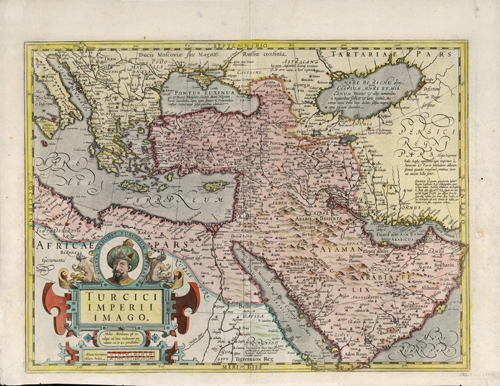
Ottoman Empire, early 17th century. Library of Congress

At its height, the Ottoman Empire (1299-1922), controlled North Africa, much of the Mediterranean, and portions of the Balkans, Italy, Austria, Hungary, and Russia. Innovations in medicine, mathematics, astronomy, architecture, philosophy, chemistry, physics, calligraphy, weaving, music, and literature are part of their cultural legacy. They gave us scalpels, alarm clocks, and coffee.

The following notes on the decline of the Empire come from A World Undone, 2007, by G.J. Meyer, an excellent history of World War I that I have quoted before.

The high point of the Empire occurred during the reign of Sultan Suleiman the Magnificent, from 1520-1566. The Sultans did not have wives, but large numbers of concubines, who gave them large numbers of sons. Suleiman had 300 women in his harem, but became enamored of a red-haired Russian woman, who later became known as “the witch,” She convinced Suleiman that his favorite son was plotting against him. Suleiman had this son killed and the witch’s son, Selim, installed as his heir. Meyer says:

“Selim the Sot was short and fat and a drunk. He never saw a battlefield and died after eight years on the throne by falling down and fracturing his skull in his marble bath.” Meyer describes the Sultans that followed him as “craven.” This started the Empire’s decline.

*****

Let me put this in bold type:

It only took eight years for a craven leader to begin the ruin of what, for 300 years, had been the most powerful and innovative Empire in the known western world.
In Celebration of Banned Books

Happy New Year, friends! During a lunchtime conversation with Mary, the name of Ray Bradbury came up, which reminded me of the first book I was told not to read and the pleasure I had in reading it.

My parents loved books and passed their love of reading on to me. One night when I was in the sixth grade, we went to the Burger Pit in Los Gatos, California. Someone had left a Sci-Fi paperback in the booth where they seated us. The cover featured a fetching space maiden in skimpy garb, in the clutches of an ugly alien with tentacles.

“You don’t want to read that trash,” my mother said. Of course I did! I left the restaurant with the book tucked in my waistband. I found a flashlight in a kitchen drawer to read it when I was supposed to be sleeping. It probably was trash, since I can’t remember the plot, if it had one, and I soon was back to reading my favorite author at the time, Jack London. His best known book, Call of the Wild, was burned in Nazi Germany, but has not yet been banned in Florida. Be sure not to tell DeSantis that London was a socialist!

A list of 300 books banned in Florida contains some striking omissions. Nineteenth century books like Walden and Uncle Tom’s Cabin did not make the list, nor did Tess of the D’Ubervilles, which comes to mind because in high school, after I saw the movie version of Far From the Madding Crowd, with Julie Christie and Alan Bates, I went on a Thomas Hardy reading binge.

Here are some of the authors I read in high school, to whom I am deeply grateful for helping to shape my outlook on life:

Henry Miller. Sherwood Anderson. Theodore Dreiser. Sinclair Lewis (I devoured work by authors of the so-called “Chicago Renaissance”). Nathaniel West (see Day of the Locust if you don’t know where the name, Homer Simpson, came from). Edwin Arlington Robinson, after I learned that his poem, Richard Cory, inspired the Simon & Garfunkel song. Shunryu Suzuki – I purchased Zen Mind, Beginner’s Mind because I wanted to learn to meditate. Now, after decades of living and meditation practice, I have a decent grasp of what he was saying, but I suspect there are places that would burn this classic the way a church group in Alamogordo, New Mexico burned books by Tolkien in 2001 after determining they were the work of Satan. I’m sure there were more, but these are the authors that first came to mind.

The only thing I can think to pass along to students who are sickened by the notion of politicians dictating what they can read and think are these words posted on Twitter by Stephen King, who has 16 books banned in Douglas County, Florida:

“Hey, kids! It’s your old buddy Steve King telling you that if they ban a book in your school, haul your ass to the nearest bookstore or library ASAP and find out what they don’t want you to read.”

The Social Dilemma: A Movie Review.

The Social Dilemma, released on Netflix on September 9, is a comprehensive evaluation of the dark side of social media, by some of the senior engineers who designed the underpinnings of these systems:

What is your history with social media?

I started this blog in the summer of 2010, after attending a seminar presented by the California Writer’s Club. I learned about “clickbait” from the blogger who led the session, who made his living managing eight blogs, and drew 50,000 – 80,000 hits a month. He used Twitter and Facebook to extend the reach of his blogs.

Fortunately, I didn’t have to hustle a profit from blogging, but I did take to social media to further publicize each post. For five years, I used it for little else.That changed in 2015, during the presidential election season and has only accelerated during our nation’s and the world’s accelerating disasters.

When I worked in the tech industry, we constantly had to think in terms of “cost vs. benefit.” By the start of this year, the benefit I received from social media was maybe ten percent – about the percentage of non-political and non-end-is-near posts my newsfeed provides. Continue reading

2020 Notes: This too…

Anam Thubten, a Tibetan meditation master, recently told a story that illustrates the Buddhist concept of “impermanence.” Long ago, a king gathered all the sages in his realm and asked them to tell him something that is always true. After conferring among themselves, the wise men and women returned and in just four words, told the king the one thing that is true in every possible circumstance: “This too shall pass.”

Sometimes that’s good news, but in 2020, it seldom is. This year, everyone has experienced loss and the fear of loss. Significant among the losses in this country is the loss of confidence in our future and in “the American way of life.” In a recent Gallup poll, only 13% of Americans expressed “satisfaction with the way things are going in the U.S.”

That many???  I don’t personally know anyone in that 13%, and it’s hard to imagine who they are. Extremely rich? Comatose? Living with wolves? The rest of us may be split over which outcome in November will benefit the nation or destroy the remnants of American greatness, but for most of us, the sense of multiple crises is pervasive.

I’ve long had the sense that the arc of that greatness and its decline extends over many decades, but I’ve not been able to express it or find someone who could until now. I highly recommend an article which appeared on August 6 in Rolling Stone: The Unravelling of America, by Wade Davis. It’s a long article, but worth it.

Davis relates that six weeks after Pearl Harbor, the Japanese had captured 90% of the world’s rubber making capacity. To ramp up the war effort, the U.S. government called for a speed limit of 35 mph to extend the life of existing tires, and the nation complied! No one accused the government of overreach. No one complained that their freedom was compromised or suggested that mandating shared sacrifice during a crisis somehow violates the Constitution.

Perhaps that aspiration for greatness was best expressed by John Kennedy, when he said in his 1961 inaugural address, “Ask not what your country  can do for you, ask what you can do for your country.” That spirit probably started to die when Kennedy did, and Davis reviews, in heart-rending detail, some of the missteps that led us from then until now.

Wade Davis’s article concludes with the observation that when Trump said of the coronavirus, “One day, it’s like a miracle, it will disappear.” he might as well have been speaking of the American Dream…

And yet, to start to imagine solutions to a problem, we must begin by trying to understand what the problem really is. It also helps to remember what the ancient king’s philosophers told him: this too shall pass. 

Soul Notes #4: The Chosen One(s)?

This morning I decided I needed a daylong fast from social media. I’m in the habit of doing something with my phone while the first cup of coffee brews, so I clicked on the USA Today app to check the NFL scores. Delighted to see that the Niners trounced Green Bay last night, I clicked the NEWS tab, and there it was, the morning’s lead story: “Rick Perry Told Donald Trump He Was God’s Chosen One.”

For an online news source, with a revenue stream dependent the number of visitors, aka “eyeballs,” it’s a pretty effective headline, designed to delight the right and offend the left, thereby generating “hits” from across the political spectrum.

Unfortunately, that itself is the problem! Think of some of the things these days that cause you to lose sleep. Now think what it means when profits drive a major news source to tell us that the most significant story of the morning concerns a politician who thinks he knows the will of God.

Especially during the last three years, I have often wondered what James Hillman would make of our current political environment. He’d certainly assign some of the blame to the discipline of psychology. One of his basic tenets was that if we only look inward for the root of our problems, we deprive the Anima Mundi, the World Soul, of our energy and our concern.

Above all, Hillman would point to literalism as the greatest ill in our thinking and view of the world, the tendency to mistake imaginal and symbolic truths for literal and historic fact. Soul whispers that each of us is special, but when we take that literally, we end up with a dark history of chosen ones believing they have a divinely ordained license to kill or oppress “the other.”

Even in ancient Israel, where the American concept of a chosen people originated, interpreting the Almighty’s will was not the business of every schmo with an opinion. A culture that venerated prophets knew there were a lot of fakes. On a lighter note, one urban legend suggests that Mr. Perry wasn’t the only politician with no business practicing theology.

Miriam Amanda “Ma” Ferguson (1875-1961), the first woman Governor of Texas, elected in 1924, is reputed to have said, during a controversy on bilingual education, “If English was good enough for Jesus Christ, it ought to be good enough for the children of Texas” (1). Unfortunately, similar quotes are attributed to others, as early as 1881 and more recently, to “an Arkansas Congressman,” and all these accounts lack reliable verification.

My basic instinct remains – when someone says, “God told me…,” get away as quickly as possible. And when it’s a politician, turn off the phone and have another cup of coffee!

Canary in the Coal Mine

Idiom in the News: Canary in the Coal Mine, by ShareAmerica, 11/12/14

canary in a coal mine (plural canaries in a coal mine or canaries in coal mines)

  1. (idiomatic) Something whose sensitivity to adverse conditions makes it a useful early indicator of such conditions; something which warns of the coming of greater danger or trouble by a deterioration in its health or welfare.

Last summer, while attending a Tibetan teaching in the east bay, I spent two nights in a motel about 30 miles east, to save money on room cost. The exit was Cordelia, familiar I’m sure to everyone who travels on Highway 80 to or from the San Francisco area. There are lots of gas stations, fast food places, and motels.

I was surprised to see that the one sit down restaurant – a Denny’s – had closed, after decades as a fixture at that exit. I reflected then that it seemed analogous to the economic “hollowing out of the middle,” you see in department stores: Walmart and Target appear to be doing well, as are high end boutiques, but the mainstream “mall anchors” – Macy’s, Penny’s, and the late-great Sears, are struggling or gone.

Similarly, on the food front, fast is thriving, as are the kind of restaurants you visit for anniversaries and birthdays, but the “family style restaurant,” the place for a Saturday morning breakfast, or a casual lunch, or a visit with a friend over coffee and pie, appears to be in trouble.

That hunch, sparked by a defunct Denny’s last year, has materialized with a vengeance this summer in the immediate neighborhood. Continue reading

Boiling Frogs

Barbed Wire. Photo by Javardh on Unsplash

Some 20 years ago, I came upon an online article by an elderly German man, responding to a question those of his generation were often asked – “How could you let the Holocaust happen?”

He said it came about over time, in incremental steps – like the old story of boiling a frog by turning the heat up slowly. “There was never a single incident so different from the ones that proceeded it that large numbers of people had a reason to take to the streets…By the time rumors of a ‘final solution’ reached us, we were too dispirited and fully compromised.”

Ten months ago, Ben Ferencz, age 99, the last surviving prosecutor from the Nuremberg trials, called the Trump administration’s family separation policy, a “crime against humanity.”

“It’s a crime against humanity. We list crimes against humanity in the Statute of the International Criminal Court. We have ‘other inhumane acts designed to cause great suffering.’ What could cause more great suffering than what they did in the name of immigration law?” Common Dreams, August 8, 2018

The administration’s chaos style of governance effectively pushed the issue out of mind through its regular deluge of outrageous acts. Fortunately, one clueless administration lawyer may have turned the heat up too high by claiming that it is “safe and sanitary” to deny soap and toothbrushes to immigrant children, and have them sleep on concrete floors under bright lights (1). This appears to have set off a firestorm of outrage – hopefully enough to to spur some action.

Here are some links to various takes on the situation, beginning with some concrete suggestions on what concerned people can do to #CloseTheCamps:

What You Can Do to Close the Camps.

AOC’s Generation Doesn’t Presume America’s Innocence.  Argues that the right fears naming the concentration camps for what they are because only “bad countries” have concentration camps.

An Expert on Concentration Camps Says That’s Exactly What the US is Running at the Border. “Many of the people housed in these facilities are not “illegal” immigrants. If you present yourself at the border seeking asylum, you have a legal right to a hearing under domestic and international law.”

America Was Never Great. Behind the Flag is a Harrowing History. The shadow cannot be ignored if an individual, an organization, or a nation is to grow.

A Firsthand Report of Inhumane Conditions at a Migrant Children’s Detention Facility

Detained Migrant Children Denied Adequate Food, Water, and Sanitation in Texas.

If Your Church is Silent Right Now, You Should Leave it.

A Buddhist Statement on the Separation of Families

“Whatever the legal status of those attempting to enter the US, separating children from their parents is a contravention of basic human rights. Parents seeking asylum make long, dangerous and arduous journeys in an attempt to find safety and well-being for their precious children. Ripping these vulnerable children from their parents is cruel, inhumane, and against the principles of compassion and mercy espoused by all religious traditions…

Separating children from their parents and holding them in detention inflicts terrible and needless trauma and stress on young children that hampers and damages their development, causing long-term damage. This policy being employed on United States soil is morally unconscionable. That such egregious actions be employed as a deterrent for families seeking entry and/or asylum in the U.S. – using the sacred bond between innocent youth and their parents – is unjustifiable on any level.”

A Statement on the Separation of Families.