Neil Gaiman on libraries, reading, and daydreaming

Neil Gaiman, 2007, CC-BY-SA 2.0

Neil Gaiman, 2007, CC-BY-SA 2.0

Neil Gaiman visited China in 2007 for the first ever, party-approved, Science Fiction and Fantasy Convention.  He asked a top official what had changed; in the past, these genres had been disparaged.  The official said his government had realized they were good at making other people’s inventions, but they didn’t invent or imagine new things themselves.

“So they sent a delegation to the US, to Apple, to Microsoft, to Google,” Gaiman explained, “and they asked the people there who were inventing the future about themselves. And they found that all of them had read science fiction when they were boys or girls.”

Gaiman told this story while giving the 2013 Reading Agency annual lecture on the future of reading and libraries.  The Reading Agency is a British charity that supports libraries and literacy programs, with the mission of giving everyone “an equal chance in life by helping people become confident and enthusiastic readers.”  Another story Gaiman told underscores the importance of the Agency’s efforts.  In New York, he once attended a talk on private prisons – one of America’s growth industries.  In trying to predict the need for future facilities, prison industry officials have developed a simple algorithm based on one key factor – the percentage of 10 and 11 year olds who can’t read.

Gaiman spoke at length of fostering not just the ability to read, but the love of reading.  There are no bad authors or bad books for children, he said.  Adults can destroy a child’s love for reading by giving them “worthy-but-dull books…the 21st-century equivalents of Victorian “improving” literature. You’ll wind up with a generation convinced that reading is uncool and worse, unpleasant.”  Everyone is different and will find their way to the stories they like and need.

Because written fiction, as opposed to television or movies, requires our imagination to turn the authors words into a vivid world, we return to our own world as a slightly different person, with an awareness of other points of view.  Reading fosters empathy, Gaiman said, and:

“Empathy is a tool for building people into groups, for allowing us to function as more than self-obsessed individuals…You’re also finding out something as you read vitally important for making your way in the world. And it’s this: the world doesn’t have to be like this. Things can be different.”

In his inspiring lecture, Gaiman talked at length of his love for libraries and how critical it was for his own development to have supportive librarians at the small library near his home while growing up – librarians who simply wanted books to be read and showed him how to use inter-library loan when he finished all the local books on vampires, ghosts, and witches.  When government officials close libraries as cost saving measures, “they are stealing from the future to pay for today.”

Gaiman expressed what he believes to be our responsibilities to children and to our future.  Reminding the audience that everything made by humans begins with imagination, we have a responsibility to use and foster our imagination of a better world than the one we found.

Gaiman ended with a quote from Albert Einstein.  When asked how to foster intelligence in children, the great scientist said, “If you want your children to be intelligent, read them fairy tales. If you want them to be more intelligent, read them more fairy tales.”
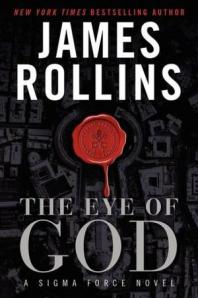
The Eye of God by James Rollins: a book review

The eye of God

In a post in August, It’s mostly insubstantial, I discussed an interview with James Rollins that I read on Sciencethrillers.com.  The title for my post came from some mind-blowing conversations Rollins described with quantum physicists while researching his latest thriller, The Eye of God.  The gist of what Rollins learned involved the insubstantial nature of our apparently solid physical world.  “If you remove all the space within the atoms making up the human body, every person that’s ever lived would fit inside a baseball,” said physicist, Brian Greene.

I heard Rollins speak in September at a writer’s lunch where he gave a lively talk on the nuts and bolts of his process.  Afterwards, I hurried home with a copy of The Eye of God.  Sadly, I didn’t finish the book until this week.  It doesn’t speak well for a thriller when it takes me weeks to “get through” it.

The book opens with a compelling synchronicity between the discovery of an ancient prophecy and the last transmission of a NASA satellite nicknamed “The Eye of God,” launched to study a comet as it passes close to earth.  Before it crashes, the satellite transmits an image of the eastern United States as a ruin of smoking craters.

Astrophysicist, Dr. Jada Shaw, theorizes that dark matter associated with the comet is bending time as well as space in the atmosphere, and the image shows our world in four days time.  Simultaneously, a priest in the Vatican receives a package containing a copy of The Gospel of Thomas, bound in human skin, and a skull inscribed with prophecy of the end of the world in four days.

Soon Dr. Shaw, the priest and his niece, and members of the Sigma Force, a covert group of ex-special forces soldiers, converge on Mongolia, where the Eye of God went down.  An asteroid storm in Antarctica is a prelude to what is coming if the satellite can’t be recovered and if it offers no clue to reversing the space-time distortion that is opening earth’s atmosphere to deadly “near-earth objects.”  Integral to the effort is a legendary black cross, made from an earlier NEO that struck earth.  The cross belonged to St. Thomas the Apostle, who evangelized in Asia, according to the apocryphal “Acts of Thomas” and ancient Christian communities in southern India.

So what’s not to like about the story?

I enjoyed elements of The Eye of God, not the least, an appendix in which Rollins’ discussed what was fact and what was fiction in the book, including a real comet that will pass near the earth this winter.

If it doesn’t break up as it swings by the sun, Comet ISON, one of the brightest comets in history, will pass so close to the earth in November and December that it may be visible during the day.

Comet ISON, via NASA Hubble telescope, will make it's closest pass to the earth on Dec. 28.

Comet ISON, via NASA Hubble telescope, will make it’s closest pass to the earth on Dec. 28.

My biggest problem with The Eye of God is that I never truly felt the danger.  The threat was arcane and not clearly articulated until midway through the book.  The solution (which I won’t give away) remained rather abstract.  The constant reminders of danger and the way out that we find in other page-turners would have helped, as would the disaster film convention of showing a few ordinary people who don’t yet know they are doomed.

Rather than keeping us focused on the real threat, restating it until it was vivid, Rollins threw in distracting subplots which included six major gunfights with Chinese triads, North Korean soldiers, and Mongolian nationalists.  Obstacles while the clock is ticking is a proven way to ramp up tension, but the repetitive nature of these firefights – bad guys who can’t shoot versus outnumbered, crack-shot good guys – was the equivalent of digital special effects at the expense of story in the movies.

The Eye of God received good reviews, especially from established fans of James Rollins. That may be the difference.  This is the ninth Sigma Force novel, and those who read the others are probably bonded with the characters and care more than I if they get shot at.  Next time I read this author, I’ll start at the beginning, though I don’t think that will be any time soon.

Jane Eyre – Charlotte Brontë

Thanks to the ever-beguiling Vickie, who blogs at Beguiling Hollywood, for the best online laugh in quite a while! She turned her readers on to Dr. Sparky, who offers 21st century literary summaries and analysis at Thug Notes. Watch his take on Jane Eyre and see why it leaves Cliff Notes in the dust!

Vickie Lester's avatarBEGUILING HOLLYWOOD

still-of-mia-wasikowska-in-jane-eyreMy favorite screen adaptation was directed by Cary Joji Fukunaga in 2011, starring Mia Waikowska and Michael Fassbender, screenplay by Moira Buffini.

Now, Thug Notes is a new fascination – I especially liked their recap and analysis of Moby Dick, but we covered that a couple of weeks ago.

Thug Notes – Classical Literature. Original Gangster..

Napkin Note Productions | Thug Notes.

View original post

The Four functions of a living myth and the evening news

In The Masks of God: Creative Mythology, 1968, Joseph Campbell identified four major functions of a “living myth:”

1) ” To awaken and maintain in the individual an experience of awe, humility, and respect in recognition of that ultimate mystery, transcending names and forms.”

CC By-NC-ND-2.0

CC By-NC-ND-2.0

2) “To render a cosmology, an image of the universe.”  Today, Campbell notes, we turn to science for this.

Andromeda galaxy.  Nasa photo, public domain

Andromeda galaxy. Nasa photo, public domain

3) To shape “the individual to the requirements of his geographical and historically conditioned social group “

January from Les Très Riches Heures du duc de Berry, 15th c., public domain.

January from Les Très Riches Heures du duc de Berry, 15th c., public domain.

4)  “to foster the centering and unfolding of the individual…in accord with himself, his culture, the universe, and that awesome ultimate mystery.”

Leshan Giant Buddha, 2010, by Wilson Loo.  CC BY-NC-ND 2.0

Leshan Giant Buddha, 2010, by Wilson Loo. CC BY-NC-ND 2.0

Forty-five years ago, when conflict during the sixties was rending the social cohesion Americans had forged during WWII, Campbell wrote:  “The rise and fall of civilizations in the long, broad course of history can be seen to have been largely a function of the integrity and cogency of their supporting canons of myth.”

A mythological canon, said Campbell, is a group of symbols that “organize and focus the energies of aspiration.”  When the symbols no longer work for an individual, there is “dissociation from the local social nexus,” and, “if any considerable number of the members of a civilization are in this predicament, a point of no return will have been passed.”

In Creative Mythology, Campbell wrote at length of an earlier period of time when a different mythical canon broke down.  In 12th century Europe, Christianity ceased functioning as a socially cohesive world view.  Enough people stopped believing (even though belief was strictly enforced) that Europe went beyond the point of no return.

Many stories emerged during that era concerning the quest for the grail, which in the earliest written versions, had nothing to do with cup of the last supper, but everything to do with a quest to heal individuals and the land.  In Wolfram Von Eschenback’s Parzival, the grail was called lapis exiles, another name for the philosopher’s stone of alchemy.  The philosopher’s stone turns base metal into gold; the grail heals the wasteland, for that is what a country and culture become where there is a drought of aspiration and meaning.

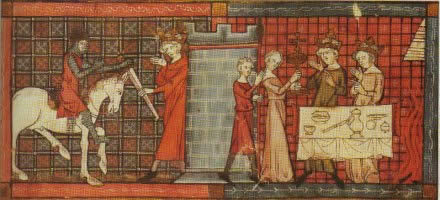
Scenes from Perceval's quest of the grail, 1385-1390.  Public domain

Scenes from Perceval’s quest of the grail, 1385-1390. Public domain

That is where we are in America today.  In the absence of a shared core of attitudes and beliefs to unify us as a people, we are a nation of warring factions at all levels of culture and government.  For now, the party is over in the land of opportunity.  Even if our politicos won’t admit it, a “considerable number of members of our civilization” know this is true.

Campbell ended Creative Mythology by asking what might feature in a new and vital mythology.  In my opinion, he dithered with his answer, as he sometimes did in his writing.  Twenty years later, he answered the same question when it was posed by Bill Moyers at the end of the Power of Myth series.  This time Campbell suggested that any world view adequate to our times and our future would have, as a mandala, a view of the earth from space.

Earth from space

Neither Campbell nor one else back then knew the full extent of the danger climate change would pose.  Now we know it’s worse than anyone thought, (see the Intergovernmental Panel on Climate Change report, released Sept. 27).  Our governments are as impotent as the wounded Fisher King of the grail legend when it comes to enacting meaningful change.

Yet as Campbell said, the quest for the grail of healing begins with individual searchers venturing into the forest alone, at the place that seems best to them.  Like Nelson Kanuk, a University of Alaska freshman, whose home in a remote Eskimo village was swallowed by the sea as a result of melting permafrost.  Kanuk sued the state of Alaska for not curbing carbon emissions and his case is now being heard by the Alaska Supreme Court.  Similar suits are pending in 12 other states.  Such headlines echo words I recently quoted by Wendell Berry, who puts his trust in “ordinary people” and said:

We don’t have a right to ask whether we’re going to succeed or not.  The only question we have a right to ask is what’s the right thing to do? What does this earth require of us if we want to continue to live on it?”

We don’t even have to rush out and sue our state governments, for as Campbell suggested, stories and world views spark action and change when a critical mass is reached.  Hopefully, we are at or beyond that point. All we, as individuals, have to do is be still enough to hear what the world is asking of us, and then enter the forest at the place that seems best.

Things you may not know about Winnie- the- Pooh

When I was young, I loved Winne-the-Pooh. There was a time when I carried my little volume – illustrated by Shephard, of course – everywhere. This fine article was posted on “The View from Sari’s World” on August 21, Christopher Robin Milne’s birthday. It’s filled with interesting facts about the historical Pooh and Christopher Robin, as well as the real Hundred Acre Wood and Poohsticks bridge. Enjoy!

sarij's avatarThe View From Sari's World

Christopher Robin Milne was born on August 21, 1920, so what better day to celebrate the world’s favorite bear!

Winnie-the-Pooh is unarguably one of the most recognizable characters in children’s literature, as are his friends: Christopher Robin, Piglet, Eeyore, Tigger, Rabbit, Kanga, Roo, and Owl. Generations of children (including my own) have loved Winnie-the-Pooh, the Best Bear in All the World.  To celebrate the birthday of the little boy Christopher Robin Miline and his favorite toy I give you:

Things you may not know about Winnie- the- Pooh

Winnie -the- Pooh was the name of the “Bear of little brain” in the stories created by A.A. Milne. A.A Milne’s son Christopher had a teddy bear who Winnie the Pooh was created after. He named his teddy Winnie after a Canadian black bear he saw at the Zoo in London. The real life bear was actually from the town of Winnipeg…

View original post 602 more words

Wendell Berry on His Hopes for Humanity

“It’s mighty hard right now to think of anything that’s precious that isn’t endangered.” – Wendell Berry

Wendell Berry by Lou Gold, 2012.  CC BY-NC-SA 2.0

Wendell Berry by Lou Gold, 2012. CC BY-NC-SA 2.0

Wendell Berry, 79, is a poet, farmer, and author of 40 books.  He is also an outspoken advocate and activist for a radical change in our treatment of the earth.  “We don’t have a right to ask whether we’re going to succeed or not,” he says.  “The only question we have a right to ask is what’s the right thing to do? What does this earth require of us if we want to continue to live on it?”

In a rare TV interview with Bill Moyers released on October 4, this gentle poet, who works a Kentucky farm that has been in his family for 200 years, reveals the fire of his determination.  Speaking of recent demonstrations against mountain top strip mining, which poisoned Kentucky rivers, Berry said,  “This is intolerable. There’s no excuse for it…there’s no justification for the permanent destruction of the world.”

I invite everyone to watch this brief trailer and if interested, tune into the full interview, or read the transcript here:  Wendell Berry on his hopes for humanity

Berry is eloquent in denouncing the “disaster of being governed by the corporations,” and he speaks of both the importance and the difficulty of holding onto hope.  He finds hope in the growing number of people who share his views and in his certainty that the present order of things cannot last because it runs counter to “creation itself.”  He also puts a lot of hope in “ordinary” people choosing to do the right thing.

There’s a eloquence in Wendell Berry’s interview, and there’s an equal eloquence in this poem, which fills me with hope and a sense of the love he feels for the forests and fields, the river and animals – the whole of creation – which he has spent a lifetime defending.

Manifesto:  The Mad Farmer Liberation Front
by Wendell Berry

Love the quick profit, the annual raise,
vacation with pay. Want more
of everything ready-made. Be afraid
to know your neighbors and to die.

And you will have a window in your head.
Not even your future will be a mystery
any more. Your mind will be punched in a card
and shut away in a little drawer.

When they want you to buy something
they will call you. When they want you
to die for profit they will let you know.
So, friends, every day do something
that won’t compute. Love the Lord.
Love the world. Work for nothing.
Take all that you have and be poor.
Love someone who does not deserve it.

Denounce the government and embrace
the flag. Hope to live in that free
republic for which it stands.
Give your approval to all you cannot
understand. Praise ignorance, for what man
has not encountered he has not destroyed.

Ask the questions that have no answers.
Invest in the millenium. Plant sequoias.
Say that your main crop is the forest
that you did not plant,
that you will not live to harvest.

Say that the leaves are harvested
when they have rotted into the mold.
Call that profit. Prophesy such returns.
Put your faith in the two inches of humus
that will build under the trees
every thousand years.

Listen to carrion — put your ear
close, and hear the faint chattering
of the songs that are to come.
Expect the end of the world. Laugh.
Laughter is immeasurable. Be joyful
though you have considered all the facts.
So long as women do not go cheap
for power, please women more than men.

Ask yourself: Will this satisfy
a woman satisfied to bear a child?
Will this disturb the sleep
of a woman near to giving birth?

Go with your love to the fields.
Lie down in the shade. Rest your head
in her lap. Swear allegiance
to what is nighest your thoughts.

As soon as the generals and the politicos
can predict the motions of your mind,
lose it. Leave it as a sign
to mark the false trail, the way
you didn’t go.

Be like the fox
who makes more tracks than necessary,
some in the wrong direction.
Practice resurrection.

Dreaming with animals

Bobcat, Folsom City Zoo Sanctuary - M.Mussell

Bobcat, Folsom City Zoo Sanctuary – M. Mussell

“What is the single greatest predictor of a hero’s success in folktales around the world?”

A professor who had studied the subject at length once posed that question in a psychology class. The answer, he said, was finding an animal helper. More than any other human or supernatural guide, an animal ally can lead the hero or heroine through trials and dangers to the end of their quest.

The professor was a friend and colleague of James Hillman (1926-2011) who loved animals and began collecting animal dreams in 1956.  Toward the end of his life, Hillman helped compile and update five decades of essays and lecture transcripts for a ten volume collection of his work.  Five volumes have been published to date, including Animal Presences, 2012, which I am currently reading.

Vixen the fox, Folsom City Zoo Sanctuary - M. Mussell

Vixen the fox, Folsom City Zoo Sanctuary – M. Mussell

After serving in the US Navy, Hillman studied at the Sorbonne, at Trinity College, Dublin, and in Zurich, where he received a PhD from the University of Zurich and an analyst’s diploma from the C.G. Jung Institute where he served as Director of Studies until 1969.  Versed in Jungian psychology, he charted his own path which he named “Archetypal Psychology.”  His first major work, Revisioning Psychology, 1975, was nominated for a Pulitzer Prize.

With 18 volumes in Jung’s Collected Works, and 10 in Hillman’s, it is clearly beyond the scope of a blog post to compare and contrast these two complex approaches to the depth psychology.  That said, several broad generalizations are possible:

Jung’s psychology can be characterized as “monotheistic,” aiming at a realization of the “Self,” as the supreme archetypal principle.  Jung understood the Self as “the God image within.”  Hillman, by contrast, called the psyche “polytheistic,” and considered the Self as simply one of many psychic centers within us.  Our nature, as we experience it moment by moment, is more like a pantheon of many gods than the kingdom of single inner supreme being.

As a corollary to these differing models of the psyche, development for Jung was often imagined as an ascent, a kind of upward climb toward spiritual clarity.  For Hillman, growth was often a descent, leading to contact with the “Soul,” which for him was more like the “soul” of a blues musician or an artist than the “immortal soul” of organized religion.

Hillman was also concerned with anima mundi, the soul of the world.  How can people be healthy when the world is ailing?  Hillman had little patience with ego psychologies that pretend human health is possible when our cities are blighted and we work in sterile, windowless offices bathed in florescent light?  As a result, his method of approaching dream and fantasy was unique.  He shunned methodologies that seek to aggrandize ego by asking what the figures of dream mean.  He insisted we treat the beings who visit us nightly with the same courtesy we would show to a guest in the waking world.

“the animals are right here. You have to be careful you don’t say something stupid because the animals are listening. You can’t interpret them; you can’t symbolize them; you can’t do something that is only human about them.”

Sage the wolf, Folsom City Zoo Sanctuary - M. Mussell

Sage the wolf, Folsom City Zoo Sanctuary – M. Mussell

“the image is the teacher. We have to endure a laboriously slow method of dreamwork…A dream brings with it a terrible urge for understanding. We want dreams decoded for their meanings. But the dream, like the animal in it, is a living phenomenon. It goes on displaying itself, pointing beyond itself to ever further interiority if we can hold back the hermeneutical desire so that the image can elaborate itself.”

“I am suggesting that the dream animal can be amplified as much by a visit to the zoo as by a symbol dictionary.”

Something within us mourns the animals missing from our lives.  We wear their pictures on t-shirts and sometimes collect little animal figurines.  We cherish domestic pets in ways that might seem bizarre to earlier generations who weren’t as estranged from the natural world.  We thrill at the sight of Coyote or Deer moving through twilight woods at the edge of the housing tract, and we mourn them dead on the road as we drive to work.

Sly the Fox, Folsom City Zoo Sanctuary - M. Mussell

Sly the Fox, Folsom City Zoo Sanctuary – M. Mussell

We are energized when animals visit our dreams – sometimes.  We’d rather they weren’t fierce, threatening, or slimy.  We prefer majestic and noble: an eagle, a dolphin, or wolf will do nicely. We’re not so fond of ants or mice, pigs or slugs, skunks or rats.

With the natural world in tatters, however, anima mundi is not dreaming of Disney creatures and love and light.  That’s all right.  Black Elk said the Lakota people knew every being has it’s place in the medicine wheel.  And if we don’t know what’s broken in ourselves and in the world, said Hillman, we don’t have the slightest idea of who and what and where we are.

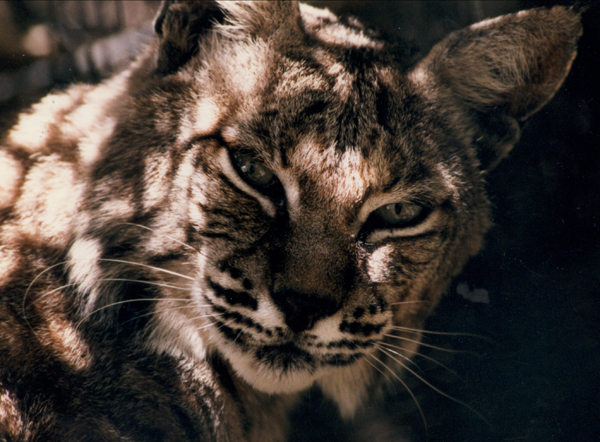
Aiko the bobcat, Folsom City Zoo Sanctuary - M. Mussell

Aiko the bobcat, Folsom City Zoo Sanctuary – M. Mussell

What animals have recently come to your dreams?  What did they seem to want? Don’t remember any animal dreams? Just ask. If you mean it, if you are truly interested and repeat the suggestion until it brings results; if you prime the pump by leaving a notebook and pen you your bed stand, the creatures will visit.

They want to be heard and are looking for those who will listen.

Mad Mouse by Chris Grabenstein

mad_mouse

Officer Danny Boyle is excited.  After his efforts in solving the tilt a whirl murder, it’s an open secret that he will be offered a full time position on the Sea Haven, NJ police force.  During the week before Labor Day, Danny is celebrating with a few close friends on the beach late at night when a phosphorescent paintball slams into his ribs.  His friends are spattered, and one of them, Becca, is hit in the eye.

A frantic call to 911 brings an ambulance, which rushes her to a hospital, and summons Danny’s partner, John Ceepak, the quintessential detective, who had been home listening to his scanner, one of his hobbies when he’s not watching forensic shows on the Discovery Channel.

The next day, Doyle and Ceepak discover paintball vandalism on a mural outside a popular restaurant.  And as Danny and a waitress friend leave a dinner with the Chief of Police in honor of his promotion, both are hit again with paintballs, but this time there’s something more – a near miss from a rifle bullet that Ceepak identifies as the type favored by military snipers.  In the next attack, the sniper doesn’t miss; a shot to the chest sends Danny’s love interest to the hospital, unconscious and barely alive.  Clearly, it’s personal.

The shooter has been leaving trading cards at his sniper positions, all referencing the year 1996:  a card advertising The Phantom, a movie released in 1996; rookie cards for Derek Jeter whose debut year with the Yankees was 1996.  At scene of the first fatal shooting, one of the cards bears a note for Danny:  “You will never remember.  I will never forget.”

Danny was 15 in 1996.  He has only a few days to remember what he did then to trigger a killing spree ten years later.  Labor Day is approaching, and the Sea Haven Chamber of Commerce is hosting a “Sunny, Funderful Beach Party Boogaloo” concert, expected to draw 50,000 tourists.  Just like in Jaws, the mayor refuses to cancel the event; Danny and Ceepak must catch the sniper before he has 50,000 targets to choose from.

Mad Mouse, 2006 is the second book in Chris Grabenstein’s Boyle/Ceepak detective series set on the Jersey shore.  John Ceepak, ex-military, is highly disciplined and always plays by the rules.  Under the tutelage of his older partner, Danny is beginning to learn the virtues of discipline and rules.

Grabenstein’s mysteries are well plotted and avoid the middle-chapter slog that often plagues detective novels.  The author’s humor and irony, channeled through Danny’s narration, finds ample scope everywhere in the resort town setting and in his descriptions even of passing characters:  “He has this receding hairline coupled with wavy swept-back hair that makes him look like he might sing country music, only he’s wearing clunky glasses with a paper clip pinned through one hinge, and country stars seldom do that.”

The combination of compelling detectives, a setting where there is always more to see, and a well imagined and written crime made Mad Mouse a pleasure to read.  I’ve already started the third book in Grabenstein’s Sea Haven series.